
For some of us, life is a brambled path haunted by trauma and turbulence. Along its winding course, we encounter prickly thorns, wily strangers and peril masked behind familiar faces. Bearing the weight of ignominy and betrayal, we arrive at a crossroad between rancour and maturity, between allowing our adverse experiences to cloud our prospects and resolutely turning the page towards the future. The choice, though stark, is far from easy and not many select wisely.
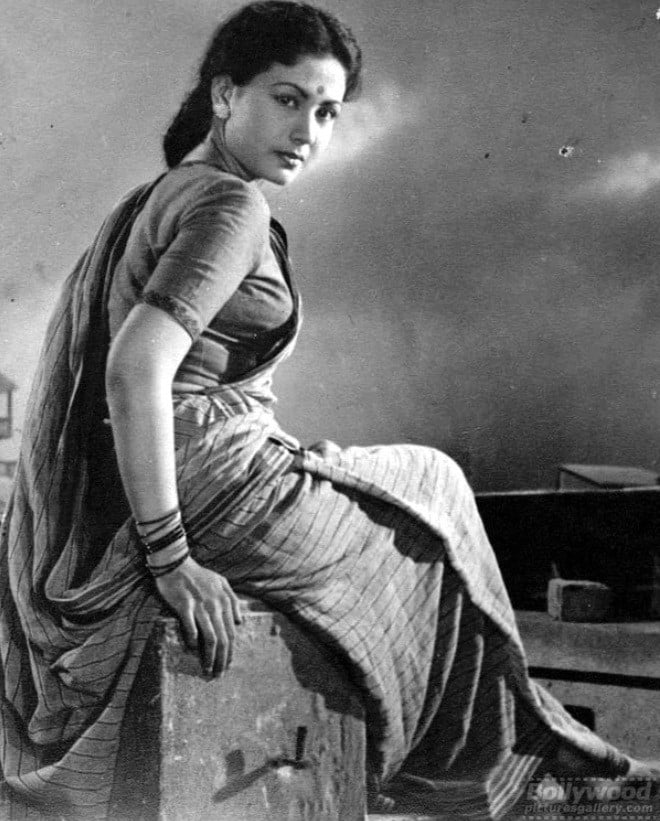
As she negotiated the minefields of her personal and professional life, Indian film actor Meena Kumari may have confronted this choice. Fortunately for her, poetry came to her rescue, offering a forest she could run towards or an oasis in a scorching desert.
It is tempting to view literature as an eternal remedy for our emotional and spiritual maladies. Yet, the written word is only a partial saviour. It cannot erase our dilemmas, but it can offer a roadmap towards healing. Literature couldn’t save Meena Kumari from the ravages of alcohol and emotional devastation. Instead, it provided her with the possibility of rebirth, a vital artistic reawakening. When she confronted the emptiness of her chosen canvas, Meena Kumari could shed the weight of her legacy as the silver screen’s ‘Tragedy Queen’. The page, in turn, became the silent witness to her creative metamorphosis as she stepped beyond her comfort zone and inhabited another avatar as a poet.
Throughout her life, she had a mercurial relationship with names, adopting new ones to suit the demands of the moment. Born Mahjabeen Bano in 1933, she entered the film industry as a child star named ‘Baby Meena’, later adopting the moniker of ‘Meena Kumari’, while remaining ‘Manju' to those closest to her. Naz, her chosen pseudonym, was simply another name she had to move fluidly between—albeit one that opened a different doorway for her.
Much to her dismay, literature distils truth, but cannot expunge it. A writer’s doubts and concerns inevitably seep into their work in subtle yet enigmatic ways. It is difficult to determine the extent to which Meena Kumari’s personal grief, insecurities and bitterness surrounding the duplicities of the film world found utterance in her ghazals and nazms. What must be remembered is that her verse cannot be seen as the jottings of a personal diary that merely exorcise the mind’s demons. Such artistic exorcisms are often chaotic and vainglorious, yielding work that is disjointed and imperfect. Meena Kumari Naz’s oeuvre stands out for its simplicity, candour and artistic spirit. While deeply personal, her poems stand as shimmering testaments to the healing power of creative expression.
The Tragedy Queen’s abiding interest in verse was not merely a clandestine pursuit or a wilful surrender to the blank page that is abandoned once catharsis was achieved. She had the courage to share her poetry with the world—a testament to her devotion to her craft. Meena Kumari Naz also sought mentorship from the esteemed lyricist and poet Gulzar and recorded a soulful album of her verse titled I Write, I Recite. Gulzar was entrusted with the task of posthumously publishing her poems as a collection titled Tanha Chand after her death in 1972.
It was, of course, a time before Indian film stars were routinely approached by publishers to write memoirs, shadowed for tell-all biographies, or invited to write fiction. As a result, readers may find it difficult to extricate the tragedy of Meena Kumari’s life from the quiet intensity of her verse.
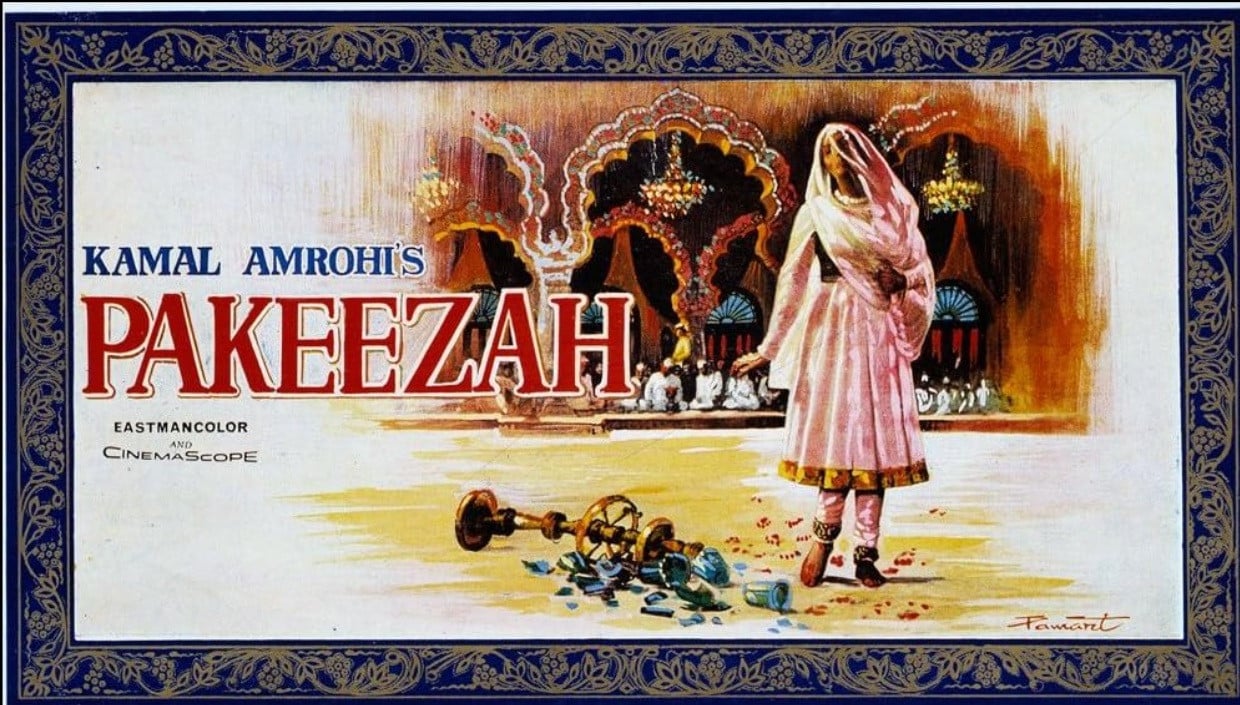
I, too, grappled with a similar burden when I began reading Tanha Chand last year. Before inhabiting the pages of this slim volume, I saw Meena Kumari through her cinematic disguises. In one fell swoop, she was Sahibjaan from Pakeezah (1972) and Choti Bahu from Sahib Biwi Aur Ghulam or the heartbroken Karuna who sings Ajeeb Dastan Hai Yeh at a wedding reception on a boat. Once I immersed myself in her poetry, those on-screen masks fell away and I caught a glimpse of a different avatar—unguarded, authentic and visceral. With the facade lifted, the verses revealed a captivating vein of truth.
In his terse introductory note to Tanha Chand, Gulzar outlines his role as the custodian to Meena Kumari Naz’s poems and diaries, while also asserting that the reader has the strongest stake in her oeuvre. Poets, he states, have rights over their verse only insofar as they conceive and utter them. Once it has been recited, the poem enters the reader’s domain and belongs to them in spirit. The first piece in the collection appears to affirm the primacy of the reader:
Shama hoon, phool hoon ya rait pe qadmon ka nishan/
Aap ko haq hai mujhay jo bhi chahay keh lein!
(I’m a flame, a flower or footprints on the sand/
You have every right to call me what you wish!)
Penned in accessible, lyrical Urdu, subsequent verses vary in terms of length, themes and intensity. The spectre of loneliness pervades Meena Kumari Naz’s poetry, surfacing as a haunting reminder of her vulnerabilities beyond the arc lights of the film world. The sentiment is poignantly conveyed in the opening lines of the titular poem:
Chand tanha hai aasman tanha/
Dil mila hai kahan kahan tanha/
Bujh gayee aas chup gaya tara/
Thartharata raha dhuwahn tanha/
Zindagi kya isi ko kehtay hain/
Jism tanha hai hai aur jahan tanha
(The moon is alone; the sky, alone/
Where hasn’t the heart found alone?
All hope is lost; the star, hidden/
The smoke still billows—alone/
Is this what we call life?/
The body is alone; the soul, alone)
In the following piece, the poet’s relationship with isolation assumes a darker shade, drawing other existential concern into its fold.
Ankahi ansuni si kuch baatein/
Soonay din aur yeh sunsaan raatein/
Tootay bhikre hue lamhay goya/
Ek gumnaam gam ki saugatein/
Na koi sheher na rasta na safar/
Muntashir zehen ki uljhi ghatein/
Har qadam waqt ka sehma sehma/
Har lamhay pe maatein maatein
(Some unspoken, unheard conversations/
Solitary days and these desolate nights/
Broken, scattered moments, as though/
Tokens of a nameless sorrow/
No city, no pathways, nowhere to go./
The entangled traps of a fractured mind./
Every footstep of time taken in mortal fear/
At every juncture, defeat and more defeat.)
Beyond evoking the lingering pain of heartbreak and loneliness, the poet seeks to find solutions to her plight. In ‘Khirki’ (Window), the poet discovers an unexpected, enduring kinship in an inanimate object that offers comfort as she reflects on her dreams and aspirations. The outcome, however, isn’t always favourable and often guides her towards a bleak horizon.
Dhuwahn dhuwahn si nazar aur wohi sannata/
Phir se ehsaas ne pehna hai bayhissi ka libas/
Sawaal bangayi bewaja zindagi phir se/
Jawab jiska wohi hairaan si khamoshi hai
(A murky vision and the same uneasy solitude/
Once again, feelings are cloaked in apathy/
For no reason, life has once again become a question/
Whose answer lies in the same startling silence)
Meena Kumari Naz’s poetry reveals an unsettling preoccupation with night. While this may stem from the poet’s long-standing battle with chronic insomnia, her relationship with night is intricate and, at times, contradictory. Earlier in the collection, the poet struggles to orient herself amid the shifting boundaries between day and night, finding it difficult to distinguish between the light and darkness. Later, she questions why days should be vibrant if nights are unbearably still. In one piece, the poet confers the token of light on the darkness, a gesture that is at once inscrutable and potent. At times, she believes darkness itself possesses its own radiance. Yet, it remains a nefarious force that draws her into a spiral of distress.
Tanhai ki raaton main aksar/
Uljhi hui neend se kuch pehlay/
Woh jaagtay saaye dhundle se/
Yaad aatay hain, yaad aatay hain
(Often on those lonely nights/
before the onset of restless sleep/
those blurred, waking shadows/
come to mind, come to mind)
At the same, she derives a peculiar thrill from the night, as though it were a bittersweet elixir.
Dil ko kaisay samjhayein ke raat guzarnay wali hai/
Bas raat ki baat hee saari hai aur raat guzarnay wali hai
(How do I console the heart, when the night is about to pass?/
It’s all about the night—the night that soon shall pass)
Despite her complex affinity with the night, it remains an enigma she seeks to unravel, as the following lines reveal:
Dhundli raat ki chund lakeerein/
Khwabon ki tabeer nahi/
Unhon ne shaam ke sar ko dhanpa/
Subha ki yeh taqdeer nahi!
(The few strokes of a hazy night/
Bear no signs of dreams fulfilled
They have merely cloaked the evening/
This is not the morning’s destiny)

More often than not, her curiosity finds expression in rhetorical questions through which she wonders whether the night’s fortunes will ever awaken. Amid this cycle of fascination and fear, she ultimately leaves the matter to fate.
Subah naseeb main ho tau subha milaygi zaroor/
Warna zindagi kat jayegi bas raat hi raat
(If dawn is in our destiny, we shall find it/
Or else life will pass us by in eternal darkness)
Apart from isolation and a deep interest in the night, Tanha Chand explores universal themes of love, loss, pain, faith and devotion in far from stereotypical hues and through a sustained engagement with nature. The crowning glory of this collection lies in its immersive quality. The poet’s aim is never to appear erudite or abstruse. Each verse invites reflections on the overlooked fragments of the human condition, especially those that are buried deep within our consciousness.
Meena Kumari Naz has often been likened to Slyvia Plath, another poet who died tragically in the prime of her life. Even without such comparisons, her work deserves greater recognition, especially among younger readers of Urdu literature.
The writer is a critically acclaimed author and can be reached at tahakehar2@gmail.com
All facts and information are the sole responsibility of the writer