
Placed in the darkest, least accessible corner in superstores or pharmacies, menstrual products are rarely treated like ordinary goods, folded into brown paper, hidden from view, turning a natural bodily process into an unsaid sin. The transaction can resemble a discreet exchange rather than the purchase of a basic health item. For many girls and women, this ritual of concealment reflects the larger reality of the country that treats their necessities as luxury items.
Even in Pakistan’s largest cities, often imagined as more progressive, the language surrounding periods is wrapped in shame and moral anxiety. Menstruation is frequently discussed through the idiom of honour and modesty, casting it as a private matter that must be regulated rather than a routine bodily process that requires infrastructure, information, and public investment.
“The shame is produced, reinforced, and then normalized when the state calls menstrual products a luxury; it is participating in that same logic,” said Bushra Mahnoor, founder of Mahwari Justice, a grassroots movement working on menstrual equity.
To break this silence, in September 2025, lawyer and activist Mahnoor Omer took the brave step of filing a petition in the Lahore High Court to challenge Pakistan’s “period tax,” earning the title of TIME’s Woman of the Year for her advocacy and public impact. Sanitary pads and related menstrual products are subject to a so-called “luxury” tax, placing them in the same fiscal category as discretionary consumer goods. The classification does more than raise prices; it sends a symbolic message about whose needs are considered essential. In a country where nearly half of all girls lack information before their first period, and only a small minority have consistent access to sanitary products, this social stigma structures our society and shapes our economic policy.
Expanding on the definition of period poverty, the dedicated activist who took the state to court over the matter stated, “Period poverty is not simply about not being able to afford pads. It refers to a system where you cannot manage your period with dignity — where there is no access to bathrooms in schools, no clean sanitation facilities, and where many girls drop out of school as a result.”
According to research compiled by the Dastak Foundation, 44% of menstruating people in Pakistan lack access to adequate menstrual hygiene facilities, 49% have no prior knowledge before menarche, and only 17% report proper access to sanitary napkins.
Most crucially, when floods damage Pakistan’s low-lying districts almost every year, relief supplies leave out items required for menstruation and maternal health. During the 2022 floods, Mahwari Justice encountered women who had no access even to spare cloth. In some cases, sisters shared a single rag, using it one after another. “When you have lost everything,” Mahnoor explained, “Finding a clean piece of cloth becomes impossible. And yet periods don’t stop because there is a disaster.”
“Calling menstrual products a luxury is not a neutral tax choice,” according to researcher and policy professional Zoya Rehman. She added, “It’s a statement about which bodies are assumed as default in economic policy and which are treated as deviations that must justify their costs. Removing that label will not undo structural inequality, but it does interrupt a hierarchy that has long been taken for granted.”
This shame attached to periods intersects with early marriage, gendered labour expectations, and the policing of young girls’ mobility. Treating menstruation as a moral issue rather than a public health reality allows institutions, families, schools, and the state to evade responsibility. In this economy of shame, the costs are borne by those who menstruate, especially young girls.
Out of the classroom, into the economy of shame
For many girls in Pakistan, menstruation marks a sharp turning point in their relationship with education. World Bank data shows that only one in five girls completes secondary education. While economic pressures, early marriage, and domestic labour are often cited as primary drivers of dropout, menstruation operates as a silent enabling condition. In schools without functional toilets, running water, or disposal facilities, managing periods becomes a monthly, unannounced test.
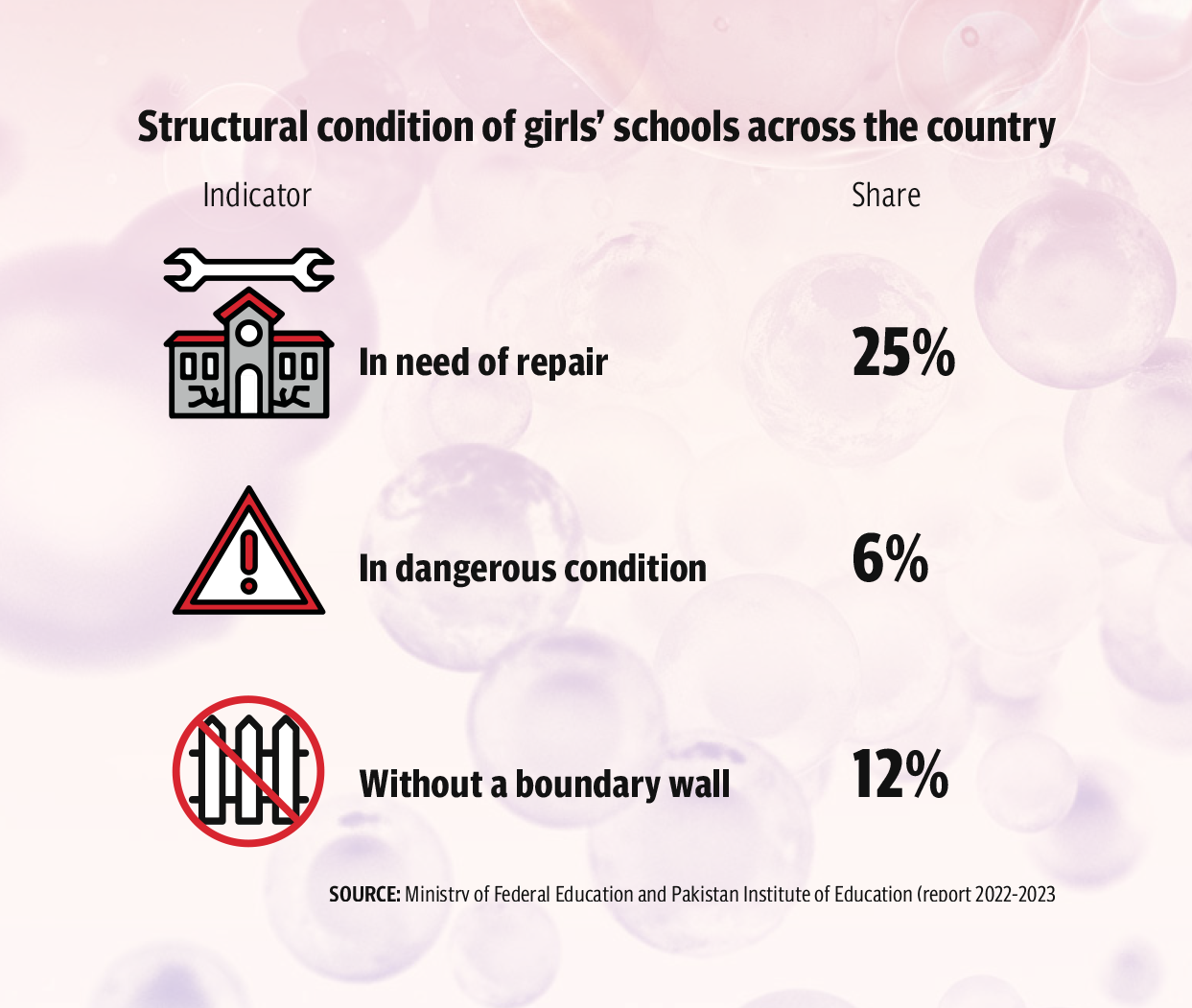
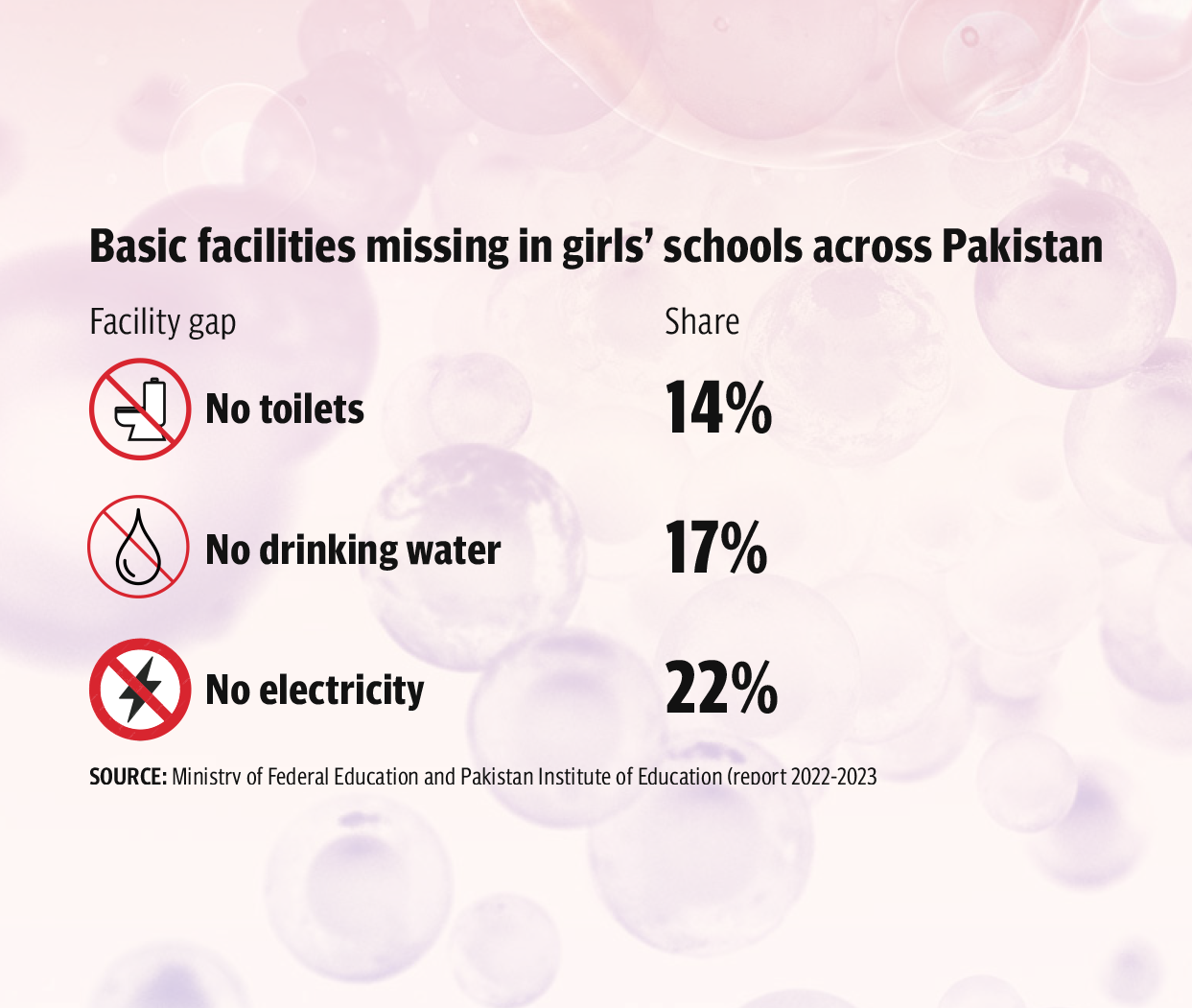
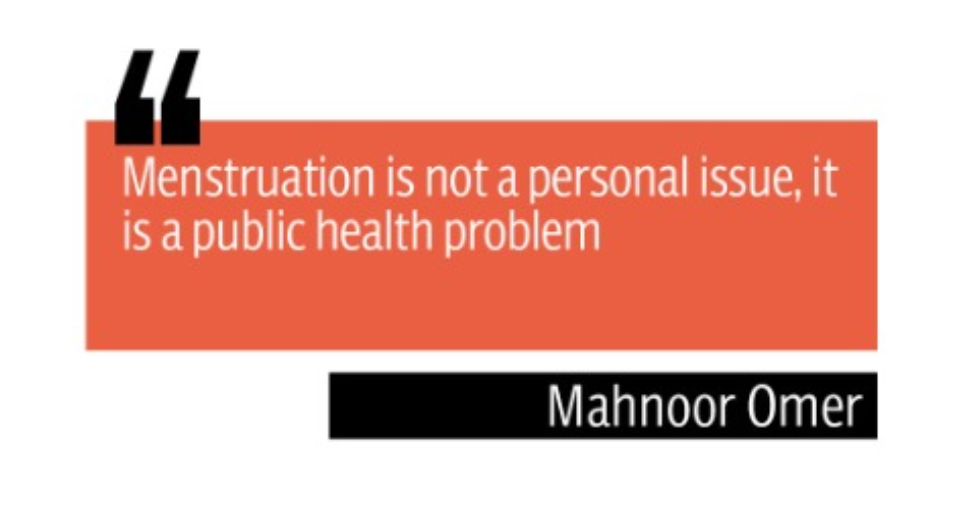 “Menstruation is not a personal issue; it is a public health problem,” said Mahnoor Omer. Yet, schools across the country remain unequipped to treat it as such. According to the Ministry of Federal Education and Pakistan Institute of Education (PIE) report 2022-2023 (2024), 14% of girls’ schools lack toilets, 17% have no drinking water, and 22% operate without electricity. One in four requires major repairs, and many lack boundary walls, compromising privacy. In this context, menstruation becomes a monthly disruption that schools are structurally unprepared to accommodate.
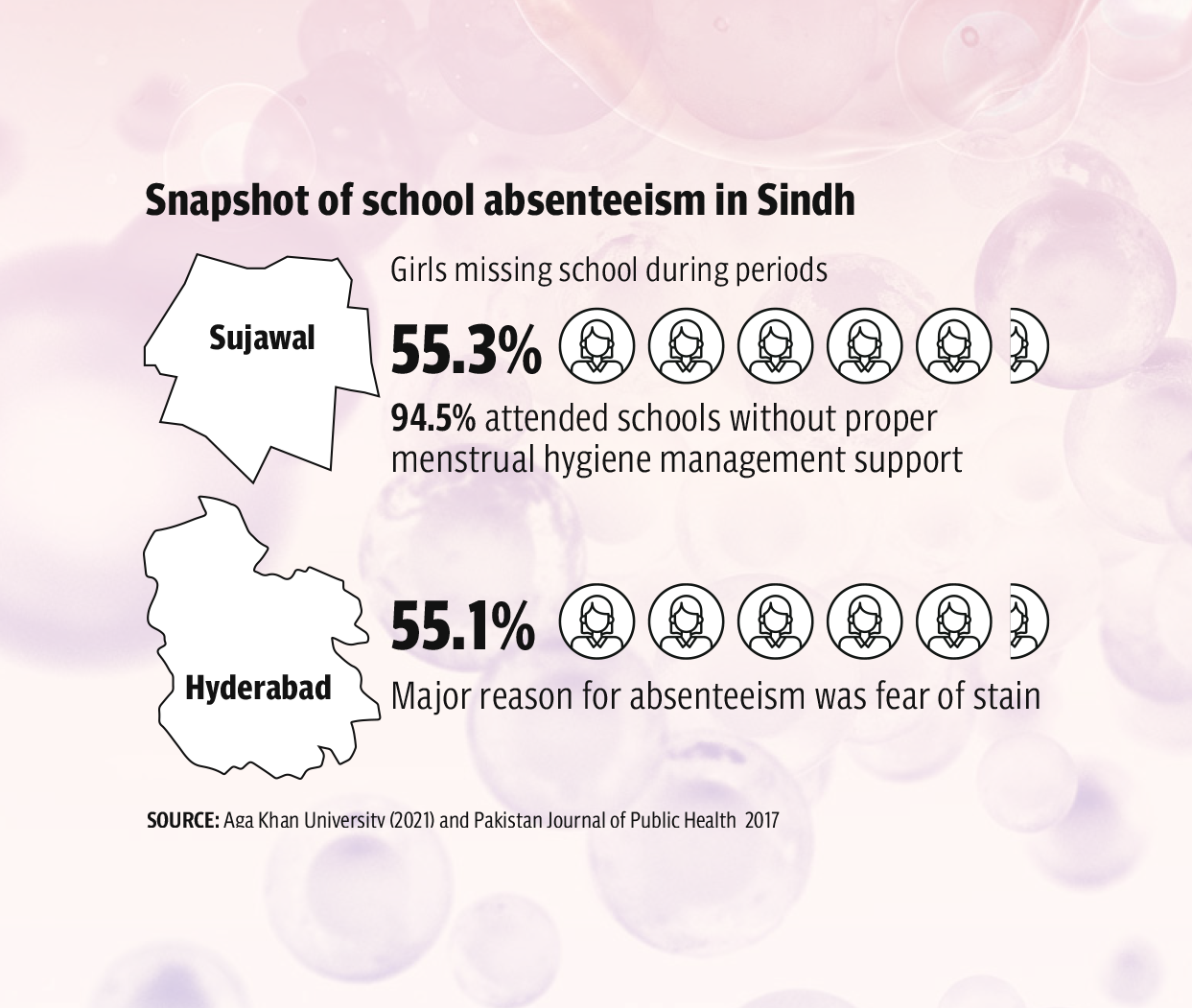
In Sindh’s Sujawal district, research by Aga Khan University found that over 55% of girls missed school during menstruation. Nearly all of them attended schools without proper menstrual hygiene management support. Similar figures emerged from Hyderabad, where fear of staining and ridicule decided attendance.
Khanzadi Murtaza, a community leader from Jhuddo in Mirpurkhas, who has worked extensively with Bushra, has witnessed this pattern repeatedly. “It is common for girls to be absent for seven days during their periods,” she said.
Khanzadi has seen this pattern play out across flood-affected areas of Tharparkar and Mirpurkhas. “Once a girl starts missing school for menstruation, the pressure increases from all sides,” she explained.
This is particularly alarming for girls’ education. As per the World Bank (2022), at the secondary level, the rate for out-of-school girls reached as high as 73% nationwide, with the likelihood of being out of school increasing with age. In Sindh, studies show that more than half of school-going girls miss classes during menstruation, primarily due to fear of staining and the absence of menstrual hygiene support. In flood-affected and rural districts, these absences often accumulate into permanent withdrawal.
A powerful narrative of shame sustains these structural gaps. Omer pointed to two interconnected forces: the reluctance to speak openly about women’s bodies, and the cultural framing of menstruation as “napak,” or “impure.” Explaining this further, she added, “It is seen as something dirty, impure, something that interrupts a woman’s being.”
This stigma operates almost reflexively as young girls are taught to conceal pads as if hiding contraband, to avoid naming their condition, to apologise for biological processes their bodies are undergoing. Premenstrual syndrome, a hormonal reality, is trivialised into moodiness or dismissed as an excuse. “We stigmatise it,” Omer observed, “and then we trivialise it.”
The lack of vocabulary to speak about menstruation without embarrassment sustains silence, and its material consequence is embedded within schools lacking infrastructure and families navigating economic strain, which shapes pathways out of education, and leaves out meaningful conversation and growth.
Blood in water
Climate disasters intensify existing inequality, and menstruation is no exception. In Pakistan, where floods have become more frequent and severe, displacement means that an already fragile situation worsens the bodily precarity of girls and women.
Disaster response in Pakistan continues to treat menstrual health as peripheral. Relief kits remain inconsistent, and distribution is uneven. For many women, access depends entirely on whether a local organiser or volunteer happens to intervene.
For girls who experience their first period during floods, the trauma can persist long after the waters recede. Without prior knowledge or support, menstruation is experienced as frightening and disorienting. Khanzadi noted that some girls took years to recover from the shock of bleeding in unsanitary, exposed conditions.
Khanzadi reported cases of prolonged bleeding triggered by stress, early onset of menstruation among young girls, and infections resulting from prolonged use of unclean materials. “In extreme cases, women reported bleeding lasting over two weeks,” she shared.
In flood camps, women describe digging holes to sit in during menstruation to avoid being seen or reusing soaked cloth for days at a time. Health consequences range from infections and prolonged bleeding to long-term reproductive complications. Community organisers in Sindh report cases of vaginal and cervical illness emerging after prolonged exposure to unhygienic conditions during the 2024 floods, a reminder that menstrual neglect is a breach of fundamental rights.
By 2024, a subtle shift had occurred, Khanzadi recalled, where during earlier floods, communities initially rejected menstrual supplies, arguing that relief organisations should prioritise food and water, now, two years later, the same families approached her asking for menstrual products for their daughters, recognizing that periods did not pause during disaster. “People understood that menstrual safety is as important as food,” she said.
Here, community intervention in the absence of state action has remained pivotal. Mahwari Justice began in the aftermath of the 2022 floods, initially responding to an urgent lack of menstrual supplies in disaster-affected areas, slowly growing into a movement focused on education, access, and the rebuilding of social relationships around menstruation.
Rather than relying on moral language, Mahwari Justice experiments with alternative ways of talking about bodies, through games, rap, and inter-generational conversations with the aim to normalise it, an approach that differs from the conventional NGO attitude towards the matter.
Reflecting on her observations of nongovernmental organisations dealing with this issue, Omer mentioned, “Sometimes NGOs distribute dignity kits without consulting communities about their needs. That approach should be reformed. Communities should be asked what they require. Pads should not be imposed, but they should be available and affordable for those who choose to use them.”
Taking matters into her own hands, Khanzadi, a community organiser from Jhuddo, has repurposed traditional gatherings, Much Kachehri, winter bonfire sessions typically dominated by men, into intergenerational spaces where women discuss menstruation, hygiene, health, and even Gender Based Violence (GBV), alongside poetry and folk music. As they share chai, apply mehndi, and exchange stories, knowledge circulates between grandmothers, mothers, and daughters.
Women also gather for Autaak, sitting together for a Baithak. These spaces, Khanzadi noted, create genuine discussion, allowing conversations about their bodies to emerge without being stuck in blame and confrontation.
Sharing the impact of this community work, in 2022, girls in Khanzadi’s community bought pads wrapped in black plastic, afraid to be seen. By 2024, many carried them in white shoppers.
She also added, “Policy makers only care about what happens in Lahore, Karachi, or Islamabad. They don’t even know people live in places like Jhuddo, who now face heavy floods every year, and women suffer repeatedly. The policies they make often don’t reach us or reflect our context. But we are hopeful because of our community strength.”
Khanzadi, however, has been able to work in only three union councils, largely through volunteer work and limited resources. “The state must provide us with resources. Community strength can take you far, but it cannot replace policy and state intervention,” Khanzadi said.
This local model of organising resists the idea of the saviour. Mahnoor is particularly critical of international coverage that portrays Pakistan as an eternally backward country in need of external help. She is also apprehensive of the international coverage focusing too much on key people, rather than the cause. “This is a people’s campaign,” she said, “When one or two people become the face, it harms the movement.”
Discussing the extensive international coverage of this issue, Omer commented that if the state claims to care about its international image, it must also care about the lived realities of women at home. She raised the question, “If students and young activists are addressing these issues with limited resources, why does the government remain silent?”
Law on trial
The petition challenging the taxation of menstrual products has gained considerable attention. Yet questions remain about whether a legal victory would translate into meaningful, sustained change.
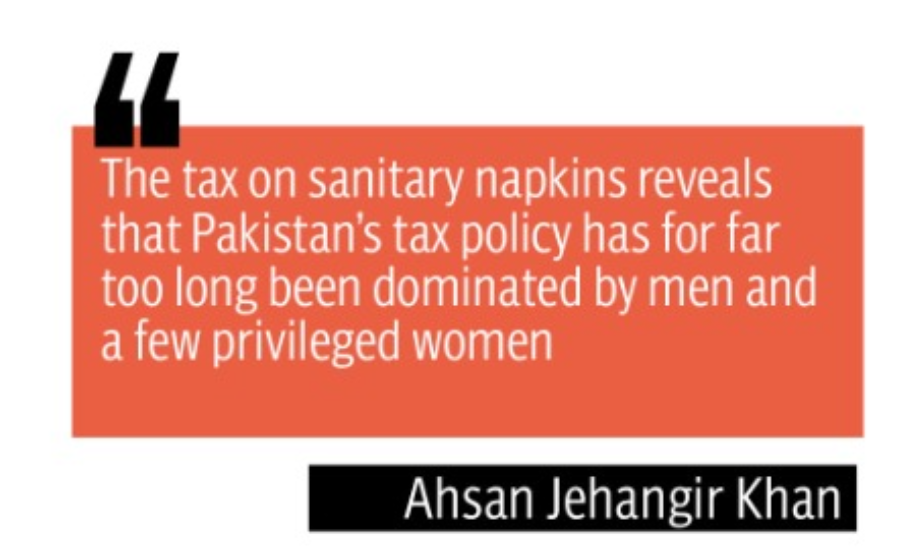
In fact, for Ahsan Jehangir Khan, the Islamabad-based lawyer representing Mahnoor Omer before the court, “It is difficult to opine upon what a “just” taxation system is in a capitalist country starved for tax-inflows and no significant uptick in the tax base.”
He added, “Like other policies, tax policy usually follows the ‘greater good’ doctrine. However, the tax on sanitary napkins does reveal that Pakistan’s tax policy has for far too long been dominated by men (and a few privileged women) therefore there has been no meaningful conversation about the “period tax,” revealing a disconnect between the policy makers and the mammoth chunk of population, which does its best to survive on paycheck to paycheck.”
“In ‘developed’ or ‘progressive’ countries, we have seen the law play out as a tool for social change,” shared Khan, “But we have also seen the law undo decades worth of social change. Our system is no different. If lawyers and judges stand for something they inherently believe to be right or ‘just’, we see the needle shift, and vice versa.”
Law, then, is neither a guarantee nor a dead end. It is one tool among many, shaped by the similar political and cultural forces it seeks to regulate.
The Islamabad-based lawyer believed, “If we are speaking about law as a tool for women’s rights, we need more women in the judiciary, greater representation in lawyers’ regulatory bodies, and more women entering law as a career.” He added, “But even that solution comes with hurdles.”
Khan acknowledged, “The price decrease, if the taxes are declared unconstitutional, might not be drastic,” stating, “One can only expect that the Court might comment on our national attitude towards menstruation. That itself could serve as a stepping stone for awareness.”
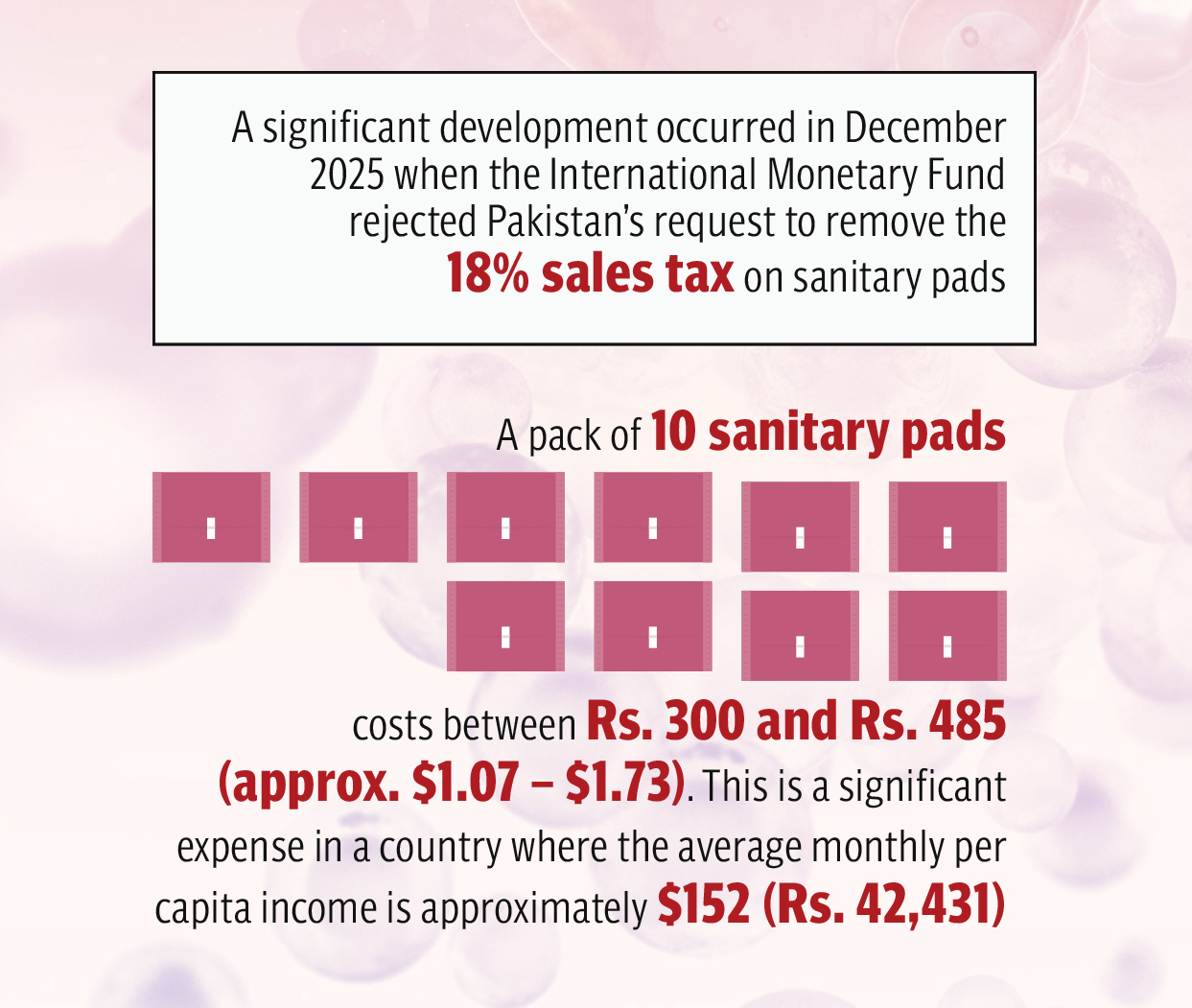
He commented, “The fact that the government approached the International Monetary Fund in December to ask whether it could remove the taxes shows that the matter was considered,” though he added that the need for such approval raises its own questions. The IMF’s response, he suggested, speaks volumes about the ‘progressive’ posture of international financial institutions.
“Our key argument so far has been the ‘intelligible differentia’ test,” explained the lead counsel in the challenge to taxation of menstrual products, sharing the principle that any distinction between groups must be logical, understandable, and rationally connected to the objective of the law. Taxing menstrual products as luxuries, the petition argues, fails that test.
It must be remembered that Pakistan’s tax system relies heavily on consumption taxes, which disproportionately burden lower-income households while leaving wealth, land, and high incomes relatively undertaxed. Within this framework, taxing menstrual products compounds inequality by attaching a recurring cost to a biological function that affects women and gendered bodies almost exclusively. The burden indeed intensifies during floods, inflation spikes, and displacement, moments when disposable income shrinks, and prices rise.
If successful, the petition would compel the state to acknowledge menstruation as a routine health reality rather than a consumer preference. For Zoya Rehman, this symbolic shift will “push the state to admit, in its own terms, that periods are not optional.”
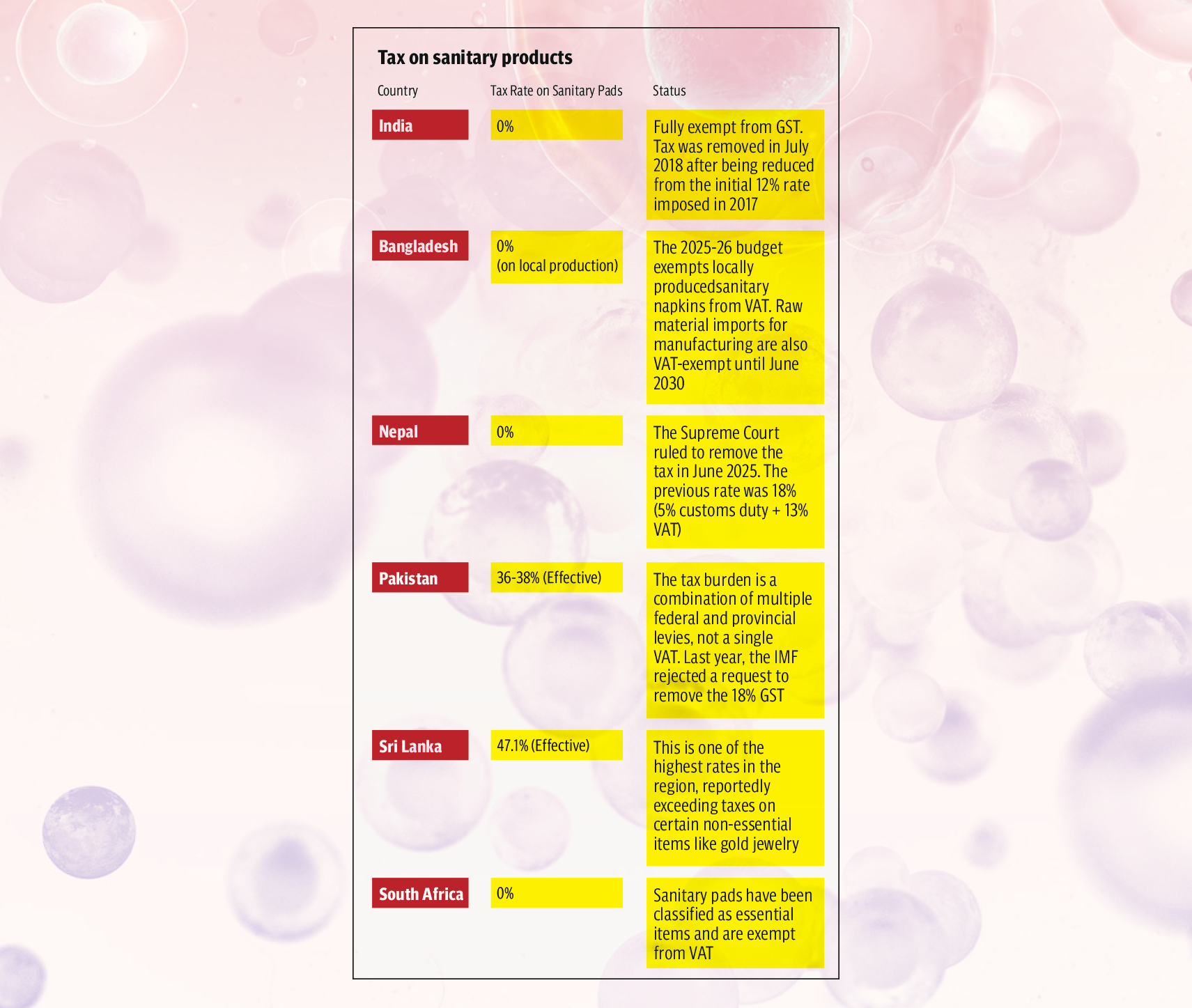
Other countries have already moved in this direction. India removed its goods and services tax on sanitary pads in 2018 after sustained public pressure. Rwanda and Kenya have similarly exempted menstrual products from value-added tax, signalling a fiscal recognition of necessity.
“For Pakistan,” Rehman observed, “the question is not simply whether to remove a tax, but how to do so in a way that lowers end prices and integrates menstrual health into broader public provisioning.” Without examining raw material duties, manufacturing costs, and retail margins, tax reform risks becoming a headline victory with little impact on the ground.
For Rehman, the legal route is neither a panacea nor irrelevant. “Law has the potential to restrain harm and create enforceable obligations,” she said, emphasizing, “But it only moves when institutions are compelled to move. The legal route is one among many. It matters when paired with collective organising, public pressure, and material provisioning.”
Nonetheless, Rehman noted, “The petition disrupts a long-standing silence.” She added, “It names taxation as discriminatory and frames menstrual products as essential. That creates an entry point for broader conversations about fiscal justice and redistribution.”
At the most immediate level, it requires ensuring that any removal of taxes genuinely reduces retail prices. More fundamentally, menstrual health depends on infrastructure: clean water, private toilets, safe disposal systems, and reliable electricity. In schools, this demands sustained investment in facilities, particularly at the secondary level, where dropout rates spike. In disaster response, it entails standardizing menstrual supplies in relief kits rather than treating them as optional add-ons.
Rehman argued that menstrual products and related infrastructure should be treated as ordinary public provisioning. “Periods are predictable. The cost is recurring. There is no reason this cannot be planned for,” she said, as such an approach would move menstruation out of emergency response and into routine governance.
It would also require rethinking Pakistan’s tax structure more broadly. A system heavily dependent on consumption taxes inevitably punishes those with the least capacity to pay. “Accounting for women and marginalised groups requires disaggregated data, impact assessments, and a willingness to treat essentials as essentials,” Rehman added.
Similarly, for Mahnoor Omer, legal reform has the potential to create a ripple effect when accompanied by cultural and political shifts. “Female leaders must be role models and start speaking about it,” she said, noting that many avoid even using the word “period” publicly.
She proposed the adoption of concrete measures, including menstrual leave policies that acknowledge the physical toll without stigma, work-from-home flexibility where possible, and efforts in religious education to debunk myths surrounding menstruation.
Addressing menstruation seriously would mark a departure from logics embedded in Pakistan’s patriarchal and economic structures. It would require authorities to confront the consequences of fiscal choices at the intersection of gender, class, and climate vulnerabilities.