5 Palestinians killed, 5 injured by Israeli fire in Gaza
Updated 2 hours ago

The lawsuit, filed in US District Court for the District of Columbia, seeks $250 million in damages
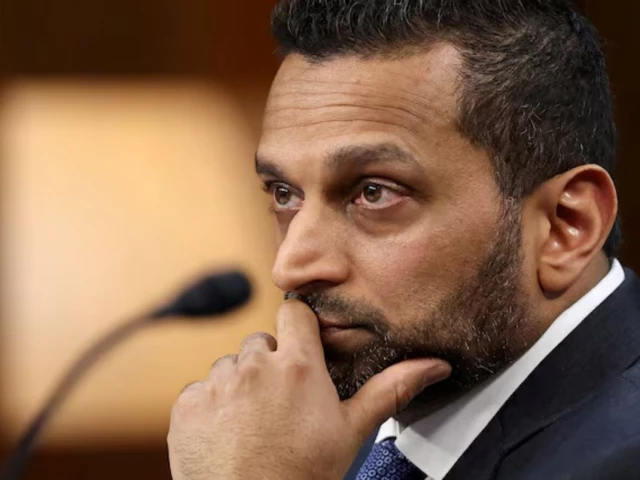
Federal Bureau of Investigation (FBI) Director Kash Patel filed a defamation lawsuit against The Atlantic and its reporter, Sarah Fitzpatrick, following the publication of an article on Friday alleging the director had a drinking problem that could pose a threat to national security.
The magazine's story, initially titled “Kash Patel's Erratic Behavior Could Cost Him His Job", cited more than two dozen anonymous sources expressing concern at Patel’s “conspicuous inebriation and unexplained absences” that “alarmed officials at the FBI and the Department of Justice”.
The article, which the Atlantic subsequently titled “The FBI Director Is MIA” in its online version, reported that during Patel’s tenure, the FBI had to reschedule early meetings “as a result of his alcohol-fuelled nights” and that Patel “is often away or unreachable, delaying time-sensitive decisions needed to advance investigations”.
In The Atlantic's story, the White House, the Department of Justice and Patel denied the allegations. The article included a statement from the FBI attributed to Patel, “Print it, all false, I’ll see you in court—bring your chequebook.”
Read More: Kash Patel removed as acting ATF Director
“The Atlantic's story is a lie,” Patel said in an interview with Reuters. “They were given the truth before they published, and they chose to print falsehoods anyway.”
“We stand by our reporting on Kash Patel,” Atlantic Editor-in-Chief Jeffrey Goldberg said in a statement to CNBC after Patel threatened to sue the publication on Sunday in an appearance on Fox News.
Reuters could not independently establish the accuracy of The Atlantic’s article or why the publication changed the title. The Atlantic and Fitzpatrick could not be immediately reached for comment.
Patel's complaint says that while The Atlantic is free to criticise the leadership of the FBI, “they crossed the legal line” by publishing an article "replete with false and obviously fabricated allegations designed to destroy Director Patel’s reputation and drive him from office”.
The lawsuit, filed in the US District Court for the District of Columbia, seeks $250 million in damages.
The lawsuit alleges that The Atlantic ignored the FBI’s denials and failed to respond to a Friday letter from Patel’s lawyer, Jesse Binnall, to senior editors and The Atlantic’s legal department, requesting more time to refute the 19 allegations the reporter told the FBI’s press office she would publish.
The letter, which Reuters has seen, was sent shortly before 4pm on Friday and the story was published at 6:20pm, according to the complaint. Reuters could not establish how or if The Atlantic responded to Binnall's request.
The lawsuit alleges the publication acted with “actual malice”, a legal standard that requires public figures such as Patel to show the publisher knowingly printed false information or recklessly ignored doubts about its accuracy.
“Defendants' conscious decision to ignore the detailed, specific, and substantive refutations in the Pre-Publication Letter, and their refusal to give a reasonable amount of time for the FBI and Director Patel to respond, is among the strongest possible evidence of actual malice,” the lawsuit says.
The lawsuit is the latest instance of a Trump administration figure suing a media outlet.
A judge dismissed Trump’s lawsuit against CNN for describing election denialism as “the big lie". Judges also dismissed Trump's lawsuits against the New York Times and the Wall Street Journal. Trump has refiled his lawsuit against the New York Times and may refile against the Wall Street Journal.
He has also secured some settlements. ABC News agreed to settle a case for $15 million plus $1m in legal fees. Paramount Global agreed to pay $16m for what the Trump administration called “deceptive editing” of a CBS News interview with his opponent in the 2024 election, Kamala Harris.









This material may not be published, broadcast, rewritten, redistributed or derived from. Unless otherwise stated, all content is copyrighted © 2026 The Express Tribune.












COMMENTS
Comments are moderated and generally will be posted if they are on-topic and not abusive.
For more information, please see our Comments FAQ