NAPA Repertory Festival 2026 opens with vibrant celebration
Updated 20 hours ago

Rolls out new 'Artist Profile Protection' feature to give musicians greater control over their identity
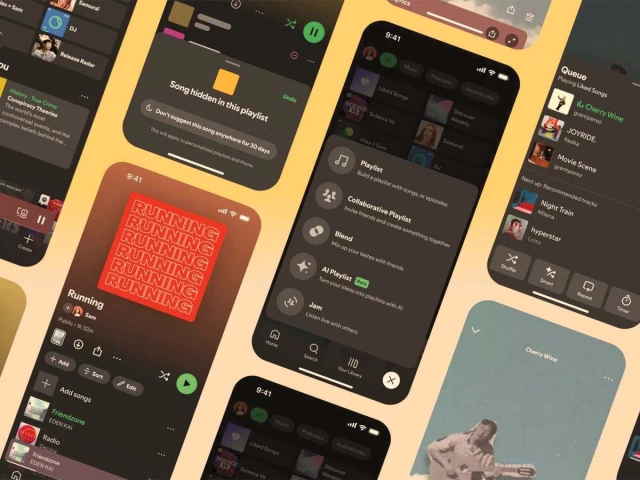
Spotify has announced a new feature aimed at giving musicians greater control over their identity on the platform, as it seeks to address a long-standing issue of misattributed releases.
The feature, called Artist Profile Protection, is currently being tested in a limited beta phase through Spotify for Artists. It allows musicians to review and approve releases before they appear on their official profiles a move the company says is a first among major streaming services.
The development comes amid a rise in incorrect or misleading music uploads, driven in part by the growing volume of AI-generated content, duplicate artist names, and metadata errors. In some cases, tracks have been wrongly linked to artists, affecting their catalogues, streaming statistics and how listeners discover their work.
Under the new system, artists who opt in will receive notifications when a release is submitted under their name. They can then choose to approve or reject it before it goes live. Only approved releases will be published on their profile and count towards their streaming data and recommendations.
If a release is declined or no action is taken it will not appear under the artist's name.
Spotify says the feature is particularly useful for artists with common names or those who have previously experienced repeated misattribution. It also introduces an "artist key", a unique identifier that can be shared with trusted distributors to automatically approve legitimate releases.
The company described artist identity protection as a "top priority", adding that feedback from the beta phase will be used to refine the tool before a wider rollout.
Artists not included in the trial, or those who choose not to enable the feature, will continue to use the platform as before. Existing mechanisms to report incorrect releases will also remain in place.
As of December 2022, Spotify is available in most of Europe, as well as Africa, the Americas, Asia, and Oceania, with availability in a total of 184 markets. Its users and subscribers are based largely in the US and Europe, jointly accounting for around 53% of users and 67% of revenue. It has no presence in mainland China, where the market is dominated by QQ Music. The service is available on most devices, including Windows, macOS, and Linux computers, iOS and Android smartphones and tablets, Smart Home devices such as the Amazon Echo and Google Nest lines of products, and digital media players like Roku. As of December 2023, Spotify was the 47th most-visited website in the world with 24.78% of its traffic coming from the United States followed by Brazil with 6.51% according to data provided by Semrush. As of 2022, Spotify is the current sponsor of Spanish football club FC Barcelona, with music artists like Drake, Travis Scott, and Ed Sheeran collaborating with the club by changing their shirts into their artist logo, sometimes used for album promotions.
Unlike physical or download sales, which pay artists a fixed price per song or album sold, Spotify pays royalties based on the number of artist streams as a proportion of total songs streamed. It distributes approximately 70% of its total revenue to rights holders (often record labels), who then pay artists based on individual agreements. While certain musicians laud the service for offering a lawful option to combat piracy and for remunerating artists each time their music is played, others have voiced objections to Spotify's royalty structure and its effect on record sales.
Spotify was founded in 2006 in Stockholm, Sweden, by Daniel Ek, former chief technology officer of Stardoll, and Martin Lorentzon, co-founder of Tradedoubler. Ek first had the idea for Spotify around 2002 when peer-to-peer music service Napster shut down and another illegal site Kazaa became popular. Ek said he "realized that you can never legislate away from piracy. Laws can definitely help, but it doesn't take away the problem. The only way to solve the problem was to create a service that was better than piracy and at the same time compensates the music industry – that gave us Spotify."















This material may not be published, broadcast, rewritten, redistributed or derived from. Unless otherwise stated, all content is copyrighted © 2026 The Express Tribune.






COMMENTS
Comments are moderated and generally will be posted if they are on-topic and not abusive.
For more information, please see our Comments FAQ