Rs107b price differential claims remain unpaid
Updated 9 hours ago

Fare hikes, holiday rush help bag Rs480m in three days; annual target set at Rs100b
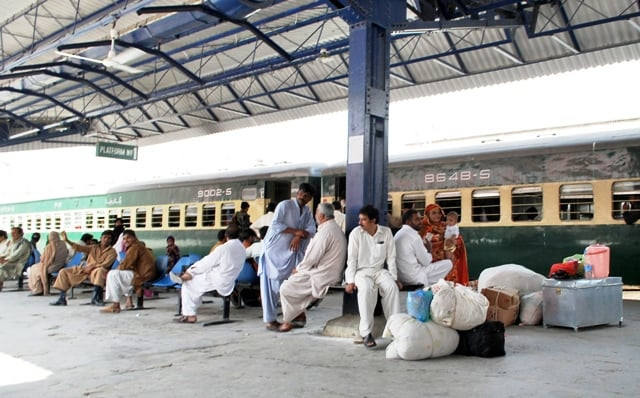
Pakistan Railways recorded a historic surge in passenger revenue during the three days of Eid, reflecting both increased travel demand and the impact of recent fare adjustments.
Official figures show that the department earned Rs110 million on the first day of Eid, followed by Rs170 million on the second day, and over Rs200 million on the third day, marking one of the highest short-term revenue spikes in recent years.
The momentum extended beyond the festive period, with Pakistan Railways generating more than Rs1 billion in passenger revenue over the past week. This performance comes at a time when the department has been under pressure to improve its financial health while managing rising operational costs.
The increase in revenue is partly attributed to the fare hike implemented in March, when ticket prices were raised in response to surging diesel costs. Fuel prices escalated sharply due to the ongoing geopolitical tensions involving Iran, Israel, and the United States, forcing authorities to pass on some of the burden to passengers. The fare revision, coupled with seasonal travel during Eid, significantly boosted earnings.
Federal Minister for Railways Muhammad Hanif Abbasi described the revenue growth as a result of improved policies and administrative measures. He emphasised that the government is focusing on enhancing passenger services and operational efficiency, while directing officials to further accelerate improvements in facilities.
Pakistan Railways has set an ambitious revenue target for FY26, aiming to surpass Rs100 billion in total earnings, compared to estimated revenue of Rs93 billion in FY25. Passenger trains remain a key contributor, although freight operations are also being targeted for expansion to stabilise long-term revenues.
However, the department continues to face structural challenges, particularly due to its ageing infrastructure. Much of the railway network still relies on colonial-era tracks and signalling systems, which have contributed to frequent delays and occasional accidents in recent years. Incidents linked to track failures and outdated equipment have raised concerns about passenger safety and operational reliability.
To address these issues, the corporation has prioritised the upgrading of major rail corridors. The Karachi-to-Rohri track is among the key projects, with plans to complete its upgrading within the next three years.
This initiative is expected to improve travel standards, enhance safety, and significantly increase train speeds, reducing travel time on one of the country's busiest routes.
Officials believe that sustained investment in infrastructure, combined with better management and pricing strategies, will be crucial for transforming Pakistan Railways into a more efficient and financially viable transport system.












This material may not be published, broadcast, rewritten, redistributed or derived from. Unless otherwise stated, all content is copyrighted © 2026 The Express Tribune.








COMMENTS
Comments are moderated and generally will be posted if they are on-topic and not abusive.
For more information, please see our Comments FAQ