Pakistan shines with two wins at Asia Pacific Property Awards
Updated 1 hour ago

As global aid tightens, Pakistan must boost domestic financing, local production of medicines
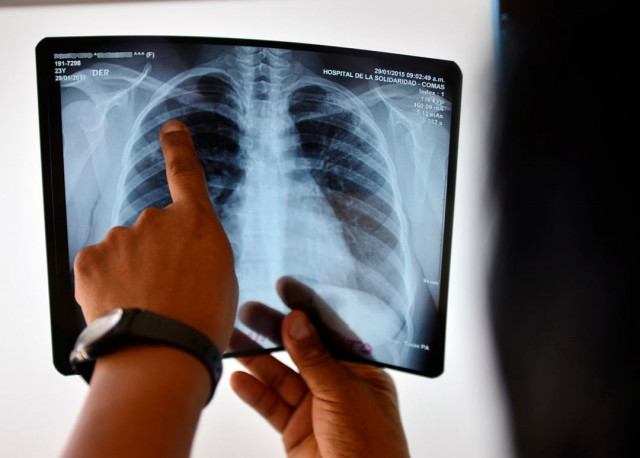
Every year on World Tuberculosis (TB) Day, the world reaffirms its commitment to eliminating tuberculosis, a disease that has plagued people for centuries. For Pakistan, TB is written in our history books. "As a child I remember the opening scene from the movie Jinnah, showing the Quaid, portrayed by Christopher Lee, battling TB. The ambulance carrying him from the Karachi airport, breaking down on the road, delaying his access to medical care. More than 70 years later the access to timely TB care still remains limited."
Significant progress has been made, especially in the last 20 years in increasing TB detection, strengthening diagnostic networks, and achieving high treatment success rates. However, donor funding continues to be a major underlier of Pakistan's TB programme.
According to local estimates, The Global Fund financed about 80% of the TB programme between 2016 and 2023, with only 20% sourced from domestic government spending.
The global context that enabled the fund inflows into the country and consequent programmatic achievements is rapidly changing. Across the world, there has been a significant shift in donor priorities that is reshaping the landscape of global health financing.
Geopolitical conflicts, economic pressures and competing domestic priorities in donor countries are leading to a contraction in development assistance.
These pressures are already affecting global health programmes. In early 2025 the United States Agency for International Development (USAID) terminated more than 5,300 grants and contracts worth approximately $27 billion, disrupting health programmes across several regions. It may be noted that the United States is also the largest contributor to the Global Fund and accounts for more than half of international financing for tuberculosis control globally. In its most recent cycle of 2026-28, the Global Fund raised roughly $12.6 billion, falling significantly short of the fund-raising target. It signals the growing unpredictability of long-term donor assistance for high TB burden countries such as Pakistan.
Many low- and middle-income countries, such as the Philippines, Vietnam and India have now transitioned to supporting 70 to 80 per cent of their national TB programmes financing through domestic resource mobilisation. Pakistan remains far behind this trajectory.
To reduce verticalisation and to ensure greater sustainability, integration of TB services into national health programmes remain key strategy. As an example, a TB care package can be introduced under the Sehat Sahulat Programme, the flagship social health insurance programme in Pakistan, as in the Philippines, where the national health insurance programme, PhilHealth, reimburses facilities for TB diagnosis and treatment, catalysing the shift to domestic financing.
Another key step towards greater national ownership and financing is reducing reliance on imported pharmaceutical products. At this point, where geopolitical instability has rattled the global order, supply chains are at an increasing risk of disruption and prices of medical commodities are expected to rise sharply. Particularly susceptible to these shocks are nations that rely significantly on imported medical technology, which is the case of TB in Pakistan.
Currently, TB medicines and diagnostics are procured through the Global Drug Facility, accounting for an estimated 60% of the donor financing for TB in Pakistan. Consequently, a significant proportion of the funds are essentially retained at source, not moving through the domestic channels. Strengthening the country's capacity to manufacture high quality TB drugs, that meet domestic and international regulatory standards, could significantly lower the cost of treatment, pave way for greater national control over the programme resources and also potentially position Pakistan to generate foreign revenue through exports.
If Pakistan is to sustain the gains made against tuberculosis, the next phase of the fight must be built at home.





This material may not be published, broadcast, rewritten, redistributed or derived from. Unless otherwise stated, all content is copyrighted © 2026 The Express Tribune.







COMMENTS
Comments are moderated and generally will be posted if they are on-topic and not abusive.
For more information, please see our Comments FAQ