Domestic dispute likely cause of Louisiana shooting that left 8 children dead
Updated 2 hours ago

China denounces ‘unilateral’ move as EU and key partners warn decision could deepen global economic uncertainty
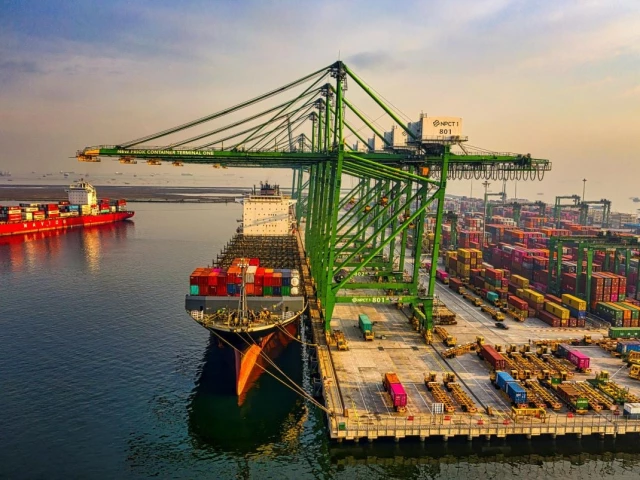
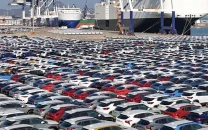
The United States’ decision to launch sweeping trade investigations against 16 major trading partners has triggered sharp criticism from China and drawn cautious responses from the European Union and several other economies, raising fears of renewed global trade tensions at a time when the international economy is already facing mounting uncertainty.
The investigations, announced on Wednesday by the Office of the US Trade Representative (USTR), will be conducted under Section 301 of the US Trade Act of 1974. They target a broad group of trading partners, including the European Union, China, Japan, Pakistan, India, Mexico, South Korea, Singapore, Switzerland, Taiwan and Vietnam.
Washington says the probes are intended to determine whether certain policies or practices in these economies are “unreasonable or discriminatory” and whether they burden or restrict US commerce.
However, Beijing swiftly condemned the move, warning that unilateral trade measures risk undermining the global economic order and escalating trade disputes.
China’s Foreign Ministry said that Beijing firmly opposes unilateral tariff measures, stressing that tariff and trade wars benefit no one. Foreign Ministry spokesperson Guo Jiakun told a regular press briefing that economic and trade differences between countries should be resolved through consultation on the basis of equality, mutual respect and mutual benefit.
Guo also rejected Washington’s claim that China suffers from “overcapacity” in certain industrial sectors, saying the allegation is unfounded and should not be used as a pretext for political manipulation. “The so-called issue of ‘China’s overcapacity’ does not really exist,” Guo said. “It should not be used as an excuse for unilateral trade actions.”
China’s Ministry of Commerce echoed that position on Friday, calling the investigation a typical unilateralist move that could severely disrupt international trade rules and the global economic order.
A ministry spokesperson said that a panel of the World Trade Organisation (WTO) had previously ruled that tariffs imposed through Section 301 investigations violate WTO rules. The spokesperson added that production and consumption have become deeply integrated across borders, meaning that claims of overcapacity must be viewed within the context of global supply chains.
“There would be no cross-border trade if production in each country only met domestic market demand,” the spokesperson said, urging the US not to define capacity exceeding domestic demand as “overcapacity”.
China also warned that it reserves the right to take necessary measures to safeguard its legitimate rights and interests.
Analysts say the new probe may represent an attempt by Washington to revive tariff policies after previous measures were blocked by the US courts.
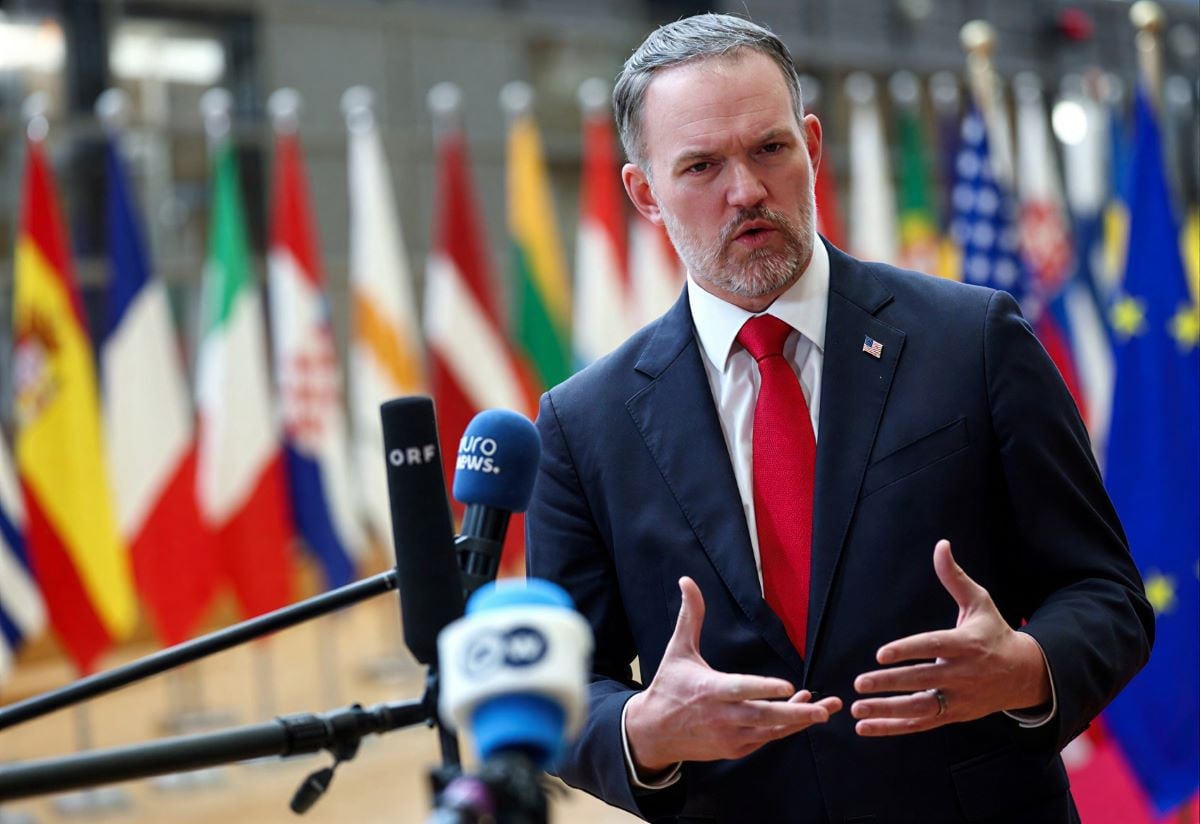
US Trade Representative Jamieson Greer speaks to the media, on the day he attends a working lunch with EU ministers responsible for trade, in Brussels, Belgium, November 24, 2025.PHOTO: REUTERS
Last month, the US Supreme Court ruled that sweeping tariffs imposed earlier under emergency authorities were illegal. Those tariffs had been introduced by the Trump administration under a law intended for national emergencies.
Following the ruling, the administration imposed a temporary 10% tariff on imports from all trading partners under Section 122 of the Trade Act of 1974. That measure, however, expires after 150 days on July 24.
US officials have indicated they hope the Section 301 investigations will be completed before that deadline. According to media reports, US Trade Representative Jamieson Greer has said the goal is to wrap up the investigations before the temporary tariff measure expires.
Also Read: Trump imposes 10% global tariffs for 150 days after Supreme Court blocks earlier duties
Some observers believe the new investigations could pave the way for additional tariffs if Washington concludes that foreign trade practices are harming American industries.
Experts argue that the move reflects Washington’s continued reliance on tariffs as an economic policy tool. He Weiwen, a senior fellow at the Centre for China and Globalisation, said the investigation could serve as a replacement for earlier tariff policies that were invalidated by the US Supreme Court. “The announcement suggests the administration still sees tariffs as an important instrument in dealing with trade partners,” he said.
Analysts also questioned the economic rationale behind the investigation, arguing that claims of overcapacity ignore the realities of global industrial specialisation.
Gao Lingyun, a research fellow at the Chinese Academy of Social Sciences, said the global division of labour naturally leads different countries to emphasise different aspects of production and consumption. “On the one hand, the US benefits from affordable, high-quality imported goods,” Gao said. “On the other hand, it complains about so-called overcapacity. This is inherently contradictory.”
Gao added that attempts to force companies to relocate manufacturing to the US through administrative pressure would likely raise production costs and ultimately harm American consumers.
The European Union has also expressed concern about the US investigation. The European Commission said it would carefully examine the details of the probe and respond firmly if Washington takes actions that violate existing trade agreements.
European Commission Deputy Chief Spokesperson Olof Gill said Brussels would ensure that EU interests are fully protected. “The Commission will respond firmly and proportionately to any breach of the joint statement commitments,” Gill said during a press briefing.
The remarks refer to a trade agreement reached between the EU and the US last year, under which the EU agreed to eliminate tariffs on US industrial products and expand tariff-rate quotas for American agricultural goods. In return, Washington committed to setting a ceiling on tariffs applied to most EU exports.
Read More: US tariff rate to hit 15% or more for some nations: trade official
European officials have rejected US allegations that the bloc contributes to global market overcapacity.
Other US trading partners are also closely monitoring the investigation.
Japan’s government said it is reviewing the details of the probe while continuing to implement its existing trade agreement with Washington.
South Korea has indicated it will consult with the US to ensure that its trade benefits under the bilateral agreement are not undermined.
Thailand has formed a working group to prepare for the investigation and is gathering relevant documentation ahead of potential discussions with US authorities.
The responses highlight growing international concern that the investigations could lead to a new wave of unilateral tariffs.
Zhou Mi, a senior researcher at the Chinese Academy of International Trade and Economic Cooperation, said the move has heightened vigilance among US trading partners. “The reactions from multiple economies show widespread concern about the possibility that the US may escalate unilateral tariff measures,” Zhou said.
The timing of the investigation has also raised concerns because it comes during a period of heightened geopolitical tension.
Global trade and supply chains are already facing pressure due to instability in the Middle East, including disruptions to shipping through the Strait of Hormuz and rising oil prices.
Analysts say that introducing new trade frictions at such a moment could further destabilise the global economic environment. “Restarting the Section 301 investigation at this time adds another layer of uncertainty to the global economy,” Zhou said.
He warned that if the probe results in new tariffs, it could disrupt international trade flows and weaken global economic recovery.
Because supply chains are deeply interconnected, the impact would not be limited to targeted economies, he said. “Businesses and consumers around the world — including those in the US — could feel the consequences,” Zhou added.
The outcome of the investigations remains uncertain, but the move has already reignited debate about the future of global trade relations.
If Washington ultimately imposes new tariffs based on the probe’s findings, it could spark retaliatory measures from affected economies and intensify trade tensions among major global players.
For now, many countries are urging dialogue and consultation rather than unilateral actions.
China has reiterated that resolving economic differences through cooperation remains the only sustainable path forward. “China urges the US to correct its erroneous practices and return to the right track of dialogue and consultation,” the Commerce Ministry spokesperson said.
As the investigations proceed, the global trading system may face renewed strain — with policymakers, businesses and investors closely watching how the dispute unfolds.







This material may not be published, broadcast, rewritten, redistributed or derived from. Unless otherwise stated, all content is copyrighted © 2026 The Express Tribune.







COMMENTS
Comments are moderated and generally will be posted if they are on-topic and not abusive.
For more information, please see our Comments FAQ