Pakistan, Ethiopia agree to expand engagement
Updated 7 hours ago

Authority shifted from cabinet to revenue secretary; policy board set to be abolished
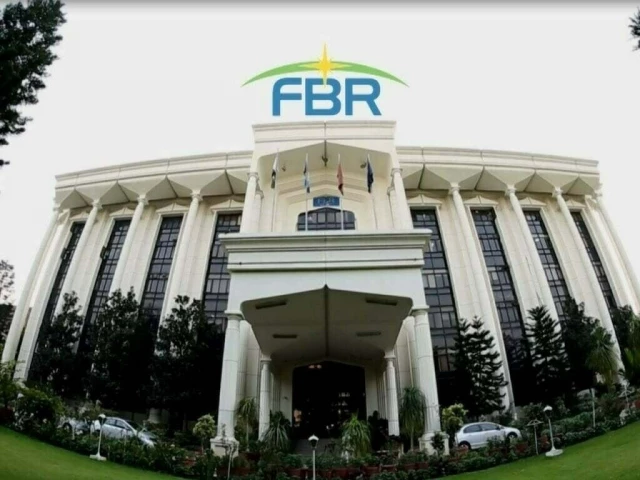
The government has moved a bill in Parliament to indemnify illegal appointments of members of the Federal Board of Revenue (FBR) and to legalise payments of rewards and incentives made without the approval of the finance minister-led policy board.
For the time being, the federal cabinet has delegated its authority to the secretary of the Revenue Division – a grade 22 officer – to make future appointments of members in grades 21 or 22, until Parliament approves the proposed amendments. However, delegating collective authority to a grade 22 officer is against the spirit of the Supreme Court's judgment in the Mustafa Impex case.
In addition to the cabinet decision, the government has proposed legal amendments to permanently vest the authority of appointing FBR members in a grade 22 secretary Revenue Division, withdrawing it from the federal cabinet, according to amendments proposed to the FBR Act, 2007.
It has also proposed an amendment to give legal cover to all actions, decisions and functions performed by illegally appointed FBR members, at least since 2016, when the Supreme Court made it binding that the federal government's authority can only be exercised by the federal cabinet.
These amendments were introduced last week in the Senate, which forwarded the bill to the Senate Standing Committee on Finance for further deliberations. The standing committee is expected to take up the bill this week for a decision.
The existing law states: "There is established a Board to be called the FBR, which shall consist of not less than seven members to be appointed by the Federal Government."
The statement of objects and reasons presented to the Senate underlined that, under the law, appointments of FBR members had to be made by the federal government, but "in practice, such appointments were being made by the chairman FBR, Secretary Revenue Division."
This has rendered all appointments, at least since 2016, illegal, including those of incumbent FBR members. The cabinet's decision to delegate authority addresses the issue to the extent of future appointments, but past appointments still remain illegal.
To cover this illegality, the government has proposed an indemnity.
"All appointments of members made before the commencement of the FBR Amendment Act 2026 shall be deemed to have always been validly made under sub-section (1) of section 3," according to the proposal.
The powers exercised and functions performed by the board, chairman, or members appointed before the commencement of the FBR Amendment Act 2026, under the pursuance of the provisions of this Act, or the rules made thereunder, or any other applicable law or the rules made thereunder, shall be deemed to have always been validly exercised and performed, it added.
The proposal further states that any actions or proceedings taken, orders passed, appointments, agreements, instruments, rules or regulations made, standards or criteria prescribed, including grant of incentives and rewards to employees and rewards to persons assisting in preventing evasion of duties and taxes, notifications, processes or communications issued before the commencement of the FBR Amendment Act 2026 shall be deemed to have always been validly done, taken, passed, made, prescribed, granted and issued, and the provisions of the Act shall be deemed always to have had effect accordingly.
The Supreme Court, in the Mustafa Impex case, authoritatively interpreted the term federal government to mean the federal cabinet. However, the cabinet is now delegating its authority to a civil servant who is not equal to the collective wisdom of the federal government.
The government has also proposed abolishing the FBR policy board, which includes representation from the cabinet and Parliament. It is lowering the decision-making level to a tax policy office headed by a grade 21 officer.
Another amendment seeks to give legal cover to the illegal rewards and incentives granted in the past without approval of the FBR's policy board since 2011. Under existing law, only the policy board has the authority to grant incentives and rewards to FBR employees.
The government has proposed that the policy board's authority be vested in the FBR and be deemed to have been so vested since 2011.
"In section 5, in sub-section (1), in clause (k), the words and commas 'board, shall with the approval of the policy board, shall be omitted and shall be deemed to always have been so omitted'," according to the proposal. It has also been proposed to abolish the policy board, established under law to provide policy guidelines in framing fiscal policy and achieving goals and targets.
The policy board is headed by the finance minister and includes the ministers for commerce, industries, textile industries and privatisation, the chairmen of the Senate and National Assembly standing committees on finance and revenue, and one member each from the Senate and the National Assembly. These matters are now proposed to be handled by the bureaucracy-dominated tax policy office, which has no representation from the cabinet or Parliament.













This material may not be published, broadcast, rewritten, redistributed or derived from. Unless otherwise stated, all content is copyrighted © 2026 The Express Tribune.







COMMENTS
Comments are moderated and generally will be posted if they are on-topic and not abusive.
For more information, please see our Comments FAQ