Azerbaijan ready to supply LNG to Pakistan
Updated 3 hours ago

With the province relying mostly on the Octroi Zila Tax, local councils have failed to meet revenue targets, goals
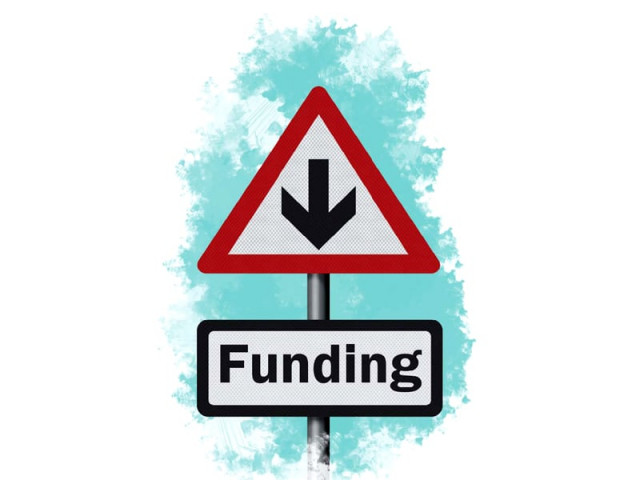
Despite the passage of three years, most local councils in Sindh remain financially dependent on funds released by the provincial government, raising concerns over weak revenue generation at the local level.
The Auditor General of Pakistan has flagged this dependence, noting that reliance on provincial funding discourages local councils from expanding their own revenue sources. Local government representatives, however, argue that all councils do not have equal access to income-generating avenues.
Independent observers are of the opinion that the Sindh government should adopt a differentiated formula for fund distribution by factoring in the income capacity and needs of various local government institutions.
The primary source of income for local councils is the Octroi Zila Tax (OZT) fund disbursed by the Sindh government. In most cases, OZT funds are largely consumed by employee salaries and benefits, leaving councils dependent on additional provincial grants to meet other expenses.
In its report for the financial year 2024-25 on the Sindh Local Government Department, the Auditor General stated that excessive dependence on government funding has led to a decline in local councils' revenues, as they consistently fail to meet their assigned targets. The report noted revenue growth during 2021-22 and 2022-23, but a decline in 2023-24, largely due to increased reliance on provincial funds.
The report added that this dependence has also affected development work. Compared to 2022-23, development spending by local councils rose by only two per cent in 2023-24, despite development projects being a core responsibility of local governments.
The Karachi Metropolitan Corporation (KMC) also failed to meet its revenue targets, resulting in a steady decline in its own income. In 2021-22, KMC set a revenue target of over Rs7 billion but collected 74 per cent less. In the following year, it set a target of Rs4 billion but still fell short by 68 per cent. In 2024, the target was further reduced to Rs3.5 billion, which also remained unmet.
As a result, KMC's development expenditure declined. Between 2021 and 2023, around 36 per cent of total spending was allocated to development projects. In 2024, this share fell to 23 per cent.
Meanwhile, the distribution of OZT funds to local councils continues under an interim arrangement. Under the Sindh Local Government Act 2013, the Provincial Finance Commission is responsible for determining the OZT share of local councils. However, the Commission has yet to be constituted, leaving the distribution of funds to be decided by the chief minister.
Vice Chairman Saddar Town Abdul Rehman Motiwala noted that councils with adequate revenue potential should not rely on the government, but added that income levels vary widely across Karachi's towns. "Only three or four towns — including Saddar, Chanesar and Jinnah — have strong revenue bases, mainly due to property and advertisement taxes," said Motiwala.
Official figures show that the provincial government releases Rs168 billion annually to local councils under OZT, disbursed on a monthly basis. Sindh has 1,618 union councils and union committees, 143 town and tehsil municipal committees, 36 municipal corporations and one metropolitan corporation — Karachi. The city itself comprises 25 towns and 246 union committees.
Under the Sindh Local Governments Act 2013, KMC is authorised to levy more than a dozen taxes, including fire, conservancy, drainage and entertainment taxes, market fees and toll taxes. Town administrations can impose over two dozen taxes, including property, professional and advertisement taxes, conservancy rates and fees on entertainment events. Union councils and committees may also levy multiple local taxes within their jurisdictions, subject to council approval.
Senior journalist and analyst Munir Saqi opined that local councils must work to enhance their own revenues but stressed that the Sindh government should immediately establish the Provincial Finance Commission. "The Commission should determine OZT shares based on the income capacity and needs of individual towns and union councils, rather than distributing funds equally despite stark differences," urged Saqi.











This material may not be published, broadcast, rewritten, redistributed or derived from. Unless otherwise stated, all content is copyrighted © 2026 The Express Tribune.







COMMENTS
Comments are moderated and generally will be posted if they are on-topic and not abusive.
For more information, please see our Comments FAQ