Tola budget proposes rupee at 250 per dollar
Updated 10 hours ago

Challenge not merely about tax rates, but about design, trust & governance

For decades, Pakistan's economic narrative has been trapped in a cycle of fiscal pressure, lender influence, and a myopic focus on meeting revenue targets rather than expanding the tax base. Unfortunately, these arguments have often prevented us from addressing the core issues that, if resolved, could help generate more sustainable revenue in the long term.
A recent example is the swiftness of the tax administration in issuing recovery notices and emphasising the consequences of non-payment following the short order on the fate of super taxes, even though the detailed order remains pending. While this may generate additional revenue for the government in the short term, it simultaneously creates significant working capital challenges for those required to pay. Thus, the tension between revenue maximisation and economic growth continues to persist, reflecting the broader dilemma of Pakistan's tax policy: should revenue collection be prioritised at the cost of economic activity, or should the focus shift towards strengthening the tax base for long-term sustainability? As a tax practitioner with over a decade of experience and a writer on tax policy, I believe it is timely to discuss these issues before the budget is announced. Doing so allows us to identify areas for improvement, which may be less useful once the budget has been implemented and analysis is only retrospective. This article, the first in a series, aims to constructively examine whether Pakistan's tax system is genuinely being reformed or merely patched.
Anatomy of Pakistan's tax system
Like other countries, Pakistan's taxation is divided into direct and indirect taxes. Direct taxes primarily include income tax, while indirect taxes cover sales tax, customs duties, and federal excise duties. Sales tax is further divided between federal and provincial jurisdictions, a longstanding source of inefficiency due to lack of harmonization. Although some progress has been made in aligning federal and provincial sales taxes, much more remains to be done to ensure a cohesive and predictable system.
Interestingly, income tax is also largely collected indirectly through advance taxes and withholding, creating imbalances and over-reliance on indirect taxation. Income tax collected through declarations and enforcement measures, especially from smaller taxpayers, remains limited, reflecting a narrow direct tax base.
Each year, Pakistan sets ambitious tax-to-GDP targets yet consistently falls short. For instance, in FY2024-25, the tax-to-GDP ratio was approximately 10.3-10.4%, while the FY2025-26 budget sets a modest target of around 11%. One key reason for this persistent shortfall is the failure to tax sectors that contribute significantly to GDP, leaving high-contribution areas with little or no tax incidence relative to their economic share. By comparison, countries in the region demonstrate that increasing tax-to-GDP ratios is possible when administration, enforcement, and policy design are aligned. Pakistan's struggle, therefore, is not a matter of willingness alone, but also of design, compliance, and trust.
Informality: the elephant in the room
The informal economy is growing despite years of documentation drives, amnesty schemes, and compliance measures. Heavy taxation on those already in the tax net, combined with minimal focus on cash-based sectors like retail, real estate, and agriculture, has made coercion ineffective. The salaried class often bears a disproportionate tax burden compared to many other sectors of the economy.
The informal sector encompasses businesses ranging from small retail and wholesale operations to unregistered agricultural producers and real estate traders. Despite repeated amnesty schemes and documentation drives, these sectors largely remain outside the tax net. This creates "blind spots" in revenue forecasting and makes policy planning challenging. The informal sector's growth also limits the effectiveness of digitalisation initiatives, as the majority of transactions remain cash-based and difficult to track.
Efforts to utilise available data on unregistered individuals have been limited. If coercion is ineffective, the alternative should be incentives for voluntary registration. The current situation gives an unfair advantage to those operating outside the tax net, while data gaps distort economic planning and create blind spots for policy-making. In other words, informality is not merely a compliance issue it is a systemic problem with profound implications for revenue, fairness, and economic growth.
The 'punish the visible' bias
In Pakistan, most people prefer to remain outside the documented economy, even at the cost of additional withholding taxes or other indirect levies. Once brought into the system, taxpayers face rigorous documentation, higher compliance burdens, and acting as collection agents on behalf of FBR. This creates the so-called "punish the visible bias" where documented sectors are easier to tax, not necessarily richer. For example, a small retailer who registers for sales tax may find themselves liable for withholding taxes, required to maintain extensive documentation, and subject to audits. Meanwhile, a similar unregistered retailer operating entirely in cash faces little oversight.
Formalisation is often treated as a liability rather than a privilege. The system also unintentionally rewards opacity, as economic actors who remain less visible or transparent often face lower effective taxation than those who operate openly. This dynamic reinforces the perception that when the state cannot tax fairly, it governs through coercion, creating a cycle in which compliance becomes costly and avoidance economically rational.
FBR: between enforcement and trust deficit
While taxpayers often complain about FBR officers applying undue pressure, the issue is partly structural. Officers are bound by revenue targets, yet the methods used to achieve them could be improved. The tax administration should facilitate compliance, rather than intimidate. Surveys would likely show that many potential taxpayers are eager to register and pay taxes but face obstacles in registration, exemptions, or resolution of disputes. Even automatic processes, such as exemptions allowed by law, often take weeks to months.
Digital systems like Iris and online filing portals have improved accessibility, but many processes, including tax registration, issuance of exemptions, and resolution of refund claims still take longer than they should. Taxpayers who intend to comply face delays and inconsistent responses, while those with informal operations remain largely untouched. The perception that FBR is adversarial rather than facilitative persists, discouraging voluntary registration and formalisation.
Recent digitisation initiatives are commendable, but institutional reform is urgently needed. Taxpayers should feel confident visiting FBR offices or interacting digitally without fear of delay, harassment, or arbitrary enforcement. A trusted, accessible tax administration could reduce disputes, litigation, and compliance costs significantly.
Another key reason Pakistan's tax system is at a crossroads is legislative instability and policy uncertainty. A classic example for legislative instability is the super tax matter. The two super taxes under Sections 4B and 4C of the Income Tax Ordinance, introduced in 2015 and 2022 respectively, were only recently clarified by the Federal Constitutional Court. Taxpayers are now expected to settle liabilities from past years, creating cash-flow challenges.
Frequent retrospective measures and abrupt policy changes discourage long-term planning by businesses, taxpayers, and investors. For instance, the tax regime for exporters was recently shifted from final tax to minimum tax without prior consultation, affecting competitiveness in global markets. Such uncertainty complicates compliance and discourages foreign and domestic investment, as businesses cannot reliably forecast future obligations. Growing constitutional tax disputes further increase litigation costs for both taxpayers and the administration.
These structural weaknesses highlight that Pakistan's tax challenge is not merely about rates or targets, but about design, trust, and governance. While enforcement, recovery, and targets are important, they alone cannot achieve sustainable revenue growth. The system's over-reliance on coercion, narrow base, opacity incentives, and policy instability has created a crossroads: either these structural issues are addressed, or the cycle of inefficiency and inequity will continue.
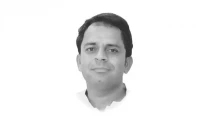
The writer is a tax expert and member of the Institute of Chartered Accountants of Pakistan






This material may not be published, broadcast, rewritten, redistributed or derived from. Unless otherwise stated, all content is copyrighted © 2026 The Express Tribune.











COMMENTS (1)
Comments are moderated and generally will be posted if they are on-topic and not abusive.
For more information, please see our Comments FAQ