'World watching with great expectation': EU council chief hopes for US-Iran deal in call with PM Shehbaz
Updated 1 hour ago

In the past, Torkham handled daily traffic of about 10,000 people, 500-700 cargo and passenger vehicles
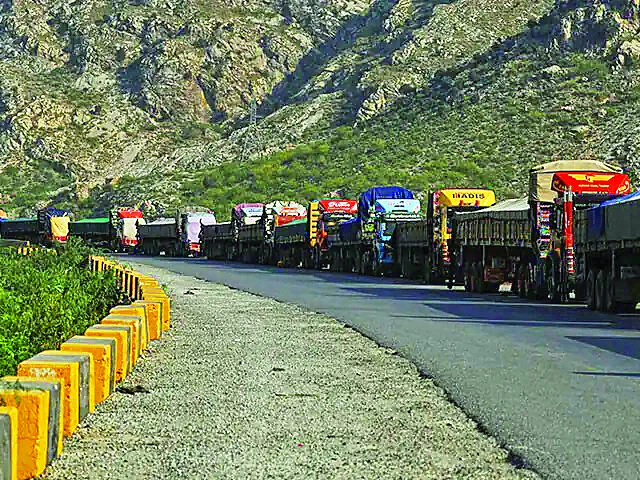
The Torkham border crossing, a vital lifeline for trade between Pakistan and Afghanistan, has been shut to all movement and commercial activity for more than four months, since mid-October last year.
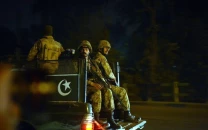
The closure, triggered by border clashes between Pakistani forces and Afghan Taliban fighters, has paralyzed cross-border commerce, stranded hundreds of trucks, thrown thousands out of work, and disrupted supply chains across both nations.
According to border sources and trade associations, the crossing was sealed following deadly exchanges on the night of October 11-12, when Afghan Taliban forces attacked Pakistani security posts in retaliation for alleged airstrikes. This led to the indefinite closure not only of Torkham but also other key points including Kharlachi, Ghulam Khan, Angoor Adda, and Chaman. While a ceasefire was mediated shortly afterward through Qatar and Turkey, trade routes have stayed closed amid ongoing security demands and tensions.
The economic toll has been staggering. Traders estimate daily export losses through Torkham alone at around $2 million (approximately Rs560 million at current rates), with pre-closure imports valued much higher. Over roughly 120 days, this translates to export damages exceeding $240 million, hundreds of billions of rupees when including halted imports, customs revenue shortfalls, and ripple effects. Recent reports from business groups indicate monthly export losses for Pakistan nearing $177 million (Rs50 billion), with bilateral trade plunging by over 50 per cent in recent periods.
Before the shutdown, Torkham handled daily traffic of about 10,000 people and 500-700 cargo and passenger vehicles. Its sudden halt has crippled local supply chains, transportation networks, and border markets. Mujeeb Shinwari, president of the All Customs Clearance Agents Association, said over 150 clearance offices in Torkham have shut down, directly idling at least 1,000 people. "This isn't just about closed offices," he said. "Dozens of families have seen their hearths go cold. Without urgent action, the damage could become irreversible."
Zakir Shinwari, president of the Torkham Labour Union, reported that more than 4,000 daily-wage workers, drivers, loaders, porters, hotel owners, and service providers, have lost livelihoods. Faisal Malook, vice president of the Landi Kotal Traders Union, described near-total collapse of local commerce: "Markets are empty of customers. People once crossed daily for work and returned with goods; now there's nothing."
The closure has also distorted prices. Afghanistan's exports of vegetables, cotton, and especially dry fruits, almonds, raisins, figs, pistachios, and pine nuts, have stopped, driving sharp increases in Pakistani markets. Conversely, Pakistani exports like potatoes, citrus, bananas, jaggery, and medicines have backed up, depressing prices for farmers and producers here and causing heavy losses.
The impact extends beyond the immediate border. Factories across Pakistan reliant on Afghan raw materials or markets have slowed, while hopes for expanded access to Central Asia via Afghanistan, through projects like CASA-1000 power transmission, have dimmed amid regional instability.











This material may not be published, broadcast, rewritten, redistributed or derived from. Unless otherwise stated, all content is copyrighted © 2026 The Express Tribune.






COMMENTS (2)
Comments are moderated and generally will be posted if they are on-topic and not abusive.
For more information, please see our Comments FAQ