SC advances digital justice with nationwide online hearings
Updated 2 hours ago

Court orders uninterrupted Ramazan power supply across K-P
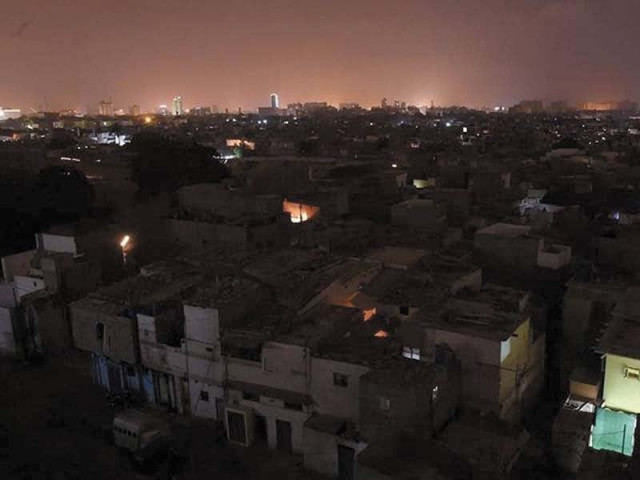
The Peshawar High Court (PHC) has disposed of a petition challenging unscheduled load-shedding in Khyber-Pakhtunkhwa, directing authorities to ensure no power outages during Sehri and Iftari times throughout the holy month of Ramazan.
A two-member bench comprising Justice Syed Arshad Ali and Justice Fahim Wali heard the case. The petitioner's counsel, Advocate Suleman Khan, informed the court that unannounced load-shedding was being imposed across the province, severely affecting residents, especially during Ramazan preparations.
He highlighted that load-shedding persisted even during Sehri and Iftari timings, with fears of intensified outages in the summer months. In urban areas of Peshawar, power cuts lasted up to four hours, while rural and suburban regions faced outages as long as 22 hours.
The lawyer argued that under the Constitution, the province holds the primary right over its electricity production, as K-P generates surplus power and supplies it to other provinces.
He noted that complaints to relevant authorities had gone unheeded, and provincial government representatives claimed helplessness, citing federal control over electricity matters.
During the proceedings, Justice Syed Arshad Ali remarked: "Where a province has its own resources, its people have the first right to them. This province produces more electricity than its needs and even supplies it to other provinces."
The court instructed relevant authorities to guarantee uninterrupted electricity supply province-wide during Sehri and Iftari hours in Ramazan. With these directions, the petition was disposed of.
The ruling comes amid longstanding public frustration over prolonged and unscheduled power outages in K-P, particularly during religious observances when electricity demand spikes for household needs.
Meanwhile, PHC has taken action on seven petitions seeking the recovery of missing persons, issuing notices to the federal and provincial governments along with other relevant authorities in five cases, while directing police officials to submit Call Detail Records (CDRs) in the remaining two.
A single-member bench headed by Chief Justice Justice SM Atiq Shah conducted the hearing. Additional Advocate General, Additional Attorney General Sanaullah, and counsel for the petitioners appeared before the court.
The petitioners' lawyers informed the court that their clients had gone missing from various locations in the province, with no information available on who had abducted them or their current whereabouts.
During the proceedings, Chief Justice Atiq Shah inquired from the Additional Advocate General about the establishment of judicial complexes (Judicial Mal Khana) across the province to aid transparent investigations into such cases. The Additional Advocate General replied that the provincial government was actively working on the matter and that a central cell would be established, noting that judicial complexes would facilitate fair and transparent probes.











This material may not be published, broadcast, rewritten, redistributed or derived from. Unless otherwise stated, all content is copyrighted © 2026 The Express Tribune.




COMMENTS
Comments are moderated and generally will be posted if they are on-topic and not abusive.
For more information, please see our Comments FAQ