PM Shehbaz hopes of peace deal soon as Iran's Pezeshkian expresses appreciation for Pakistan role in negotiations
Updated 9 hours ago

Sessions address women's rights, law, dissent, heritage
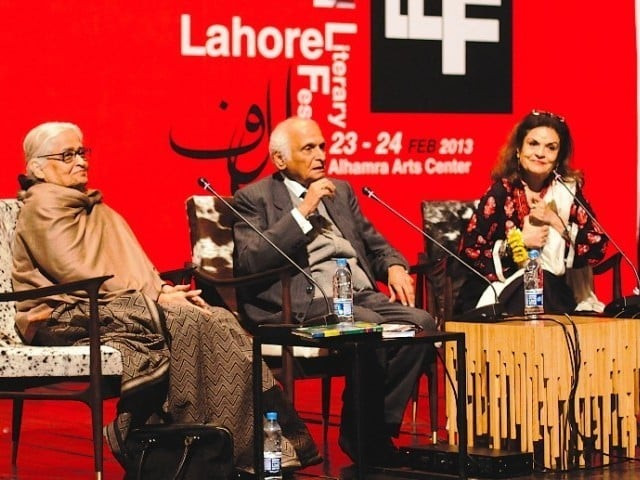
The final day of the 14th Lahore Literary Festival on Sunday began with a book launch and talk titled featuring author and activist Fatima Bhutto. The session set a reflective tone for the day, addressing history, memory, survival, and the ethical responsibility of writers.
Parallel sessions engaged audiences in discussions on women's rights, law, dissent, cultural heritage, translation, history, fiction, biography, and global power structures.
A session titled "Rights on Trial: Women, Law, and the Price of Dissent" examined the challenges faced by women within legal and political systems, featuring representatives from the Women's Action Forum, Advocate Asma Hamid, and Reema Omer of the International Commission of Jurists, with moderation by Barrister Rida Hosain.
Alhamra Hall One hosted discussions on the life and contributions of Professor Perin Cooper Boga and legacy of the British Empire.
In another session, leading global voices Deepa Mehta, Mohsin Hamid, Kamila Shamsie, and Geoff Dyer reflected on the enduring relevance of art in uncertain times.
Sessions in other halls explored diverse themes such as "The Case for Gender Apartheid," "Story of Dhaka Muslin," "Madinat al Zahra: The Radiant Capital of Islamic Spain," and "Protecting the Past," which highlighted people-led resistance to the destruction of cultural heritage.
Book launches including Shattered Lands, Stalemate, 32 Onkar Road. Discussions on South Asian history, translation, and global fiction also continued.
A session on the poetry and thought of Jon Elia examined his work not merely as an expression of personal sorrow but as a living, questioning intellectual tradition deeply engaged with society.
Critic and writer Nasir Abbas Nayyar, poet Fatima Hassan, and Shaista Hassan participated as panelists, while the session was moderated by writer Sughra Sadaf. Nayyar observed that Jon Elia's poetry does not rely on complex philosophical frameworks but rather represents a direct, unambiguous intellectual process that challenges social stagnation, intellectual hypocrisy, and accepted truths.
Fatima Hassan stated that Jon Elia's expression of pain is not romanticised grief but an honest portrayal of human relationships, social behaviour, and inner realities, which gives his poetry global relevance.







This material may not be published, broadcast, rewritten, redistributed or derived from. Unless otherwise stated, all content is copyrighted © 2026 The Express Tribune.





COMMENTS
Comments are moderated and generally will be posted if they are on-topic and not abusive.
For more information, please see our Comments FAQ