Retailers propose 10pm business closure time
Updated 17 hours ago

Governor sees stability for two years, says data-driven policy to continue
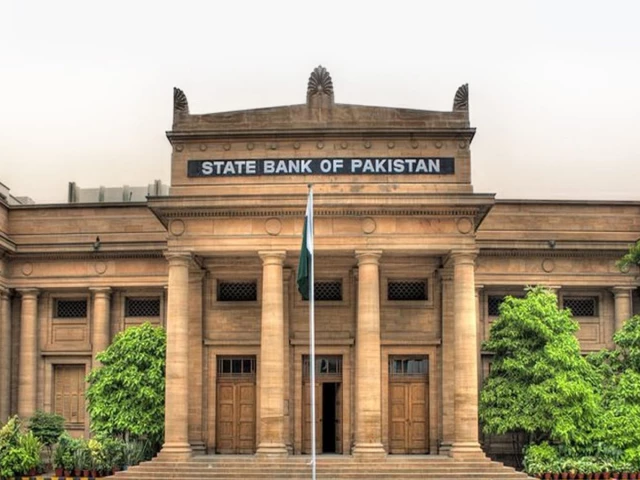
The State Bank of Pakistan (SBP) Governor Jameel Ahmad has expressed confidence that the country's current phase of macroeconomic stabilisation will continue for at least the next two years, while making it clear that the central bank will avoid any unconventional or "out-of-the-way" policy rate cuts despite the prime minister's call for a bold monetary easing decision.
During an in-camera briefing with journalists, the central bank chief said Pakistan had successfully moved past the most acute phase of its economic crisis and entered a more stable period characterised by improved external balances, contained inflation and recovering foreign exchange reserves.
"The momentum over the next two years will continue, at least," he said.
The governor said the central bank has effectively completed the initial two stages of its economic recovery plan: mitigating the macroeconomic crisis and restoring relative stability. The next phase, he added, will involve supporting development finance initiatives aimed at promoting sustainable growth. Although development finance is not traditionally the central bank's core function, he noted that the SBP intends to facilitate measures that strengthen productive sectors and enhance long-term economic resilience.
On monetary policy, he reiterated that maintaining stability remains the primary objective. Responding to questions regarding the prime minister's request for a bold reduction in the policy rate, Ahmad stressed that the SBP would continue to adopt a cautious, data-driven approach. He warned that aggressive or unconventional easing measures could undermine hard-earned macroeconomic gains and destabilise the inflation outlook.
Discussing growth prospects, the governor noted that Pakistan's average GDP growth rate over the past 30 years has hovered around 3.7%. Instead of pursuing rapid expansion that could create imbalances, the SBP's focus is on ensuring sustainable growth supported by structural reforms and improved productivity.
He said the current account deficit, which surged to 4.7% of GDP in 2022 with a shortfall of $17.5 billion and foreign exchange reserves falling below $16 billion, has steadily improved. The deficit narrowed to 3.3% in 2023 and further to 2.2% in 2024 before turning into a surplus in 2025, largely driven by strong remittance inflows. Looking ahead, the governor expects the current account to remain within a manageable range of 0% to 1% of GDP.
Inflation, he added, has stabilised within a 5% to 7% band, contributing to a more predictable macroeconomic environment. Meanwhile, foreign exchange reserves have gradually improved even as imports have recovered alongside economic activity. Monthly imports have increased from roughly $5.5 billion to about $6 billion, reflecting improved domestic demand without placing excessive pressure on the balance of payments.
Exports remain a mixed picture. Overall growth has been modest, although non-food exports are expanding at a rate of around 5% to 6%, suggesting some progress in diversification. However, rice exports have seen a sharp decline, falling 47% to $973 million during the JulyDecember period of fiscal year 2026 compared to $1.827 billion in FY2025.
To support exporters and industrial activity, the government has introduced a series of incentives, including a Rs4.4 per unit reduction in electricity tariffs, adjustments to the Export Finance Scheme rate and the introduction of "Blue Passports" for top exporters to facilitate global business engagement. The governor said these structural and fiscal measures would complement the SBP's stabilisation efforts and help improve the country's export performance over time.
On a query regarding the end of dependence on the ongoing International Monetary Fund (IMF) programme, he said it would depend on Pakistan's fiscal and economic discipline. "Our post-IMF behaviour, how we utilise resources and whether we remain within our means, will determine our future path," he said.
Pakistan is currently under a $7 billion Extended Fund Facility (EFF) with the IMF, which is scheduled to conclude between September and October 2027.
Since independence, the country has approached the IMF around 25 times, making it one of the institution's most frequent borrowers. In comparison, India has sought IMF assistance only seven times, with its last bailout in 1991 during a severe balance of payments crisis, after which sweeping economic reforms reduced its dependence on the Fund. Bangladesh has entered into 14 IMF arrangements and Sri Lanka 17 times.
He also sought to dispel what he described as a common misconception that the government automatically saves money on interest payments whenever policy rates decline. The governor explained that while lower interest rates may reduce the government's debt-servicing costs, they simultaneously lower the State Bank of Pakistan's income from its monetary operations and investments. Last year, the SBP transferred around Rs2.4 trillion in profits to the government's accounts, but this amount is expected to decline to roughly Rs2 trillion this year due to the reduction in interest rates.






This material may not be published, broadcast, rewritten, redistributed or derived from. Unless otherwise stated, all content is copyrighted © 2026 The Express Tribune.






COMMENTS
Comments are moderated and generally will be posted if they are on-topic and not abusive.
For more information, please see our Comments FAQ