Govt to introduce single-point checking system at airports to cut delays
Updated 2 hours ago

Katcha nullahs, village sewerage schemes planned for long-term solution
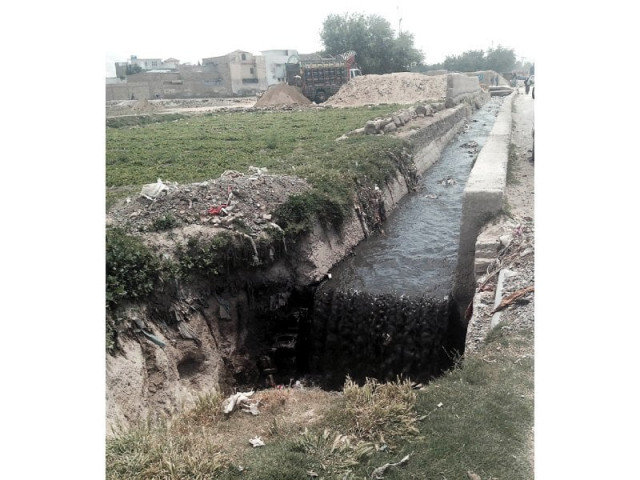
In a step towards achieving the United Nations Sustainable Development Goals (SDGs) on total sanitation by 2030, the Faisalabad divisional administration has mapped 1,460 rural sewage ponds across four districts and launched a phased operation for their elimination and safe disposal.
Faisalabad Commissioner and Administrator Metropolitan Corporation Raja Jahangir Anwar told reporters at his office that the survey was conducted through union council secretaries.
The mapping identified 712 ponds in Faisalabad, 422 in Toba Tek Singh, 134 in Chiniot, and 192 in Jhang.
He said dewatering of 62 ponds has already been completed, while a 60-day timeline has been set for draining the remaining ponds.
Under the next phase, authorities have fixed a 90-day deadline for digging and constructing katcha nullahs (earthen drains) to connect ponds with the nearest natural water bodies.
For temporary relief, dewatering through sucker machines is being carried out on a fast-track basis with the cooperation of district councils, the Water and Sanitation Agency (WASA), and the South Punjab Authority.
The commissioner said the initiative aims to improve sanitation conditions for the vast rural population and reduce health hazards caused by stagnant sewage water.
As a long-term solution, a PC-1 proposal for cluster-based village sewerage schemes will be included in the next Annual Development Programme to ensure sustainable sanitation infrastructure.
Revenue officials (patwaris) and union council secretaries have also been tasked with identifying sewage ponds in urban fringes, katchi abadis, and suburban settlements.
Special awareness measures have been introduced, including announcements through mosque loudspeakers warning residents to keep children away from ponds and avoid taking livestock near contaminated water.
Bamboo barriers are also being installed around hazardous sites.
District administrations have issued notices to private plot owners to remove sewage ponds on their land or construct protective boundary walls.
Assistant commissioners in all 17 tehsils of the division have been directed to conduct regular inspections, update data, and request resources where required.
Raja Jahangir Anwar warned that strict legal action, including registration of FIRs, will be taken against negligent individuals if any untoward incident occurs due to unsafe ponding or illegal excavation.
Officials say the campaign marks a coordinated effort to modernise rural sanitation and protect public health across the division.















This material may not be published, broadcast, rewritten, redistributed or derived from. Unless otherwise stated, all content is copyrighted © 2026 The Express Tribune.






COMMENTS (1)
Comments are moderated and generally will be posted if they are on-topic and not abusive.
For more information, please see our Comments FAQ