Israeli strikes kill five in Gaza, Hamas clashes with Israeli-backed militia
Updated 55 minutes ago

US says both sides discussed critical minerals, Quad, energy security, and nuclear
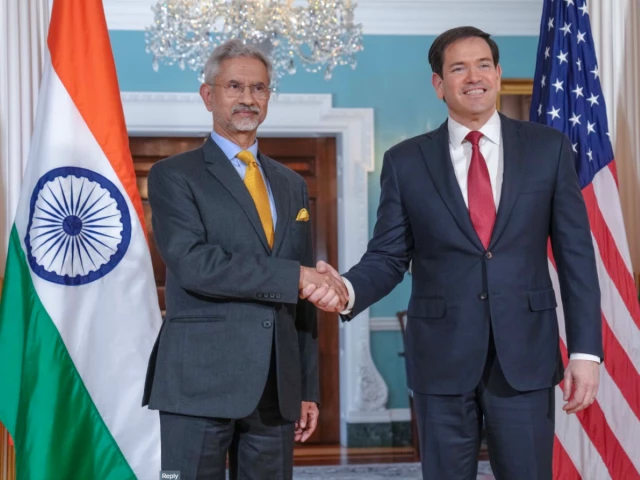
India’s External Affairs Minister S Jaishankar held talks in Washington, DC, with US Secretary of State Marco Rubio as New Delhi faces mounting domestic pressure to publish full details of a newly announced India-US trade agreement.
According to a US readout cited by Indian media, the two sides “welcomed the trade deal” agreed by Donald Trump and Narendra Modi earlier this week, and discussed steps to formalise cooperation on “critical minerals,” which include materials used in supply chains for technologies such as batteries and clean energy systems.
Read: Kremlin says no confirmation from India on halting Russian oil purchases
The meeting took place ahead of a US-hosted critical minerals ministerial, with discussions also covering trade, energy, defence, nuclear and the Indo-Pacific, Jaishankar said in a social media post.
Delighted to meet US @SecRubio this afternoon.
— Dr. S. Jaishankar (@DrSJaishankar) February 3, 2026
A wide ranging conversation that covered our bilateral cooperation agenda, regional and global issues.
Facets of India - US Strategic Partnership discussed included trade, energy, nuclear, defence, critical minerals and… pic.twitter.com/1rbXJHgEQY
According to the meeting summary shared by State Department principal deputy spokesperson Tommy Pigott, Rubio and Jaishankar “welcomed the trade deal reached between President Trump and Prime Minister Modi."
The two leaders discussed working together to “unlock new economic opportunities and advance our shared energy security goals”, and also “expressed their commitment to expanding bilateral and multilateral cooperation through the Quad," acknowledging that "a prosperous Indo-Pacific region remains vital to advancing our shared interests”, according to Pigott.
The trade deal
The broad outlines announced so far suggest the US will cut tariffs on Indian goods to 18%, down from a higher rate of 25%, while India would lower barriers for a range of American exports and increase purchases of US goods, including energy.
Read more: Indian opposition hits Modi over US-India trade deal, demands full details
But opposition leaders in India say the government has not published a full text, timelines or an enforcement mechanism, and they want Parliament briefed before the deal is implemented.
India’s main opposition party, the Indian National Congress, said the government must take “the Parliament and the entire country into confidence and share all the details,” warning the deal could expose the domestic industry and farmers to fresh competition.
US officials have framed the agreement as a boost for American exports, particularly farm products, while Reuters reporting has suggested India may retain protections for some politically sensitive agricultural sectors.
US Trade Representative Jamieson Greer said India would maintain some protections in "key areas" of its politically important farm sector, but the United States would continue to work for access.
Overall, Greer said India's tariff reductions on nuts, fruits and vegetables, and on access to wine and spirits amounted to a "big win" for US farmers, opening a market of more than a billion people to more US goods. He did not mention any new US access to India's markets for rice, beef, soybeans, sugar or dairy, which are highly guarded commodities that India excluded from its recent trade deal with the European Union.
An Indian government official told Reuters on Tuesday that India would gradually ramp up purchases of US petroleum, aircraft, defence, telecom goods and pharmaceuticals as part of the deal, which includes a multi-year commitment to buy $500 billion in American goods.
For Washington, critical minerals have become a strategic priority as countries seek to reduce dependence on single-source supply chains.













This material may not be published, broadcast, rewritten, redistributed or derived from. Unless otherwise stated, all content is copyrighted © 2026 The Express Tribune.





COMMENTS
Comments are moderated and generally will be posted if they are on-topic and not abusive.
For more information, please see our Comments FAQ