Gold prices rise in local, global markets
Updated 11 hours ago

KSE-100 slides nearly 5,000 points, or 2.6% WoW, as investors turn cautious
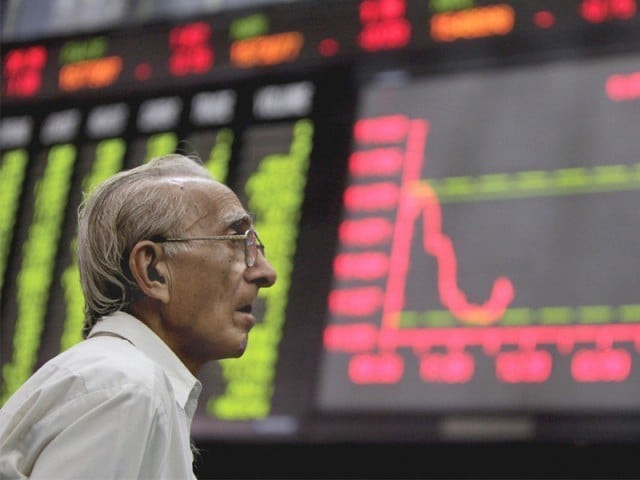
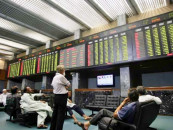
Pakistan's equity market closed the week on a cautious note as the benchmark KSE-100 index slid 2.6% week-on-week to settle at 184,175 points, weighed down by heightened geopolitical tensions, disappointing corporate earnings, and the State Bank of Pakistan's (SBP) decision to keep the policy rate unchanged despite market expectations of a cut.
Investor sentiment remained subdued for most of the week, with volatility amplified by rollover week pressures, although selective buying emerged in the final session following government relief measures for the industrial sector and supportive macro signals from the central bank.
On a day-on-day basis, the PSX ended the range-bound session on Monday at 188,588, down 579 points (-0.31%). The market experienced a largely uneventful session on Tuesday as the KSE-100 index moved sideways and closed at 188,203, down 385 points (-0.20%).
Wednesday also saw sideways movement, when the index ended higher by 178 points (+0.09%) at 188,380. On Thursday, the PSX witnessed a sharp sell-off, fuelled by geopolitics, where the KSE-100 plunged by 6,042 points (-3.21%) to settle at 182,338. However, the bourse enjoyed a strong reversal of trend on Friday, surging 1,836 points (+1.01%) to close at 184,175.
Arif Habib Limited (AHL), in its weekly commentary, noted that the KSE-100 index remained sluggish over the outgoing week, registering a loss of 4,993 points (-2.6% WoW) at 184,175. Market sentiment stayed cautious, influenced by escalating geopolitical tensions, Fauji Fertiliser Company's (FFC) 4QCY25 results coming in below market expectations (given FFC's 9.5% weight in the KSE-100), status quo on the policy rate (against expectations of a cut), and rollover-week dynamics.
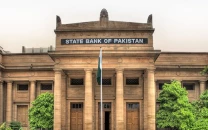
On January 26, the SBP kept the policy rate unchanged at 10.5% and shared its macro outlook, projecting FY26 GDP growth at 3.75-4.75%, a current account deficit of 0-1% of GDP, and stable inflation at 5-7% over FY26 to FY27.
To support liquidity and private sector credit, the SBP reduced the cash reserve requirement (CRR) for banks, lowering the average fortnightly CRR from 6% to 5% and the minimum daily CRR from 4% to 3%, AHL mentioned.
Banking deposits increased by 23.6% YoY to Rs37.4 trillion as of Dec'25 (Rs30.3 trillion as of Dec'24), whereas investments jumped by 30.1% YoY to Rs37.9 trillion. Gas output climbed to 3,197 mmcfd in the third week of Jan'26, the highest since Jan'25, while oil production rose to 67,066 bpd, marking the strongest level since Aug'24.
Power sector circular debt stood at Rs1.7 trillion as of Dec'25 (vs Rs2.4 trillion in Dec'24 and Rs1.8 trillion in Nov'25). SBP-held foreign reserves rose by $13.4 million to $16.1 billion while the Pakistani rupee appreciated slightly against the US dollar, strengthening 0.03% WoW to close at Rs279.80/USD.
Syed Danyal Hussain of JS Global stated that the KSE-100 remained under pressure during the week, closing at 184,175 points, down 2.6% WoW, as investor sentiment weakened following the MPC decision to keep the policy rate unchanged, contrary to expectations of a 50-100-basis-point (bps) cut, while rising geopolitical tensions further compounded market uncertainty.
The bourse, however, staged a modest recovery on the final trading session after the government announced relief measures for the industrial sector, including a 300bps reduction in the Export Finance Scheme (EFS) rate and a cut in power tariffs by Rs4.04/unit.
In a major development, the Federal Constitutional Court (FCC) upheld the legality of the super tax, overturning earlier high court rulings against it. The decision is expected to support revenue collection, with the FBR projected to generate over Rs300 billion in additional revenues in FY26, Hussain said.
Meanwhile, Pakistan repaid more than Rs3.65 trillion in debt ahead of schedule over the past 14 months. Power sector circular debt flow also declined to Rs75 billion in 1HFY26, bringing the cumulative stock down to Rs1.68 trillion. On the sectoral front, the SBP reduced the average CRR for commercial banks from 6% to 5% to support credit expansion to the private sector. Lastly, the SBP's reserves remained stable at $16.1 billion, he added.










This material may not be published, broadcast, rewritten, redistributed or derived from. Unless otherwise stated, all content is copyrighted © 2026 The Express Tribune.







COMMENTS
Comments are moderated and generally will be posted if they are on-topic and not abusive.
For more information, please see our Comments FAQ