King Charles jets to US for trip overshadowed by Iran quarrel and shooting
Updated 1 hour ago

Note that airport temperature screenings rarely prevent the spread of disease
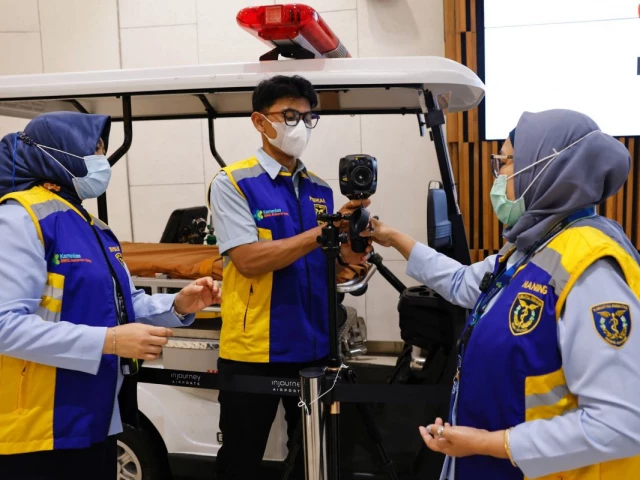
Airport screenings for the Nipah virus, which have been stepped up across Asia this week following two cases in India, are more about public reassurance than a scientific measure to stop the virus, leading experts said on Friday.
Countries including Malaysia, Thailand, Indonesia, and Pakistan implemented temperature screenings at airports after India reported two Nipah cases in West Bengal. Health ministries described the measures as precautionary steps against a dangerous disease.
Nipah primarily spreads through products contaminated by infected bats, such as fruit. While it can be fatal in up to 75% of cases, human-to-human transmission is limited.
The World Health Organisation (WHO) said on Friday that it does not currently recommend airport screening and that the risk of the virus spreading from India is low.
Read More: What to know about the Nipah virus?
“Based on what we currently know, there is a very low likelihood that this outbreak will cause a large international epidemic,” said Dr Md Zakiul Hassan, a Nipah specialist at icddr,b, a global health research institute in Bangladesh, where Nipah cases are reported almost every year.
Piero Olliaro, professor of poverty-related disease at the University of Oxford, said airport screenings for such a rare disease were likely ineffective.
“Countries sometimes do these things just to show they’re taking action … telling their people that they’re doing something to protect them,” he said.
Olliaro and other public health experts noted that airport temperature screenings rarely prevent the spread of disease.
During Covid-19, for example, screenings missed the majority of cases. Moreover, many illnesses can cause fever, and follow-up testing for a rare disease such as Nipah is time-consuming.
Experts said global attention should instead focus on better understanding the virus in areas where it currently spreads and protecting at-risk populations with vaccines and treatments.
“There are people suffering from this disease, and they deserve attention,” said Olliaro, adding that such measures would also help prepare for any future pandemic risk if the virus evolves into a more widespread problem.
“Preparedness means we have the tools now, and we are not trying to develop the tools when the horse has left the stable,” he said.








This material may not be published, broadcast, rewritten, redistributed or derived from. Unless otherwise stated, all content is copyrighted © 2026 The Express Tribune.












COMMENTS
Comments are moderated and generally will be posted if they are on-topic and not abusive.
For more information, please see our Comments FAQ