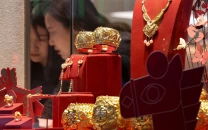
Gold, silver prices decline in local market as global rates fall
Updated 6 hours ago

Highlights policy stability, new digital e-mining platform at Pak-China forum
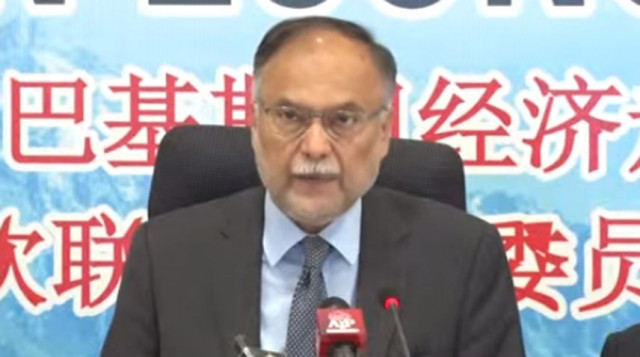
Pakistan and China on Wednesday underscored plans to deepen cooperation in the mineral sector, positioning mining and downstream processing as a new pillar of bilateral economic engagement, as officials and businesses from both sides gathered at the Pak-China Mineral Cooperation Forum in Islamabad.
The forum, held at the Jinnah Convention Centre and organised by the China Chamber of Commerce in Pakistan (CCCPK), brought together federal ministers, diplomats, regulators and industry representatives to discuss policy frameworks, investment opportunities and technological collaboration across the mineral value chain. According to an official statement, the event drew more than 800 participants, including over 70 Chinese companies and more than 100 Pakistani firms.
Addressing the opening session, Planning, Development and Special Initiatives Minister Ahsan Iqbal said Pakistan viewed mineral development as a strategic priority within the broader framework of Pakistan-China cooperation, particularly as both countries mark 75 years of diplomatic relations. He said projects under the China-Pakistan Economic Corridor (CPEC) had already delivered measurable gains in power generation, infrastructure and industrial connectivity, and that minerals could play a similar role if developed responsibly.
Chinese Ambassador Jiang Zaidong, in his keynote address, reaffirmed Beijing's interest in Pakistan's mining sector, stressing the importance of capacity building, technology transfer and sustainability. He said responsible mining practices and adherence to international construction and environmental benchmarks were essential for long-term cooperation. Referring to the Saindak project, the ambassador noted that more than 5,200 local workers had been trained over the years, and said China would continue to support local participation and community engagement in mineral projects.
He added that China was also focusing on what he described as "small and beautiful projects" in areas such as infrastructure, education and healthcare, alongside large-scale investments, to ensure broader development outcomes.
Energy Minister Ali Pervaiz Malik said Pakistan was moving toward a policy framework centred on responsible, value-added mineral development, with an emphasis on regulatory strengthening and improved oversight. He said global demand for critical minerals linked to the energy transition had increased the strategic importance of the sector. Highlighting China's experience in areas such as rare earths, copper smelting and refining, he said this expertise was directly relevant to Pakistan's emerging mineral economy.
Malik referred to existing joint ventures, including the Saindak Copper-Gold Project, the Duddar Lead-Zinc Project and Sindh Engro Coal Mining Company, and said cooperation was expanding into new copper-gold prospects. He reiterated the government's commitment to policy stability, streamlined approvals and improved federal-provincial coordination, and invited Chinese firms to participate in the Pakistan Minerals Investment Forum 2026.
The energy minister also highlighted ongoing collaboration between the Geological Survey of Pakistan and the China Geological Survey, which began in 2010 and resulted in nationwide geochemical sampling. He said Pakistan was now moving toward higher-resolution surveys and integrated geoscientific programmes to better identify mineral potential. CCCPK Chairman Wang Huihua said mining and minerals were emerging as a key area in the next phase of Pak-China economic cooperation. He said the chamber would continue to facilitate structured dialogue and business linkages between companies from both countries.
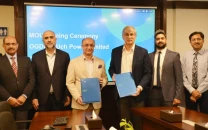
Board of Investment Minister Qaiser Ahmed Sheikh said Pakistan-China investment ties were gaining momentum, particularly at the private-sector level. He said hundreds of Pakistani companies had engaged with Chinese counterparts, leading to multiple memoranda of understanding and growing business-to-business cooperation. He added that the Board of Investment was working to convert these commitments into actual investments. A key outcome of the forum was the launch of the Pak-China E-Mining Platform, a digital initiative aimed at improving information sharing and coordination between Pakistani authorities and Chinese enterprises. Several MoUs were also signed, including agreements involving Wah Nobel (Pvt) Limited, JW Corporation, MCCT International, the Pakistan Mineral Development Corporation, POWERCHINA International and Pak China Investment Company Limited, focusing on investment facilitation and technical cooperation.
The second session featured policy briefings by federal and provincial representatives on mining regulations and incentives, alongside technical presentations by Chinese institutions. The forum concluded with business matchmaking sessions and an exhibition enabling direct engagement between companies.
Separately, Planning Minister Ahsan Iqbal visited the GDA Pak-China Friendship Hospital in Gwadar, operated by the Indus Hospital and Health Network, where he inaugurated a new diagnostic block. Officials said the hospital currently provides free treatment to around 1,100 to 1,200 patients daily and plans further expansion. Iqbal said CPEC's vision extended beyond infrastructure to health and education, describing the hospital as a symbol of PakChina cooperation and public welfare.
WITH ADDITIONAL INPUT FROM APP




This material may not be published, broadcast, rewritten, redistributed or derived from. Unless otherwise stated, all content is copyrighted © 2026 The Express Tribune.





COMMENTS
Comments are moderated and generally will be posted if they are on-topic and not abusive.
For more information, please see our Comments FAQ