Govt disburses Rs38b in fuel subsidy
Updated 13 hours ago

Steering committee, data system approved as OGDC gets Rs7.7b circular debt payment
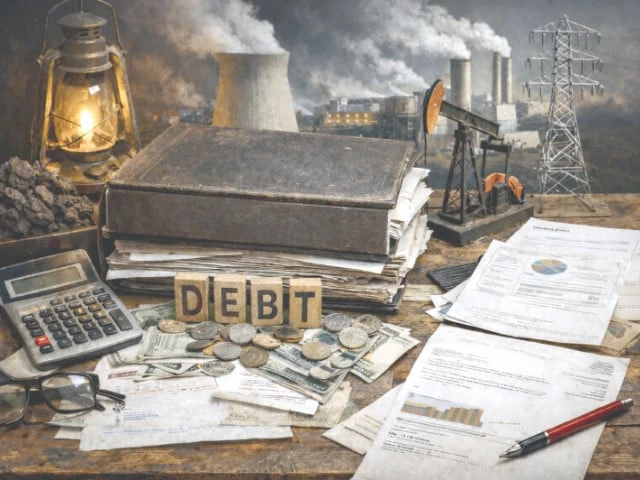
Amid chronic circular debt and persistent divisions between key ministries that have contributed to chaos in the energy sector, the government is moving ahead with the Integrated Energy Plan by bringing all stakeholders on board to address fragmented decision-making, silo-based ad-hoc planning, resource inefficiencies and the absence of uniform policy inputs.
Energy is a fundamental driver of economic growth, social progress and human development. However, the lack of a pre-defined planning structure, tools and processes for a sustainable integrated energy planning ecosystem has, in the past, resulted in fragmented decision-making, silo-driven planning, inefficient resource utilisation and inconsistent policy inputs.
To address these challenges, the government has pursued several initiatives under the Integrated Energy Plan framework, including PAK-IEM and the Integrated Energy Planning Project.
In view of ongoing efforts on integrated energy planning, the rapidly evolving global energy landscape, environmental imperatives and accelerating technological transitions, the institutionalisation of a robust, evidence-based national Integrated Energy Plan has become imperative to strengthen Pakistan's energy governance and ensure long-term policy coherence.
According to the Integrated Energy Plan recently approved by the Cabinet Committee on Energy (CCoE), the Prime Minister's Office had directed the Ministry of Energy (Power and Petroleum Divisions) to develop an effective inter-ministerial coordination mechanism among the ministries of Power, Petroleum and Water Resources to address cross-cutting issues.
It was further directed that an Integrated Energy Plan be developed in consultation with all relevant stakeholders, including both federal and provincial governments. The concerned ministries had already been mandated to prepare the Integrated Energy Plan under the National Electricity Policy 2021, approved by the Council of Common Interests (CCI).
Following the Prime Minister's directive, an inter-ministerial meeting was held in September 2025 under the chairmanship of the Minister for PD&SI. The meeting was attended by ministers for Power, Petroleum, Water Resources and Economic Affairs. Participants deliberated on a proposed high-level Integrated Energy Planning Ecosystem, including the structure of an IEP Secretariat, defined roles and a high-level roadmap.
The participants recognised the development of the Integrated Energy Plan as a national priority and recommended that the proposal for plan development and operationalisation of the Secretariat be reviewed by a secretary-level committee.
Subsequently, a secretary-level meeting was convened in October 2025. Representatives from the ministries of Power, Petroleum, Planning and Water Resources broadly agreed with the proposed Integrated Energy Planning Ecosystem, its structure and the proposed roadmap.
The CCoE has since approved the proposed Integrated Energy Plan architecture, ecosystem and high-level roadmap for the development of the plan.
The committee also approved the proposed steering committee along with its terms of reference for formal notification. In addition, it cleared the development and institutionalisation of an Energy Information System (EIS) in coordination with relevant ministries and organisations through the integration of their respective databases.
The Ministry of Commerce supported the proposal and recommended that it be made an integral part of the steering committee. It also stressed the need to align the Integrated Energy Plan with national development priorities, including trade policies, Sustainable Development Goals and the net-zero transition.
The proposal was also backed by PPIB, PPMC and CPPA-G. Multiple meetings were attended by the ministries and secretaries for PD&SI, Planning and Water Resources, who had already agreed with the concept.
The SIFC Committee also emphasised the urgency of a decision on the matter. During discussions, details of the proposal were shared, and it was informed that, in line with SIFC directives, approval was sought to initiate the Integrated Energy Plan architecture through the formation of a steering committee and institutionalisation of the Energy Information System. The proposal had already been endorsed by all provinces and Gilgit-Baltistan.
It was further informed that the proposed Secretariat structure would include a committee responsible for deliberation on joint matters, along with an Economic Analysis Wing.
It was also proposed that the Chief Secretary of Azad Jammu and Kashmir be included in the committee.
The CCoE approved the "Proposed Integrated Energy Planning Ecosystem, Secretariat Structure and High-Level Roadmap 2025-27", aimed at addressing the long-standing divide between the energy ministry and other relevant ministries to enable informed decision-making in the future.
Meanwhile, Oil and Gas Development Company Limited (OGDCL) has received the seventh instalment, one of twelve equal monthly instalments of Rs7.725 billion, as interest payment from Power Holding (Private) Limited (PHL) under the government-approved mechanism.
In a notice to the Pakistan Stock Exchange, OGDCL stated that the total interest amount of Rs92 billion will be repaid in twelve equal monthly instalments starting July 2025. The receipt of the latest instalment reflects continued progress under the government's initiative to address circular debt in the energy sector.





This material may not be published, broadcast, rewritten, redistributed or derived from. Unless otherwise stated, all content is copyrighted © 2026 The Express Tribune.




COMMENTS
Comments are moderated and generally will be posted if they are on-topic and not abusive.
For more information, please see our Comments FAQ