Body brought back of Karachi man martyred in Israeli missile attack on Iran
Updated 1 hour ago

Restrictions drive Punjab mills towards shutdown while K-P mills expand
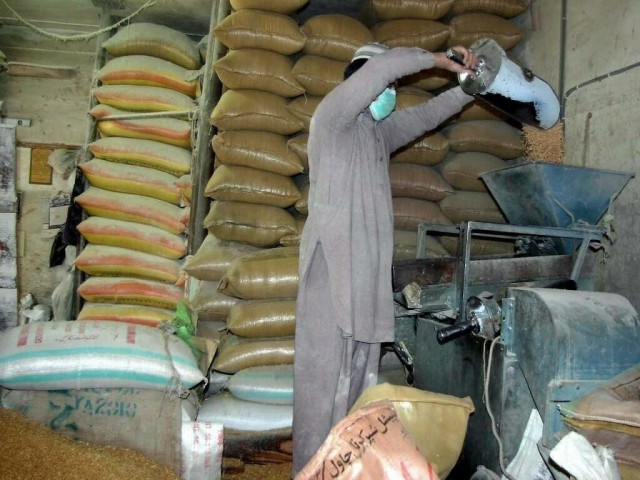
The Flour Mills Association on Saturday warned that the flour-milling industry in the Rawalpindi Division has reached the brink of collapse, calling for the immediate lifting of inter-district and inter-provincial restrictions on the supply of wheat and flour, and demanding that government wheat be distributed on an equal basis.
The Association further stated that in Rawalpindi, the practice of forcing mills to obtain expensive private wheat through permitswhile purchasing flour from mills at 25% below the government pricemust be discontinued. Otherwise, mills would be compelled to observe a complete strike, suspending flour supplies to the twin cities of Rawalpindi and Islamabad as well as the wider division.
A meeting of the Pakistan Flour Mills Association (Rawalpindi Region), presided over by Patron-in-Chief Tariq Sadiq, was attended by flour-mill owners from across the division. The meeting noted that when the Punjab Government announced its wheat deregulation policy, the flour mills had welcomed it.
Under the policy, mills were instructed to procure wheat directly from farmers in Punjab, and the government assured millers that no restrictions would be imposed on the transport of flour.
Contrary to these assurances, the Association stated that for the past three months informal and unconstitutional restrictions had been imposed on inter-provincial and inter-district movement of flour, pushing the milling industry in Rawalpindi to the point of closure.
Rawalpindi, it noted, is neither an agricultural belt nor an industrial city; with few industries operating, closure of the flour sector would inevitably increase unemployment.
The Association further observed that as a result of these measures, Punjab's flour-milling industry was being forced towards shutdown, while the industry in Khyber-Pakhtunkhwa (K-P) was expanding.
Flour cannot legally cross Punjab Food Department checkpoints into K-P from Rawalpindi, they said, yet wheat continues to move in large quantities through other border routes. Evidence of this, the meeting noted, could be seen in the substantial increase in electricity bills of K-P flour mills compared to three months ago.
According to participants, the restrictions and checkpoints had been imposed under the pretext of preventing a flour crisis, yet such a crisis would end if the restrictions were lifted.











1725429132-0/Untitled-design-(12)1725429132-0-208x130.webp "widespread rain thunderstorms expected across country from april 1 pmd")



This material may not be published, broadcast, rewritten, redistributed or derived from. Unless otherwise stated, all content is copyrighted © 2026 The Express Tribune.






COMMENTS (1)
Comments are moderated and generally will be posted if they are on-topic and not abusive.
For more information, please see our Comments FAQ