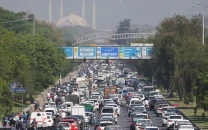
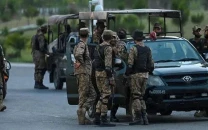
Islamabad maintains security lockdown amid uncertainty over US-Iran talks
Updated 1 hour ago

587 big cats declared in private ownership; 34 unregistered ones seized in recent operation

Following the enforcement of strict laws in Punjab regarding the private keeping, breeding, and sale of big cats, individuals associated with this sector are facing severe financial pressure as free trade has effectively come to an end. Concurrently, the Wildlife Department is facing an increased burden in caring for confiscated animals.
In July 2025, the Punjab Wildlife Rangers imposed a province-wide ban on keeping big cats in urban populations, displaying them at public places, and buying or selling them without a licence. Alongside this, new Standard Operating Procedures (SOPs) were issued for breeding farms, making spacious cages, large land areas, veterinary facilities, and making strict security measures mandatory.
According to the department, 587 big cats in private possession were declared during this operation, while 34 unregistered big cats were taken into custody. Additional Chief Wildlife Ranger Punjab, Syed Kamran Bukhari stated that the confiscated animals had been shifted to various government zoos across the province, where the department was now responsible for their care.
Wildlife officials revealed that the formal process to register big cats had not yet begun. Registration will start after the verification of the declared animals is completed. The registration fee for a single big cat has been set at Rs50,000, with annual renewal mandatory. With this process now slowing down, the monthly expenses of the department run into millions of rupees since an adult lion consumes an average of 10 kilograms of meat per day.
On the other hand, big cat breeders claimed that the restrictions had almost paralysed their businesses. Renowned breeder Mian Zia believed that banning the keeping of big cats in city homes and rooftops was a positive step. “However, a complete ban on buying, selling, and export them has made breeding unprofitable. Due to the lack of buyers, more than half of the breeders have stopped breeding altogether,” said Zia.
Breeders also claim that Pakistan is among the leading countries in the world in terms of breeding of big cats, but they are suffering losses due to the lack of access to international markets. According to them, if the government allows exports under a limited and regulated framework, it would not only reduce financial losses but also make animal exchange with other countries possible.
Another Lahore-based breeder, Mian Umar Daula, explained that during the winter season it became difficult to keep newborn cubs at breeding farms, which led to higher mortality. “Cubs up to six months of age should be allowed to be kept in a domestic environment under specific conditions,” requested Daula.
Meanwhile, officials of CITES, the Convention on International Trade in Endangered Species of Wild Fauna and Flora, informed that big cats were listed in CITES Appendix I, and therefore their import and export were prohibited. According to officials, Appendix I includes wild animals and birds that are critically endangered worldwide. International trade in these species is almost banned completely because their populations are extremely low and trade could lead to their total extinction.
Officials further stated that the laws governing trade in Appendix I species were extremely strict. Commercial import and export of these species is completely prohibited. Under the SOPs, for the transport or exchange of any Appendix I species, an export permit from the exporting country’s CITES management authority and an import permit from the importing country’s authority are mandatory. These permits are issued only when it is proven that the animal or bird was not obtained from the wild in a harmful manner and that the trade will pose no threat to the survival of the species.









This material may not be published, broadcast, rewritten, redistributed or derived from. Unless otherwise stated, all content is copyrighted © 2026 The Express Tribune.





COMMENTS
Comments are moderated and generally will be posted if they are on-topic and not abusive.
For more information, please see our Comments FAQ