BOI ramps up investor outreach in UK
Updated 8 hours ago

Energy ministry argues average tariff reduction eaten up by increase in subsidised consumers
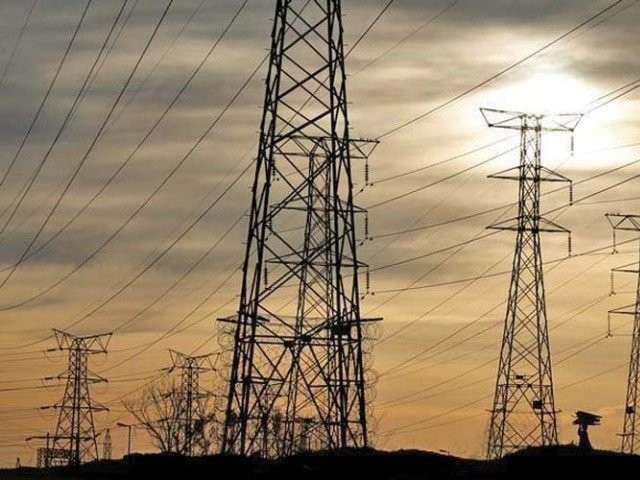
The National Electric Power Regulatory Authority (Nepra) has approved the government's motion to keep end-consumer tariff of distribution companies (DISCOs) and K-Electric unchanged for the calendar year 2026.
In its decision released on Monday, Nepra pointed out that the Power Division had stated that over the years unit sales had gone down from 113 billion kilowatt hours (kWh) in financial year 2023 to the projected 101 billion kWh in CY26, primarily due to the influx of solar net metering and off-grid solar. The capacity of net metering and off-grid solar has increased to 6,539 megawatts and 12,629MW, respectively, which leaves an impact of around Rs3.5/kWh on grid rates.
The Ministry of Energy said that the total revenue requirement of ex-Wapda DISCOs for CY26, as determined by Nepra, had decreased by Rs142 billion as compared to FY26, resulting in a reduction of Rs0.62/kWh in the average base tariff for the calendar year. Explaining the reasons, the Power Division highlighted that the major factor for the reduction in the average rate was the decrease in power purchase price for CY26 as compared to FY26.
The division explained that although the average tariff had been slashed by Rs0.62, the reduction was eaten up by the change in sales mix as subsidised consumers increased exponentially from 9.5 million in FY22 to 20.71 million by June 2025. With this shift, the consumption from subsidised consumers rose from 8,527 million kWh in FY21 to 19,711 million kWh by June 2025.
It was also submitted that despite the change in sales mix, the federal government decided to maintain the existing applicable tariff for each category of consumers and out of the total determined revenue requirement of Rs3,379 billion, a subsidy of Rs248 billion would be picked up by the federal government. Nepra determined the uniform tariff as required under Section 31(4) of the Act, which included the impact of previous year adjustments of Rs71.572 billion, to be passed on over 12 months from the date of notifying the decision.
The proposed electricity base rates for various categories of domestic consumers will be in the range of Rs3.95 per unit to Rs47.69 per unit for the ongoing year. For the domestic consumers using more than 700 units per month, the tariff will be Rs47.69 per unit, while for the protected domestic consumers using 1-100 units, the tariff will be Rs10.54 per unit, and for the protected domestic consumers using 101-200 units, the tariff will be Rs13.01 per unit.
For the non-protected domestic consumers using 1-100 units, the tariff will be Rs22.44 per unit, and for consumers using 101-200 units, it will be Rs28.91 per unit. The tariff for 201-300 units will be Rs33.10 per unit, while for 301-400 units, it will be Rs37.99 to Rs39.05 per unit. The tariff for 401-500 units will stay at the existing Rs40.22 per unit. The tariff for consumption of 501-600 units will be Rs41.62 per unit, and for 601-700 units, it will remain at Rs42.76 per unit. For the lifeline domestic consumers using 1-50 units and 51-100 units, the tariff will remain unchanged at Rs3.95 per unit and Rs7.74 per unit, respectively. For commercial consumers, the tariff will be Rs45.43 per unit, for general services Rs43.17 per unit, for agriculture Rs30.75 per unit and for industrial consumers Rs33.48 per unit. Nepra approved the government's request to apply the new end-consumer tariff from January 1, 2026.
Industries oppose cross-subsidies
Earlier, the industrial representatives raised concerns over the proposed end-consumer tariff for CY26 at a public hearing held by Nepra, arguing that the structure places a disproportionate burden on industrial consumers through cross-subsidies.
The hearing was convened to discuss a federal government motion on the end-consumer tariff applicable to DISCOs. During the proceedings, the Power Planning and Monitoring Company (PPMC), the technical arm of the Power Division, informed the regulator that the determined national average tariff for CY26 was Rs33.38 per unit, reflecting a reduction of 62 paisa from the previous year's average of Rs34 per unit. Under the uniform tariff policy, the tariff will apply across all DISCOs, including K-Electric.
However, several stakeholders expressed reservations about the distribution of costs within the tariff structure.
Industrial representatives stated that the proposed tariff increasingly treats the industry as a source of revenue rather than a driver of economic growth. According to figures presented during the hearing, the industrial tariffs include an embedded cross-subsidy of Rs131 billion, equivalent to Rs5.37 per unit, which they say is not clearly reflected in tariff notifications.













This material may not be published, broadcast, rewritten, redistributed or derived from. Unless otherwise stated, all content is copyrighted © 2026 The Express Tribune.







COMMENTS
Comments are moderated and generally will be posted if they are on-topic and not abusive.
For more information, please see our Comments FAQ