Two Pakistani astronauts selected as candidates for China space programme
Updated 3 hours ago

AI to expand beyond cars into robots, wearables, home and health tech at CES 2026

Autonomous driving technology is expected to dominate the CES trade show in Las Vegas this week, as investors bet that artificial intelligence will reinvigorate an industry beset by slow progress, high costs, safety incidents, and regulatory scrutiny.
As automakers scale back electric vehicle (EV) plans and seek their next revenue driver, a slew of auto suppliers and startups are set to showcase the latest autonomous vehicle hardware and software. Partnerships and deals that promise to reduce or remove the need for a human driver entirely are expected to be announced.
"This year you will see more and more focus on AI and autonomous," said C.J. Finn, US. automotive industry leader for PwC. "That connectivity on autonomous, I do think will be front and center."
AI is expected to extend beyond automobiles, appearing in robots, wearable gadgets, home devices, and health technology. Tech heavyweights including Nvidia CEO Jensen Huang and AMD CEO Lisa Su are among the key speakers this year.
No electric vehicles
CES 2026, one of the largest technology exhibits in the United States, runs from Jan. 6 to 9. Traditionally a launchpad for TVs, laptops, and wearables, CES has recently become a key venue for automakers debuting EVs.
Read More: Samsung Electronics says customers praised competitiveness of HBM4 chip
However, a pullback on EV-friendly incentives and policies by the Trump administration has dampened demand, forcing many automakers to abandon plans for new EV launches. Most major automakers will not unveil any new EVs this year—a stark contrast to prior years.
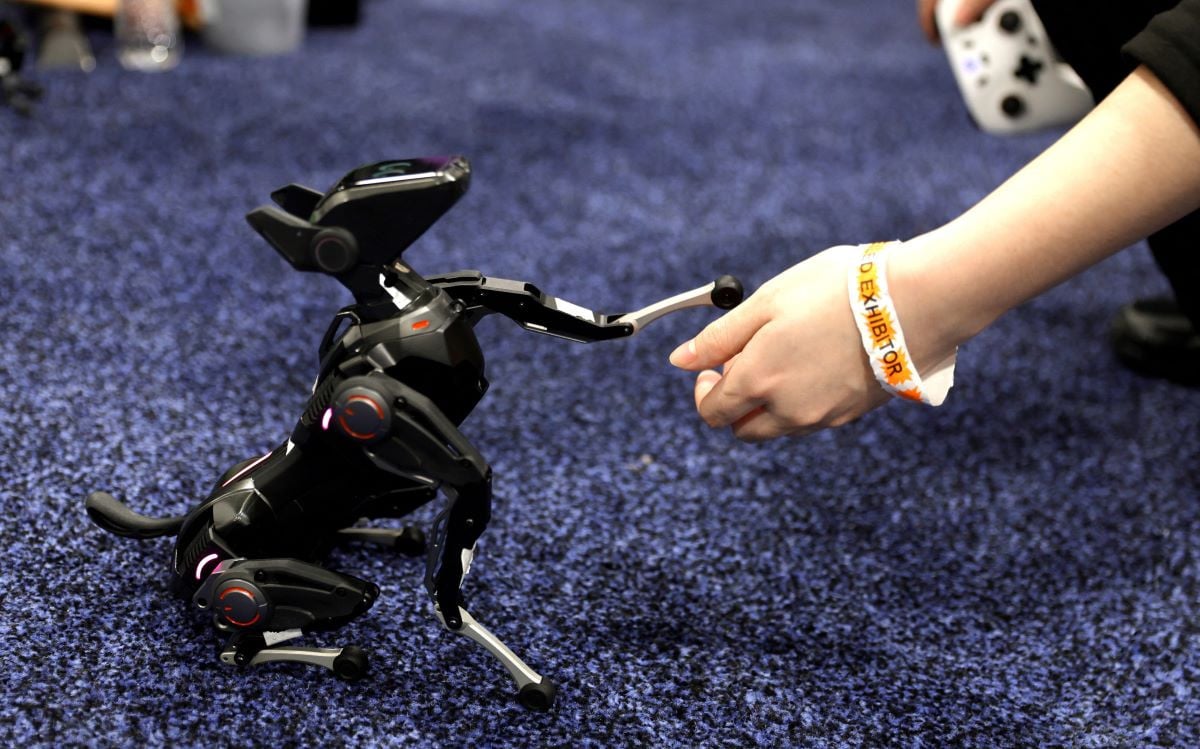
An exhibitor shakes hands with a robotic dog in the Hengbot Innovation booth during CES Unveiled at CES 2026, an annual consumer electronics trade show, in Las Vegas, Nevada, US January 4, 2026.REUTERS
Money on autonomy
Commercializing autonomous vehicles has been challenging. High investments, regulatory hurdles, and investigations after collisions have forced several companies to shut down.
Yet Tesla’s launch of a small robotaxi service with safety monitors in Austin, Texas, and Alphabet’s Waymo’s accelerated expansion have reinvigorated the industry. Driver-assist systems for personal vehicles have also improved, with some automakers offering hands-free driving and automatic lane change on highways. Rivian, for example, aims to launch "eyes-off" functionality and city street self-driving.
"That's starting to align with where people are putting forward their money and how they're allocating capital," Finn said.
Cost worries linger
Automakers remain strategic about capital investments after billions in write-offs due to changing EV strategies. They are also dealing with high tariffs on auto and auto parts imports imposed by the Trump administration. Many have absorbed most tariff costs instead of passing them to customers, adding pressure on profit margins.
Competition from Chinese automakers will also be a key concern at CES, said Felix Stellmaszek, global leader of the automotive and mobility sector at Boston Consulting Group.
"The main theme that we actually expect to see also popping up at CES is around cost and cost competitiveness," Stellmaszek said.












This material may not be published, broadcast, rewritten, redistributed or derived from. Unless otherwise stated, all content is copyrighted © 2026 The Express Tribune.






COMMENTS
Comments are moderated and generally will be posted if they are on-topic and not abusive.
For more information, please see our Comments FAQ