Salman Akram Raja, PTI leaders say barred from entering G-B ahead of polls
Updated 2 hours ago

Aurangzeb says reforms, easing inflation and stronger balances are restoring investor confidence
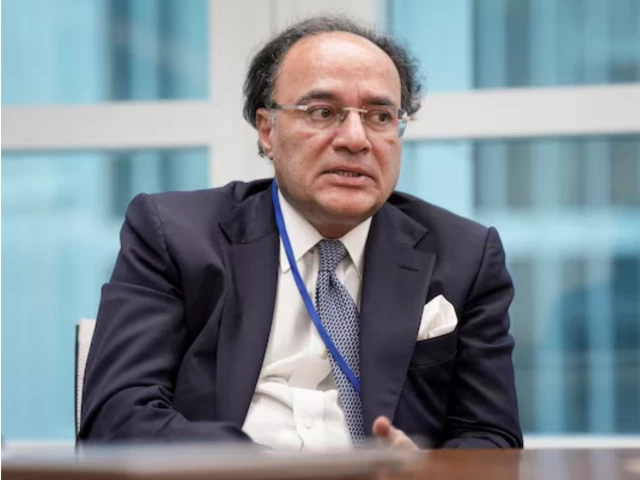
Federal Minister for Finance and Revenue Senator Muhammad Aurangzeb said Pakistan has reached a critical turning point, with macroeconomic stability, sustained reforms and policy continuity restoring confidence and shifting the economy toward export-led growth.
He said the transition is opening new opportunities for domestic and global investors and positioning the country for sustainable, long-term economic growth.
Aurangzeb expressed these views in a wide-ranging interview conducted a few weeks ago and published this week by USA Today. The interview appeared in a special 16-page publication titled “Pakistan Special Report.”
The report includes commentary, articles and expert views on Pakistan’s economy, investment opportunities and key policy priorities.
In the interview, Aurangzeb said Pakistan has entered fiscal year 2025 from a position of renewed strength. He cited macroeconomic stability, improving external balances and a firm commitment to structural reform.
He said that for the first time in several years, Pakistan has achieved both a primary fiscal surplus and a current account surplus. He described this as a decisive break from a cycle of recurring deficits.
Strong remittance inflows, he said, played a key role in the turnaround. Inflation has fallen sharply from a peak of 38% to single-digit levels.
Foreign exchange reserves have risen to more than $14.5 billion, providing about two and a half months of import cover. The exchange rate has remained stable, helping restore investor confidence.
Aurangzeb said macroeconomic stabilisation is only the foundation and that sustainable growth remains the main challenge. He noted that last year’s economic growth of 2.7%, while positive, is not enough to meet the needs of a rapidly growing population.
He said Pakistan is moving away from a consumption- and debt-driven growth model toward an export-led strategy. The current budget, he said, reflects this shift.
Read: Pakistan eyes January Panda Bond debut
Aurangzeb pointed to structural reforms in taxation, energy pricing and state-owned enterprises. He also highlighted tariff reforms aimed at dismantling decades of protectionism and improving global competitiveness.
He said Pakistan is aligning its strategy with changing global demand. He identified information technology services, textiles and agricultural exports as key growth areas.
Aurangzeb said IT exports have crossed $4 billion and could double within five years with regulatory clarity and better infrastructure. He said steps are being taken to simplify tax regimes for exporters and reduce bureaucratic hurdles.
On broader reforms, he said privatisation of state-owned enterprises, tariff liberalisation and energy sector restructuring aim to fix long-standing inefficiencies that have burdened public finances.
He said the reforms reflect a longer-term vision, echoing the World Bank’s assessment of Pakistan’s potential “East Asia moment.”
Aurangzeb referred to the World Bank’s 10-year Country Partnership Framework, the first of its kind for Pakistan. He said it focuses on economic reform, climate resilience and population management.
On climate risks, he said Pakistan is working with multilateral partners to improve preparedness for more frequent floods and droughts.
Read More: IMF staff deal reached, investment-led growth now priority: FinMin
He acknowledged ongoing risks, including global commodity price shocks, external debt pressures and political uncertainty. Still, he said the government remains committed to reforms despite geopolitical and domestic challenges.
Aurangzeb said discipline, consistency and international cooperation are essential to protecting recent gains.
Highlighting investment opportunities, he pointed to agriculture, minerals and mining, and the digital economy as priority sectors.
He cited Pakistan’s agricultural potential, the strategic importance of the Tethyan Copper Belt in Balochistan, and growing interest in data centres, artificial intelligence and digital services.
Aurangzeb said regulatory frameworks are being updated to support innovation and attract foreign investment, especially from the United States. He described technological change as a major game-changer for Pakistan.
He invited global investors and partners to engage with Pakistan through trade, investment and collaboration.
He said Pakistan is moving from a narrative of crisis management to one of opportunity and transformation, driven by reform momentum, economic potential and its natural strengths.






This material may not be published, broadcast, rewritten, redistributed or derived from. Unless otherwise stated, all content is copyrighted © 2026 The Express Tribune.


COMMENTS (3)
Comments are moderated and generally will be posted if they are on-topic and not abusive.
For more information, please see our Comments FAQ