FinMin expects continuous progress under GSP+
Updated 4 hours ago

Emphasises need for developing road map, bringing efficiency to power sector
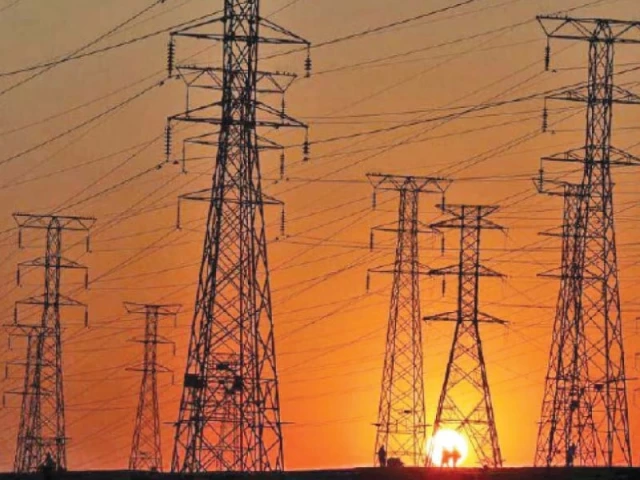
The Economic Coordination Committee (ECC) has stressed the need for gradually moving towards a uniform tariff in the power sector to bring efficiency aimed at ending circular debt, which has affected foreign-funded energy projects.
The Power Division highlighted the implications of the circular debt for foreign-funded schemes, while the ECC chairman emphasised the importance of consultation between the Petroleum and Power Division and the Finance Division to develop a road map for reducing the debt.
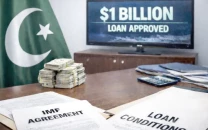
Sources told The Express Tribune that during discussions in a recent meeting of the economic decision-making body, the Power Division presented the background of the Circular Debt Management Plan (CDMP) and explained that recovery targets were well aligned with an agreement with the International Monetary Fund (IMF).
The ECC observed that although the targets set by the IMF were met, in the future, focus should be oriented towards efficiency and as a long-term solution it should gradually move towards a uniform tariff. The Finance Division also supported the uniform tariff as one of the tools required to achieve efficiency.
The forum called for holding deliberations on state-owned power generation companies (Gencos) and independent power producers (IPPs), which were in the process of privatisation. The Power Division said that the schedule for Gencos (4 to 6) was being drawn up, which would help to clear liabilities.
The Ministry of Energy (Power Division) briefed the meeting that the government was continuously working on measures to address the multidimensional challenges confronting the power sector.
One major challenge was the circular debt amounting to Rs1,614 billion at the end of fiscal year 2025. Despite multiple reform measures, the circular debt continued to grow. Accordingly, there was a need to address the debt flow through efficiency improvement measures.
The Ministry of Energy (Power Division) recalled that the circular debt totalled Rs57 billion in FY23 and Rs83 billion in FY24. The debt flow was negative Rs780 billion in FY25. The debt piled up owing to several factors such as poor bill recoveries, line losses above regulatory targets, unpaid budgeted subsidies, pending government payments and K-Electric's transition costs.
The last financial year marked a notable reduction in the debt flow, achieved through performance improvement among distribution companies (DISCOs), strengthened corporate governance and one-time payment initiatives after renegotiating power purchase agreements.
The government has drawn up the CDMP 2025-26 in a bid to reduce the flow of circular debt to a sustainable level. The Ministry of Energy briefed the ECC that the CDMP was aimed at effective debt management through efficiency improvement measures and the reduction of debt flow to the minimum level.
The plan envisages measures to reduce the debt stock by phasing out the accumulation of power producers. The gap in cost recovery and the projected use of cheaper power shall be mitigated through efficiency measures. The Finance Division said that the committed subsidies would be budgeted properly and released on time.
The Ministry of Energy told the ECC that in the medium to long term, the CDMP would cover areas like efficiency improvement, cost-reflective tariffs, resource availability, change in commercial operations date (COD) of incoming power plants, cost recovery, exchange rate volatility, inflation, imported coal prices and crude oil prices. These factors have major implications for power purchase costs.
Accordingly, a new trajectory for forecasting the power purchase price, which is rational and aligned with the sector's revenue requirements, has been chalked out for FY26. Likewise, the plan assumes aggressive improvements in DISCOs' efficiency while recognising the scope of utility-level and national-level reforms, better risk management, and internal checks and balances.
Based on the latest assumptions, the Power Division has developed the CDMP 2025-26 by covering the budgetary financing decisions taken by the Finance Division without any interventions.
The base-case circular debt flow was expected to be Rs74.5 billion, which is planned to be mitigated to zero under the CDMP through timely tariff adjustments, improvement in losses and fiscal support. After a substantial reduction in budgeted subsidies, DISCOs focus on strict monitoring and performance targets to enhance operational efficiency, reduce losses and improve revenue recovery.









This material may not be published, broadcast, rewritten, redistributed or derived from. Unless otherwise stated, all content is copyrighted © 2026 The Express Tribune.






COMMENTS (1)
Comments are moderated and generally will be posted if they are on-topic and not abusive.
For more information, please see our Comments FAQ