Civilian casualties: military error or political choice?
Updated 22 hours ago

Afghanistan, Iran, India and China each impose distinct political, security challenges on Pakistan’s regional outlook
In discussing the geopolitical environment in which Pakistan exists at this time in its 80-year history, we should distinguish between the near and far. In between these two we should also look at the middle — the Middle East. I will begin with the nearby which is made up of four immediate neighbours. Going counterclockwise from the north, the four neighbours are Afghanistan, China, India and Iran. All four, in some way or the other, have had an impact on Pakistan. Of the four, three have adopted religion as the source of governance. The most obvious case is that of Afghanistan where the Islamic extremists that go by the name of Taliban took control of the country on August 15, 2023, when the twice-elected president Ashraf Ghani fled from Kabul, leaving the advancing Taliban to move into the vacated presidential palace.
The Taliban brought their interpretation of Sunni sharia as their governing philosophy. The most disturbing aspect of this style of rule was the treatment of women who were placed very low in the social hierarchy. Women were to cover their bodies from head to toe and not go out of their homes unless accompanied by a male relative. Girls were not to attend school beyond the sixth grade; schooled at home, the emphasis was to be on religious instruction.
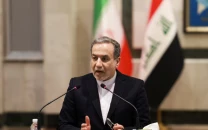
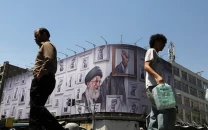
Like Afghanistan, Iran is also an Islamic state but the Islam it follows is Shiite, which has several differences from Sunnism. The main feature of the Iranian version of Shiite political system is the concentration of power in the hands of the clergy and the denial of democratic rights to the general population. One thing common between Afghanistan and Iran is the poor treatment of women. The clerics of Tehran have also ordered women to cover their bodies from head to toe when they leave their homes. Failure to do so can lead to arrest and imprisonment.
India, after having launched a democratic and representative system of governance when it gained independence in August 1947, gave full democratic rights to non-Hindus in a very diverse society. Two groups — Muslims and low caste Hindus — were to be treated no differently from the large Hindu majority. Under the long-serving Prime Minister Narendra Modi, the system of governance is changing, with Hindus becoming the preferred citizens of the state. Modi, before moving to Delhi as prime minister, had served as the Chief Minster of the Gujarat state in India's northwest. There he allowed his Hindu followers to massacre thousands of Muslim citizens of the state. He could have used the security forces under his command to stop the killing. This action was noted the world over. The United States denied him an entry visa when he applied for it to visit the country. It was only after he was elected to lead India as the country's prime minster that Washington changed its stance. Not only did he visit the American capital as an honoured guest, but President Donald Trump also called him a great friend.
However once installed as India's leader, he has begun to show his true colour. He and his Hindu nationalist organisation, the Bhartiya Janata Party, the BJP, have begun to move against the country's Muslim minority. They have opted to introduce Hindutva as the system of governance. They have also decided to change the name of the country from India to Bharat. This makes sense as the name India was derived from the name of the Indus River which originates in the Tibetan highlands and then flows through Pakistan into the ocean though a delta located a bit north of India in Pakistan's Sindh province. This treatment of Muslims in India that number 200 million in a population now estimated at 1.5 billion will create what I have called in a recent article, "India's Musalman problem."
These three quasi-religious states in Pakistan's neighbourhood will, overtime, create problems for Pakistan. The rise of the Taliban in Afghanistan has given support and comfort to their allies in Pakistan who are members of the group called the Tehreek e Taliban Pakistan, the TTP. The TTP is following the ideas adopted by the Taliban who assumed power in Kabul after the twice-elected president Ashraf Ghani fled the country in August 2023. The TTP has increased its operations in Pakistan, aiming their attacks at the country's security forces who, in response, have largely held fire.
This brings me to a discussion of Pakistan's fourth neighbour, China. Islamabad's close relations with China date back to the closing days of the eleven-year rule of Field Marshal Ayub Khan, Pakistan's first military ruler who governed for eleven years from 1958 to 1969. He was convinced by his Foreign Minister Zulfikar Ali Bhutto that he needed to distance himself from Washington and get close to Beijing. This was done and Islamabad drew close to Beijing in the final days of Ayub Khan's eleven-year rule, 1958-69. This policy was followed by Ayub Khan's successors which resulted in Pakistan now becoming China's closest ally.
One result of China's close relations with Pakistan is the massive investment Beijing is making in developing Pakistan's road and rail network. This is being done under the trillion-dollar investment by China in Asia, Africa and Europe. Chinese call this the Belt and Road Initiative or BRI. The China-Pakistan Economic Corridor, the CPEC, is the first BRI project which will connect the city of Kashgar in China's Xinjiang Autonomous Region with the port of Gwadar on Pakistan's Baluchistan coast. I know from my experience when I worked as World Bank's China Operations Director that the government in Pakistan in the mid-1990s was not particularly keen to have China build the corridor. The Chinese prime minister at that time asked me to get Ghulam Ishaq Khan, the president of Pakistan, to have his government give the go-ahead to China and have it build the CPEC. GIK obliged.
At a seminar held in Lahore on December 4, I was asked whether it makes economic and political sense to be so closely aligned with China, especially when Beijing's economic and military rise is causing Washington a great deal of trouble. My answer was an unqualified positive. China is likely to play a major role in developing the countries of Central Asia by using transport corridors as the points of entry. The entry into Central Asia will be through Pakistan.








This material may not be published, broadcast, rewritten, redistributed or derived from. Unless otherwise stated, all content is copyrighted © 2026 The Express Tribune.
COMMENTS (2)
Comments are moderated and generally will be posted if they are on-topic and not abusive.
For more information, please see our Comments FAQ