Indus Cloud signs strategic partnership agreement with PTCL to deliver cloud excellence
Updated Apr 24, 2026

Company will be prohibited from importing any new equipment into US
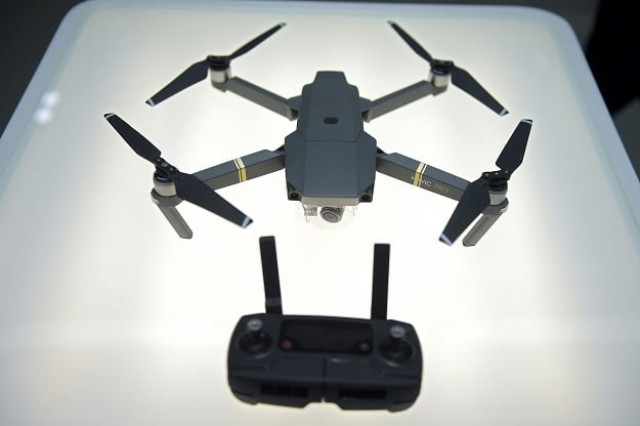
DJI products are set to be blocked from the United States on December 23, 2025, unless President Donald Trump decides to halt the move.
Under the new restrictions, existing DJI drones and Osmo cameras already in the country can still be used. However, the company will be prohibited from importing any new equipment into the US. The Federal Communications Commission (FCC) will also gain the authority to retroactively bar older DJI models after a formal waiting period. The measures apply to any device containing a wireless radio, not just drones.
The ban stems from bipartisan claims in Washington that the Chinese manufacturer poses a national security risk. Lawmakers argue that Beijing could compel DJI to hand over user or flight data, despite the US government never publicly presenting evidence of espionage. DJI maintains it does not share data with Chinese authorities, says all US data is stored domestically, and previously announced it would delete all American flight logs starting September 2024.
Some opponents contend DJI is effectively controlled by the Chinese Communist Party, though a US judge ruled in September 2025 that there was insufficient evidence to support the claim.
Behind the political rhetoric is a desire among US officials to see American-made drones take a dominant position in the market. For now, DJI continues to hold a commanding global lead. No domestic US manufacturer has matched its combination of scale, cost efficiency, or product quality, prompting several Republican lawmakers to push back against the ban in the final weeks before the deadline.
Industry groups argue that DJI drones remain essential tools for farmers, energy firms, and emergency responders because reliable alternatives do not yet exist. Many of DJI’s former competitors, including Skydio, have shifted their focus toward enterprise and defence clients, leaving few consumer-oriented options aside from newer entrants such as Insta360’s Antigravity A1.
Even before the looming ban, DJI was already facing significant pressure. US customs authorities have restricted the entry of several DJI shipments over the past year based on allegations of forced labour in its supply chain, claims the company denies. Tariffs and political scrutiny have further squeezed the brand, with many popular models no longer available on American shelves. DJI even skipped US launches for its flagship Mavic 4 Pro, Mini 5 Pro, and Neo 2.
In response, the company appears to have explored selling its technology under alternate labels, such as “Xtra” for cameras and “Skyrover” for consumer drones, but regulators are expected to clamp down on any rebranded imports as well.
Avoiding the ban would require a US national security agency to audit DJI and certify it as non-threatening formally. According to the company, no agency has initiated such a review as the deadline approaches.
Still, uncertainty remains. Trump previously paused the legislated TikTok ban, and his recent dealings with major tech companies, including Intel, Nvidia, and Apple, have shown a willingness to negotiate for political leverage. A similar last-minute arrangement with DJI is not out of the question.










This material may not be published, broadcast, rewritten, redistributed or derived from. Unless otherwise stated, all content is copyrighted © 2026 The Express Tribune.






COMMENTS
Comments are moderated and generally will be posted if they are on-topic and not abusive.
For more information, please see our Comments FAQ