Govt slashes jet fuel price by Rs48 per litre
Updated 53 minutes ago

Backlog prompts Peshawar High Court intervention over delays in criminal cases
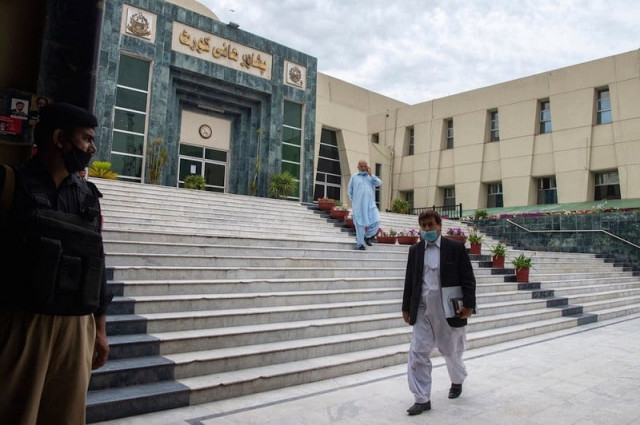
The Khyber-Pakhtunkhwa government has submitted a detailed report from the Forensic Science Laboratory (FSL) to the Peshawar High Court, highlighting critical shortcomings in the criminal justice system. According to the report, the FSL currently has 83,000 pending samples awaiting testing due to a severe shortage of staff, with only 44 personnel available out of the 85 required.
Additional Advocate General Noman Kakakhel presented the report before Chief Justice SM Atiq Shah, noting that the backlog has led to delays in criminal investigations and prosecutions across the province. "The fact that only half of the required staff is present is extremely concerning," the chief justice remarked, expressing deep worry over the strain on the province's sole FSL facility.
In response, the Chief Justice has ordered the formation of a larger bench to examine the issue in detail and provide directives to relevant authorities to address the staffing crisis. The court emphasized that with just one laboratory handling such a massive volume of cases, urgent steps are needed to streamline operations and reduce delays.
The development comes under the ongoing judicial review of systemic flaws in the criminal justice system. Earlier, a larger bench had been constituted to solicit suggestions and recommendations from lawyers and other stakeholders on how to reform the investigative and prosecution processes. The goal is to ensure timely case disposal, improve conviction rates, and strengthen the overall efficiency of the criminal justice framework.
Sources say that the backlog at the FSL is not only hampering the pace of ongoing investigations but also impacting the administration of justice for thousands of citizens awaiting resolution of their cases. The K-P government and the judiciary are reportedly working together to implement corrective measures and to reinforce the staffing and operational capacity of the forensic lab.
With 83,000 samples pending, authorities stress that immediate action is critical to prevent further delays in criminal proceedings and restore confidence in the province's judicial and investigative institutions.
Separately, a larger bench of the Supreme Court of Pakistan has partially accepted the appeal of a man convicted of killing two people in an 'honour'-related incident in Maidan, Dir, converting his double death sentence into life imprisonment.
The case was heard by a five-member bench comprising Justice Shahid Waheed, Justice Malik Shehzad, Justice Aqeel Ahmad Abbasi, Justice Shakeel Ahmad and Justice Naeem Afghan. Advocate Ziaur Rehman Tajik represented the convict, Sanober.
According to the prosecution, Sanober shot and killed a woman and a man, Ashfaq Khan, on February 2, 2013, alleging 'honour' as the motive. A sessions court awarded him two death sentences, which were subsequently upheld by the Peshawar High Court and later by the Supreme Court.
On December 20, the parties reached a settlement (raazi-nama) and submitted it before the court. However, both the trial court and the Peshawar High Court dismissed the convict's review petitions, ruling that an accused cannot be acquitted in an honour-killing case on the basis of a compromise.
Later, a bench headed by Justice Aminuddin Khan referred the matter to a larger bench for reconsideration.
The Supreme Court has now partially accepted the review appeal, observing that a compromise can legally take place in honour-killing cases, though punishment under Section 311 of the Pakistan Penal Code still applies. The court wrote in its judgment that in such cases, the convict may be awarded up to 25 years in prison.
Setting aside the earlier decisions of the trial court and the PHC, the Supreme Court converted Sanober's double death sentence into life imprisonment.
















This material may not be published, broadcast, rewritten, redistributed or derived from. Unless otherwise stated, all content is copyrighted © 2026 The Express Tribune.




COMMENTS
Comments are moderated and generally will be posted if they are on-topic and not abusive.
For more information, please see our Comments FAQ