
For decades, heavy industries were defined by carbon intensity. Sector by sector- manufacturing, shipping, and supply chain logistics- the movement of goods relied on fossil-fuel-powered grids and diesel-fueled equipment. Today, that model is undergoing an irreversible shift.
Driven by rising energy costs, global supply chain decarbonisation commitments, and climate vulnerabilities, energy-intensive industries are redefining efficiency. Sustainability is no longer framed merely as a corporate social responsibility objective; it has evolved into a strategic operational priority.
Across the globe, high-consumption sectors are realising that transitioning to renewable energy, particularly solar power, is key to building resilient, future-ready infrastructure.
Few sectors illustrate this urgency more clearly than port terminals and maritime logistics.
Ports serve as the primary nerve centres of international trade, handling over 80% of global commerce by volume. They operate non-stop, powering massive heavy machinery, gantry cranes, high-capacity lighting systems, and expansive cold-storage reefers. As a result, terminal operators sit directly at the intersection of high energy demand and global carbon emissions.
Across modern trade routes, the push toward "green ports" is rapidly accelerating. Electrifying container handling equipment, implementing smart energy management grids, and installing micro-scale solar generation are fast becoming standard operational practices. These measures help insulate terminals against global energy volatility while sharply reducing local greenhouse gas emissions.
Connected to this is also the logistics sector. For instance, DHL supports businesses in reducing greenhouse gas emissions across their logistics operations. From lower-carbon express, air, ocean, road and rail transport to sustainable warehousing, packaging, circularity and e-commerce solutions, DHL helps customers identify practical ways to reduce their carbon footprint across the supply chain.
In the same vein, a home-grown global courier and logistics firm has also been making efforts to reduce fossil fuel use in last-mile deliveries through electric bikes. It has shifted part of its courier fleet in Islamabad and Rawalpindi to electric bikes, covering more than 300,000 kilometres and saving over 17 metric tonnes of carbon emissions while cutting fuel costs by around 60%. The company has also moved toward paperless operations, including replacing traditional paper receipts with SMS-based receipts.
For emerging markets, the operational benefit is even higher. Where grid reliability can fluctuate, and fuel costs remain high, localising energy generation via solar power provides both financial predictability and continuous energy security.
As Pakistan faces ongoing energy transition dynamics and expanding industrial ambitions, integrating renewables into major infrastructure becomes critical. Industrial hubs and freight nodes consume vast amounts of power; enabling them to generate their own clean electricity relieves pressure on national grids while demonstrating commercial viability to the broader market.
The port and maritime sector in Pakistan is beginning to show how this transition works in practice. Terminal operators are taking proactive steps to offset their operational footprints by tapping into the country's abundant solar potential.
As global trade expands, the surging energy demands of logistics hubs drive a transition toward clean, on-site power generation like solar energy. This operational shift delivers a dual advantage. Firstly, it enhances grid independence and operational resilience against power disruptions. And simultaneously, it lowers carbon emissions and secures long-term cost efficiency.
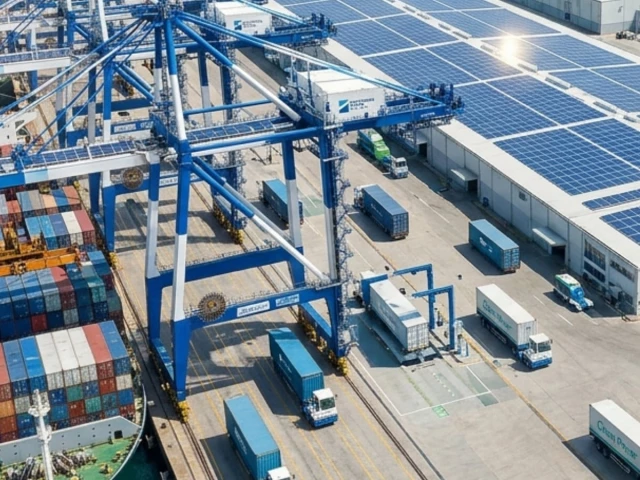
A clear example of this shift is visible at Hutchison Ports Pakistan (HPP). As the country's first deep-water container terminal, HPP has increasingly embedded environmental sustainability into its long-term operational framework. Beyond adopting fully electric, Remote-Controlled Quay Cranes (RCQCs) and hybrid equipment, the terminal has deployed rooftop solar installations across its facilities to power core administrative and operational units. It also received an initial batch of 20 E-Trucks.
By integrating clean power directly into terminal operations, HPP offers a practical blueprint for how logistics hubs in Pakistan can systematically reduce direct emissions while optimising operational expenditures.
As international brands, shipping lines, and importers audit the carbon footprint of their end-to-end supply chains, logistics providers and port operators that proactively decarbonise gain a distinct competitive edge. Freight corridors powered by clean energy will naturally attract forward-looking global trade partners.
The transition to solar energy across energy-intensive hubs proves that sustainability and operational efficiency are mutually reinforcing goals. By turning rooftops, open yards, and industrial infrastructure into power-generating assets, heavy industries can lead Pakistan’s clean-energy evolution.
Building future-ready trade infrastructure requires bold investments today. For logistics and port operations, embracing solar power and renewable energy isn't just an eco-conscious choice—it is the strategic cornerstone of long-term operational resilience.




COMMENTS
Comments are moderated and generally will be posted if they are on-topic and not abusive.
For more information, please see our Comments FAQ