
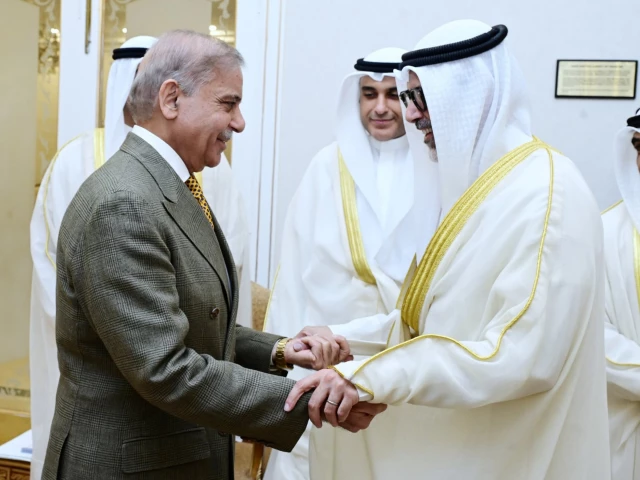
The latest Pakistan–Kuwait defence cooperation agreement should neither be viewed as an isolated development nor automatically interpreted as the expansion of a new collective, defence bloc in the Middle East. Its significance lies elsewhere, it represents the institutionalisation of a long-standing defence relationship at a time when Gulf states are reassessing their security requirements, diversifying strategic partnerships and increasingly looking towards capable regional actors.
Pakistan–Kuwait defence relations have deep historical roots. Defence contacts existed as far back as the 1960s, while more structured institutional cooperation began developing during the 1980s. The Gulf crisis of 1990–91 further demonstrated Pakistan’s wider security engagement with the region, including the deployment of Pakistani forces to Saudi Arabia for the protection of two Holy Mosques.
The relationship therefore has considerable historical depth and should not be interpreted simply through the prism of today’s regional crises. The present agreement is part of this continuum. Pakistan and Kuwait established a defence cooperation framework in 2023, and the latest agreement represents its further formalisation and expansion. Training, exchange of military personnel, capacity building, border security and cooperation in defence equipment provide the practical foundations of this partnership.
It is equally important, however, to distinguish this arrangement from the Pakistan–Saudi Strategic Mutual Defence Agreement and the wider debate surrounding the Makkah framework. There is presently no publicly established basis for describing the Pakistan–Kuwait agreement as an Article 5 style collective-defence commitment under which an attack on one automatically becomes an attack on the other. What is significant is the direction of travel.
Kuwait appears to be moving from conventional defence cooperation towards a more structured security partnership with Pakistan. In time, such bilateral partnerships could contribute to something larger, a more interconnected regional security architecture. But the agreement itself should not be interpreted as establishing what it does not explicitly contain.
The Gulf Is Diversifying, Not Abandoning Washington
There is a temptation to interpret growing Gulf defence engagement with Pakistan as evidence that regional states are losing faith in the United States. That interpretation is too simplistic. The Gulf states are not necessarily replacing their traditional security partnerships, they are diversifying them. Recent conflicts have reinforced an important strategic lesson, excessive dependence upon any single external security provider creates vulnerabilities. The Gaza war, expanding regional tensions and the US–Iran confrontation have demonstrated how quickly the security environment can deteriorate and how developments elsewhere can directly affect Gulf stability.
The logical response is therefore not necessarily to replace Washington, but to broaden strategic options and develop greater indigenous and regional capacity. This is where Pakistan increasingly becomes relevant. Islamabad offers something different from a conventional security guarantor. It combines military capability with political access across competing geopolitical camps.
Pakistan maintains a strategic partnership with China, important relations with the United States, deep historical ties with Saudi Arabia and other Gulf states, close relations with Turkiye, and trusted channels with Iran. Few countries possess this combination. For Gulf states, therefore, Pakistan’s value lies not simply in what its armed forces could contribute during a conflict. Its greater utility may lie in strengthening deterrence, facilitating dialogue and helping prevent conflict from escalating in the first place. The most successful security partnership, after all, is not necessarily one that wins a war. It is one that helps ensure the war never becomes necessary.
Why Pakistan?
Pakistan brings several distinct advantages to the emerging Gulf security environment.
The first is military capability and professionalism. Pakistan possesses large, professional and operationally experienced armed forces, sophisticated training institutions and a growing defence-industrial base. Decades of experience across conventional warfare, counterterrorism, border security, peacekeeping and international military cooperation have created institutional expertise that Gulf partners can utilise while retaining their own strategic autonomy.
The second advantage is geography. Pakistan sits at the intersection of South Asia, Central Asia, China, the Arabian Sea and the Gulf. Geography has often been described as Pakistan’s strategic burden, properly leveraged, it is equally one of its greatest strategic assets.
Third is political legitimacy and compatibility. Pakistan’s identity as a major Muslim state carries considerable weight in a region where sustainable security arrangements require political confidence and public legitimacy alongside military capability.
Most importantly, however, Pakistan possesses diplomatic connectivity. Its ability to communicate with Washington, Beijing, Tehran, Riyadh, Ankara and other important capitals gives it potential value not merely as a military partner, but as a strategic bridge. This is also where Pakistan complements rather than competes with Turkiye or traditional Western partners. Turkiye possesses formidable military and technological capabilities, while Western powers retain capabilities Pakistan cannot and need not replicate.
A diversified regional architecture does not require Gulf states to choose one partner over another. Different partners can provide different strategic advantages.so it’s the accumulative weight of the cooperation which matters. Pakistan’s comparative advantage lies in combining military credibility, geographic proximity, political acceptability and diplomatic connectivity.
What Pakistan Gains
For Pakistan, deeper Gulf defence cooperation offers substantial strategic and economic benefits.
First, it enhances Pakistan’s international relevance beyond the traditional India–Pakistan framework. A Pakistan contributing to Gulf stability, regional deterrence and diplomatic de-escalation becomes a stakeholder in a much larger geopolitical space.
Second, defence partnerships can generate wider economic dividends. Training, defence production, technology collaboration, maintenance, joint ventures and defence exports can strengthen Pakistan’s defence-industrial base while creating durable institutional relationships with some of the world’s most important economies.
Third, strategic relevance generates diplomatic leverage. States that contribute meaningfully to regional stability inevitably acquire greater influence in shaping the political and security architecture surrounding them. This creates an opportunity for Pakistan to convert its military credibility into broader diplomatic and economic relevance. But greater relevance also creates greater responsibility.
Pakistan As a Strategic Bridge
Pakistan’s strategic value lies precisely in its ability to bridge regional divides rather than become part of them. With deep relationships across the Arab Gulf, close strategic ties with Turkiye and longstanding political and geographic connectivity with Iran, Pakistan is uniquely positioned to help reduce the sectarian and geopolitical fault lines that have historically constrained regional cooperation. Rather than allowing these divisions to define the region’s security environment, Pakistan can encourage a gradual transition from competition towards cooperation, bringing major regional actors into dialogue around their shared interests in sovereignty, stability, economic security and non-interference.
This could eventually contribute to a more inclusive collective regional security architecture, in which Saudi Arabia, Iran, Turkiye, Pakistan and the wider Gulf states increasingly see one another not as competing security camps, but as stakeholders and partners in regional stability. Such an architecture need not be directed against any external power or third country. Nor should it seek to replace existing international partnerships. Its purpose should be to strengthen indigenous capacity for deterrence, crisis management, dialogue, conflict prevention and collective resilience.
Pakistan is particularly suited to play the role of a strategic bridge because it maintains meaningful relationships across these different centres of power. Its approach should therefore be guided by a simple principle, bridge divides rather than reinforce them, build deterrence without provocation, and gradually transform parallel partnerships into a cooperative regional security framework.
From Bilateral Agreements to Collective Stability
The Pakistan–Kuwait agreement consequently matters not because it announces another military alliance, but because it could represent one building block in a much broader evolution of regional security. A network of bilateral partnerships, Pakistan–Kuwait, Pakistan–Saudi Arabia, Pakistan–Turkiye and Pakistan’s engagement with other Gulf and regional states, can create habits of cooperation, interoperability, dialogue and strategic confidence.
Over time, these relationships could become the foundations upon which a more inclusive regional framework is constructed. The objective should not be the creation of another confrontational military bloc. The region already has enough fault lines. What it requires is an architecture capable of reducing them. For Pakistan, this represents both an opportunity and a responsibility.
Islamabad must preserve strategic balance, avoid becoming trapped in rivalries and continue maintaining productive relationships with China, the United States, the Gulf states, Turkiye and Iran. In an increasingly fragmented international system, strategic influence will belong not only to states possessing military power, but also to those capable of connecting competing powers, creating credible deterrence, absorbing geopolitical shocks and providing diplomatic off-ramps before crises become wars.
Pakistan now has an opportunity to occupy precisely that space not simply as a provider of military capability, but as a bridge between regional powers and a potential architect of collective stability.
The writer is Principal at the NUST Institute of Peace and Conflict Studies and a Defence & Security Analyst.




COMMENTS
Comments are moderated and generally will be posted if they are on-topic and not abusive.
For more information, please see our Comments FAQ