
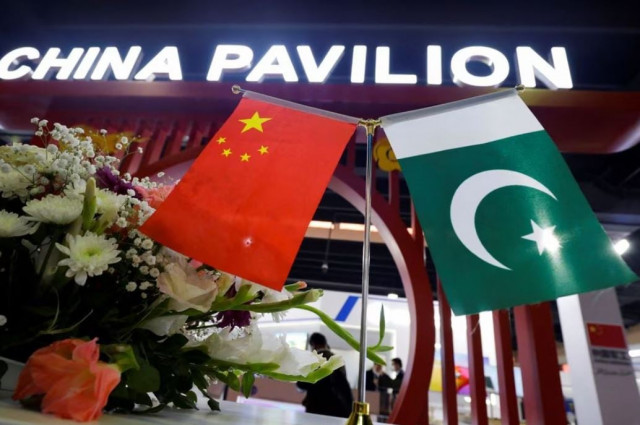
Seventy-five years after Pakistan and the People’s Republic of China established diplomatic relations, a partnership born in the unsettled politics of the post-colonial world has evolved into one of the most consequential relationships in the Global South.
What began in 1951 as a convergence between two young states navigating sovereignty, security and an unequal international order has now gradually acquired a broader developmental and geopolitical meaning.
The circumstances were markedly different. China was a newly established revolutionary state confronting diplomatic isolation and the emerging Cold War order, while Pakistan was a young post-colonial country searching for security, economic stability and a place in a world still structured by colonial legacies.
Across the decades, the relationship proved remarkably adaptive as it deepened from political and military cooperation into economic partnership, infrastructure, energy, trade and, ultimately, the China-Pakistan Economic Corridor (CPEC).
China itself has undergone a historic transformation. Under President Xi Jinping, particularly since 2012, Beijing has placed the concepts of national rejuvenation, high-quality development, technological self-reliance, poverty reduction and state capacity at the centre of its political economy.
The Belt and Road Initiative has extended this developmental vision outward, placing connectivity and South-South cooperation within a wider project of shared development.
For Pakistan, the more important question is how its partnership with China can contribute to its own development, through the transfer of knowledge and technology, stronger productive capacity, industrial cooperation and closer integration with a country whose transformation has reshaped the development possibilities of the Global South.
CPEC 2.0 is emerging at the centre of that new equation.
From friendship to development
The historical relationship provides the foundation. Pakistan was among the first countries to recognise the People’s Republic of China, and the two sides established formal diplomatic relations in 1951.
The ties subsequently deepened through the 1963 boundary agreement, military cooperation, economic assistance and Pakistan’s role in facilitating the opening of Sino-US contacts in the early 1970s. In 2015, Xi Jinping’s visit to Pakistan elevated the relationship to an “All-Weather Strategic Cooperative Partnership”.
The relationship entered another decisive stage with the Belt and Road Initiative (BRI), announced by Xi in 2013, and CPEC, formally launched during his 2015 visit.
The distinction is important. Earlier phases of China-Pakistan cooperation were largely about strategic alignment and individual development projects. CPEC placed the bilateral relationship inside a much larger Chinese conception of international economic cooperation.
Xi hailed the BRI at its 10th anniversary in 2023 as a “new platform for international economic cooperation”, based on connectivity in infrastructure, trade, finance and policy. He repeatedly stressed its guiding principle: “planning together, building together, and benefiting together”.
More than 150 countries and over 30 international organisations had signed BRI cooperation documents by then, according to Beijing.
Pakistan occupies a particularly important place within this architecture.
The Xi transformation
The most consequential feature of the Xi era is perhaps the attempt to combine the dynamism of a market economy with the strategic direction of a highly capable party-state.
Xi does not present Chinese modernisation as an imitation of Western development. The 20th National Congress of the CPC in 2022 explicitly defined “Chinese modernisation” as socialist modernisation under the leadership of the Communist Party. Its defining characteristics, Xi argued, include modernisation of a huge population, common prosperity, material and cultural advancement, harmony between humanity and nature and peaceful development.
This meant that the development process was not left primarily to market forces, but was a strategic national project reinforced by institutions capable of mobilising resources over decades.
Five-year plans remain central to this approach. So are industrial policies, state investment, infrastructure construction, technological upgrading, and increasingly sophisticated systems of social and economic administration.
Xi has simultaneously placed enormous emphasis on Party discipline and state capacity. His argument is that political stability and institutional continuity permit China to pursue objectives that transcend electoral cycles. China has made it central to its own conception of modernisation.
Meanwhile, Pakistan’s development debate has often suffered from the opposite problem: frequent changes in policy, weak implementation, discontinuity between governments and a persistent gap between planning and execution.
That is one reason the Chinese experience attracts attention in Islamabad.
The poverty question
Perhaps the strongest evidence for the developmental claims of the Xi era is China’s campaign against extreme poverty.
A new study published last year by Jason Hickel showed that wages in China were now higher than in every other developing country in Asia.
“This has happened for several key reasons. For one, surplus labour in China has been increasingly absorbed into the wage-labour economy, which has amplified workers’ bargaining power. At the same time, the current leadership of President Xi Jinping has expanded the role of the state in China’s economy, strengthening public provisioning systems – including public healthcare and public housing – that have further improved the position of workers,” the study noted.
Beginning in 2013, the targeted poverty alleviation campaign attempted to identify poor households individually and tailor interventions to their circumstances. Local governments were tasked with identifying households, improving access to education and healthcare, developing local industries, providing employment and, where necessary, relocating communities from areas with exceptionally difficult living conditions.
By 2020, China reported that 98.99 million rural residents living below its national poverty line had been lifted out of poverty, while all 832 officially designated poor counties had been removed from the poverty list.
The scale of China’s broader poverty reduction is even more striking. The World Bank has estimated that almost 800 million people in China moved above the international extreme-poverty line over roughly four decades, accounting for close to three-quarters of the global reduction in extreme poverty during that period. It identifies economic transformation, urbanisation, infrastructure, education and policies targeting disadvantaged populations as among the major drivers.
Xi has treated the achievement not merely as a social-policy success but as evidence for the Chinese development model.
The political language surrounding it is revealing. Poverty eradication is presented as a collective national mobilisation — an exercise of state capacity directed towards a defined social objective.
There are legitimate qualifications. China’s official poverty line and methodology do not capture every dimension of inequality, urban deprivation or relative poverty. The eradication of extreme poverty therefore, should not be confused with the elimination of inequality. But even critical assessments acknowledge the extraordinary scale of China’s poverty reduction and the role of infrastructure, public services and targeted interventions.
For Pakistan, this is potentially the most important lesson — not the replication of Chinese institutions, but the idea that poverty can be treated as a structural development problem rather than simply as a welfare issue.
CPEC and the second phase
The first phase of CPEC reflected an earlier Chinese development logic: solve infrastructure bottlenecks, address energy shortages and establish physical connectivity.
Roads, power plants, transmission infrastructure, Gwadar and upgrades to the Karakoram Highway were intended to overcome constraints that had long limited Pakistan’s growth. The gains have been significant, particularly in transport and electricity capacity, although the financial structure of some power projects and Pakistan’s wider energy-sector weaknesses have generated serious long-term liabilities.
Pakistan’s power-sector circular debt, for example, stood at about Rs2.635 trillion at the end of January 2024, according to the World Bank.
That experience helps explain the changing language surrounding CPEC.
The next stage is increasingly lauded as “CPEC 2.0”, moving from infrastructure towards industrialisation, agriculture, technology, digitalisation and integration into value chains.
The May 2026 China-Pakistan joint statement explicitly committed both countries to “high-quality” Belt and Road cooperation and the “high-quality development of the upgraded version of CPEC 2.0”. It also highlighted the phased realignment of the Karakoram Highway, the development of Gwadar as a regional connectivity hub and greater use of the Khunjerab Pass for land connectivity.
This shift is crucial. A road does not by itself constitute development. Its developmental significance depends on what it connects, what industries emerge around it, what goods move along it, who obtains employment and whether domestic firms acquire productive capabilities.
A different idea of global governance
The Xi era has also transformed the international dimension of China-Pakistan relations.
Xi’s foreign-policy vocabulary increasingly revolves around the “community with a shared future for humanity”, alongside the Belt and Road Initiative and the Global Development, Security, Civilisation and Governance Initiatives.
The philosophy behind these initiatives is explicitly critical of unilateralism and bloc politics. In a 2025 APEC speech, Xi argued that “unilateralism precipitates division and regression” while “multilateralism is the viable option for tackling global challenges”.
He presented the BRI and four Global Initiatives as China’s proposed responses to major global problems.
For Pakistan, this language resonates with a longstanding preference for a more representative international order and greater strategic space for developing countries.
The two countries’ 2026 joint statement went further, recording Pakistan’s support for the Community with a Shared Future for Humanity and all four Global Initiatives.
However, this does not mean that Pakistan has abandoned its other international relationships. Rather, it indicates a convergence around a world in which power is less concentrated and development is given greater weight in international affairs.
Technology and the next phase of modernisation
A further dimension of Xi’s development philosophy is technological self-reliance.
China’s enormous expansion of research and development, its push into artificial intelligence, advanced manufacturing, digital infrastructure, electric vehicles, space technology and other strategic sectors reflects an increasingly explicit conviction that technological capability is inseparable from national sovereignty.
In February 2026, Xi described scientific and technological self-reliance and strength as the “key” to building China into a great modern socialist country.
For Pakistan, this opens a different field of cooperation. The future of CPEC is likely to involve not merely roads and power plants but digital infrastructure, artificial intelligence, agricultural technology, telecommunications, vocational training and industrial research.
Meanwhile, Pakistan’s preparations for deeper cooperation already reflect this shift. During Prime Minister Shehbaz Sharif’s May 2026 visit, the two sides placed IT and telecommunications, battery energy storage and agriculture among the areas for business cooperation.
What Pakistan can — and cannot — borrow
There is a temptation in discussions of the “China model” to reduce China’s transformation to a simple formula. The reality is more complex.
China’s rise was built over decades through a particular combination of industrialisation, state capacity, education, infrastructure, technological accumulation, market reforms and integration into the global economy.
Pakistan cannot reproduce that history but it can learn from the underlying principle that development requires a sustained national project in which infrastructure serves production, industrial policy builds domestic capabilities, technology is progressively absorbed, and poverty reduction is connected to employment, education and social development.
This is where China’s experience becomes particularly relevant to Pakistan. Chinese cooperation can help address some of the structural constraints that have held back Pakistan’s development.
For instance, US technological and military dominance for decades allowed Washington to exercise extraordinary leverage over allied states, often narrowing their strategic choices and tying their security to the interests of a global power. Pakistan was no exception.
Its entrenched elite repeatedly chose external dependence over building the productive and institutional foundations of national autonomy, with consequences that were ultimately borne by its people.
However, Pakistan’s May War with India offered a striking reminder that the old hierarchy was no longer as absolute as it once appeared. Much of the Western military hardware deployed against Pakistan was confronted by Chinese technology, underscoring the emergence of a different centre of technological and industrial power.
The battlefield demonstrated the value of Chinese technology but the larger opportunity lies in learning from China’s experience of industrial policy, technological development, poverty reduction and social transformation, and in exploring the possibilities of its evolving ecosocialist vision.




COMMENTS
Comments are moderated and generally will be posted if they are on-topic and not abusive.
For more information, please see our Comments FAQ