
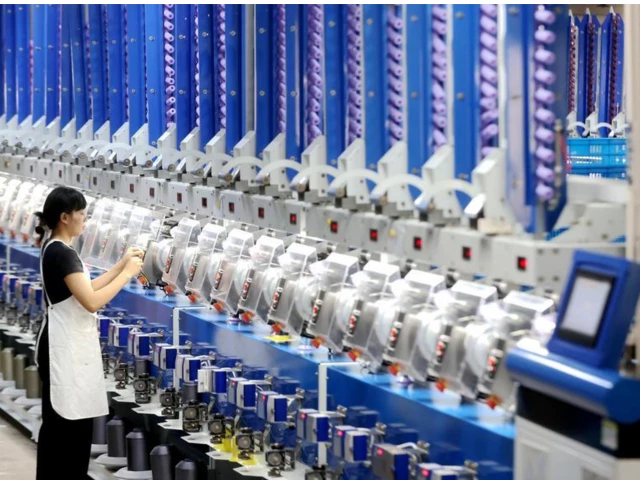
The debate over China’s so-called “overcapacity” reflects less an economic imbalance and more a narrative shaped by geopolitical rivalry and protectionist impulses. The overcapacity claim is based on the assumption that the Chinese manufacturing sector produces far more than global markets can consume. And this “production overdrive” is spurred by government subsidies and dwindling domestic demand. However, an analysis of market behaviour, economic principles, and demand trends reveals a completely different reality: China’s industrial capacity is not excessive. It’s responsive, competitive, and increasingly indispensable.
The overcapacity concept is grounded in clear economic indicators: persistent underutilisation of production facilities, rising inventories, weak profitability, and lack of demand. By these measures, China’s industrial sector doesn’t exhibit systemic overcapacity. According to China’s official data, industrial capacity utilisation stood at around 74.4% in 2025, which is considered reasonable for a large economy. Utilisation rates are even higher in advanced manufacturing sectors. At the same time, lower figures in traditional industries point to structural adjustments linked to the green transition of the world’s No. 2 economy rather than chronic inefficiency.
Market dynamics also punch holes in this narrative. There is a growing demand for Chinese products — from air conditioners and home appliances to EVs and renewable energy technologies — not because they are forcibly pushed into markets, but due to their affordability, accessibility, and, above all, quality. During the record-breaking heatwaves that swept through much of Western Europe in July, China-made air conditioners became top-selling items. This surge in AC demand indicates a simple truth: production that meets genuine needs cannot reasonably be described as excessive.
Also Read: China's foreign trade posts strongest start in five years
The debate, according to critics, also overlooks the basic principle of comparative advantage in global trade. Production in excess of domestic demand is not inherently problematic. It is, in fact, the very basis of international trade. China, widely regarded as the “factory of the world,” has developed the capacity to produce at scale due to its comprehensive industrial ecosystem and intensely competitive domestic market. This makes Beijing a critical supplier in global supply chains. Framing such capacity as “overcapacity” risks conflating competitiveness with distortion.
The claim is also skewed. When European industries dominate global markets in sectors such as automobiles, pharmaceuticals, and aviation, it is celebrated as a reflection of innovation and competitive strength. However, when Chinese manufacturers achieve similar global reach, it becomes a problem. This selective interpretation shows the problem is not capacity itself, but who possesses it.
China’s industrial strength is driven by several structural advantages, including intense domestic competition, consistent technological innovation, economies of scale, and the world’s most complete manufacturing supply chain. These factors together have enabled Chinese companies to improve efficiency, reduce costs, and enhance product quality over time. The resulting competitiveness is not an anomaly but the outcome of sustained industrial development within a market-driven environment.
Similarly, subsidies should also be studied in a broader global context. Industrial support policies — ranging from tax breaks and R&D funding to low-interest loans — are used by major economies worldwide to spur innovation and incentivise strategic sectors. China says its policies are consistent with international norms and World Trade Organization rules, as its subsidies are directed toward innovation, green development, and public welfare. Such tools are not exclusive to China; rather, they are systemic features of modern economic governance.
Critics argue that the implications of such claims extend beyond trade debates, particularly in the context of the global energy transition. The world direly needs affordable clean technologies, including solar panels, batteries, and electric vehicles. China has emerged as a leading supplier in these sectors, drastically lowering the cost of adoption globally. For many developing countries, access to these technologies depends on affordability. Restricting Chinese exports through tariffs or other barriers risks increasing costs, slowing climate progress, and limiting access for economies that need it most.
Protectionist responses may also carry unintended consequences. Trade curbs can raise consumer prices, exacerbate inflation, and disrupt established supply chains. They may also hinder the efficient allocation of resources globally, reducing overall economic welfare. Moreover, such measures risk fragmenting the global trading system, replacing cooperation with competition in ways that undermine long-term growth.
China pushes for an alternative approach focused on openness and cooperation. Instead of erecting barriers, it encourages deeper integration through investment, joint ventures, and collaborative R&D. Encouraging Chinese firms to localise production in foreign markets, particularly in partnership with domestic enterprises, offers a pathway to assuage concerns while preserving the benefits of global supply chains. Such cooperation can enhance technological exchange, create jobs, and deliver win-win outcomes.
Read: China's foreign trade expands 17.3% in first 7 months
The protracted overcapacity debate ultimately reflects broader shifts in the global economic landscape. As China’s manufacturing capabilities continue to expand and evolve, they challenge established hierarchies and reshape patterns of production and trade. In this context, economic arguments are often intertwined with strategic considerations, complicating objective assessment.
A more constructive perspective would focus on aligning capacity with global needs rather than labeling it as excessive. The world today faces pressing challenges — from climate change to rising living costs — that require scalable, efficient, and affordable solutions. China’s manufacturing sector is well positioned to contribute to these efforts.
Portraying China’s industrial strength as overcapacity is a naïve interpretation of a complex and dynamic reality. Far from being a liability, China’s production capabilities represent a critical component of the global economy, enabling access to essential goods and supporting development worldwide. As global demand continues to evolve, the emphasis should not be on curtailing capacity, but on ensuring that it is harnessed effectively to meet shared challenges and opportunities.




COMMENTS (1)
Comments are moderated and generally will be posted if they are on-topic and not abusive.
For more information, please see our Comments FAQ