
More than a century ago, Alfred Thayer Mahan offered an idea that still explains the modern world with surprising force: the nations that shape the seas shape history itself. Mahan, an American naval thinker writing in the age of empires, argued that real power does not rest only in armies, borders, or rhetoric. It rests in trade routes, ports, naval reach, and above all, in command over the narrow maritime passages through which commerce flows. Put simply, his theory of Sea Power held that whoever influences the sea lanes influences the world.
That old theory now feels strikingly modern.
The current confrontation involving the United States and Iran is often described through the language of missiles, sanctions, air power, and escalation. But beneath those headlines lies a deeper strategic contest: the contest over waterways.
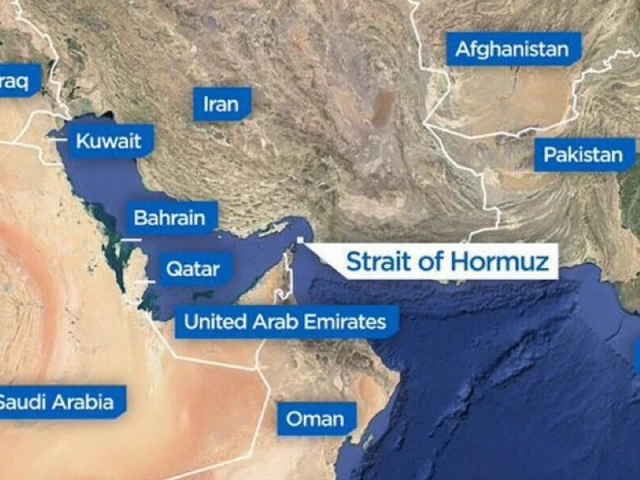
The Strait of Hormuz, through which a substantial share of the world’s energy trade moves, has again become a focal point of global anxiety. Iran has spoken in the language of maritime pressure. The United States has responded in the language of maritime power. Meanwhile, concern has spread westward toward the Bab al-Mandeb and the Red Sea corridor, and eastward toward the wider significance of the Strait of Malacca. These are not isolated tensions. They are part of one map, one logic, and one strategic pattern—the pattern Mahan theorised about.
What makes chokepoints so important is not merely that ships pass through them. It is that power passes through them too. A narrow body of water can become a political instrument far greater than its physical size. A state that can reassure shipping gains influence. A state that can unsettle shipping gains leverage.
Even the suggestion that a strait may become unsafe can ripple outward into oil prices, insurance costs, diplomatic calculations, and military deployments. The sea, in other words, is not neutral geography. It is a theatre of power.
This is why the race to exert influence over the world’s chokepoints matters so much. It is not just about whether one passage can be blocked or another patrolled. It is about who gets to shape the terms of movement through the arteries of global commerce.
Hormuz matters because it sits at the heart of energy flows. Bab al-Mandeb matters because it links the Indian Ocean to the Red Sea and onward to the Mediterranean. Malacca matters because it is one of Asia’s great commercial bottlenecks. Separate them on a map and they may look like regional concerns. Connect them strategically, and they become a single maritime story: the theory of Sea Power in action.
The emerging US-Indonesia defence understanding is significant in precisely this sense. It need not be dramatised into an imminent crisis in Malacca to matter. Its importance lies in what it suggests about the strategic imagination of our time. The contest is no longer being thought of only in terms of one conflict zone or one adversarial relationship. It is being thought of in chains: of access, passage, alliance, mobility, and influence.
Mahan understood that sea power is never confined to one body of water. It works cumulatively. A move near one maritime corridor changes calculations around another. Presence in one theatre strengthens leverage in the next.
That is why the sea is becoming the central stage again.
If the world economy is a body, then its chokepoints are arteries. Whoever can secure those arteries possesses an outsized role in world affairs. That is why great powers keep returning to them. It is also why regional powers located near them are never merely local actors. Geography, when combined with strategy, becomes influence.
And it is here that Pakistan enters the picture in a particularly striking way.
In the midst of a crisis defined by maritime pressure and great-power signalling, Pakistan has emerged as an unlikely but increasingly important diplomatic player. Pakistan has shown that strategic relevance is not exercised solely through firepower. It can also be exercised through credibility, access, and diplomacy.
This did not happen by accident. If Pakistan today finds itself closer to the centre of major diplomatic currents than many would have predicted, it does so because of the strategic effort that has gone into building this role. Efforts made by a synchronised state machine and its Chief of Defence Forces and Chief of Army Staff Field Marshal Syed Asim Munir. Pakistan may not border the Strait of Hormuz, but it has nonetheless become one of the key players shaping events around it.
The larger lesson is clear. The struggle over Hormuz, the anxieties around Bab al-Mandeb, the signalling tied to Malacca, and the diplomatic re-emergence of Pakistan all point to the same conclusion: the sea is not the backdrop to international politics; it is one of its principal arenas. Mahan saw this long ago. The world is relearning it now.
The author is an International Relations expert and an alumnus of London School of Economics.




COMMENTS (2)
Comments are moderated and generally will be posted if they are on-topic and not abusive.
For more information, please see our Comments FAQ