
Operation Ghazab Lil Haq will likely be remembered less for a single strike and more for what it changed in the psychology of the western front: Pakistan stopped treating cross-border pressure as an “acceptable level of pain” that must be absorbed quietly while the country tries to fix everything else. For years, raids, fire assaults on posts, militant movement, and the sense that violence could be switched on and off from across the line acted like a steady tax on security, investor confidence, and diplomacy. The operation’s first and biggest success is that it signaled a ceiling to that tolerance, and it did so in a way that looked organized rather than emotional.
A key difference this time was consistency. Pakistan’s western posture has often suffered from oscillation: anger followed by fatigue, strong statements followed by drift. Adversaries exploit that pattern by waiting Pakistan out. Ghazab Lil Haq was designed to break that expectation. Whatever one thinks of the politics around it, the state communicated a repeated message: the frontier will be defended actively, and cross-border testing will carry real costs. Consistency may not sound like a dramatic achievement, but in deterrence it is the entire game; as the maxim goes, “Actions speak louder than words.” When a state becomes predictable in its response, it becomes harder to probe casually.
The second success was clarity of purpose. The operation was framed not as venting, but as a structured response to a defined problem: repeated cross-border pressure and the militant ecosystem that feeds it. That matters because force becomes strategically useful only when it is tied to a policy message—“we want stability, but we will impose costs when tested”—instead of being treated as a short burst meant mainly for domestic optics.
In plain terms, Ghazab Lil Haq tried to reset the cost-benefit calculation of those who assumed Pakistan would limit itself to protests and brief retaliation. As Sun Tzu put it, “In the midst of chaos, there is also opportunity.” The opportunity here was to convert a dangerous, recurring problem into a clearer strategic lesson: tests will be answered, and ambiguity will be reduced.
The third success was diplomatic. Pakistan’s warnings on the Afghanistan file have often been heard internationally and then quietly shelved. A large, sustained operation forces attention, even from actors who do not want deeper involvement. Attention is not sympathy, but it is leverage. By making the costs of inaction visible, Ghazab Lil Haq pushed the issue back into a higher-priority lane and made it harder for external stakeholders to treat the western frontier as “background noise.”
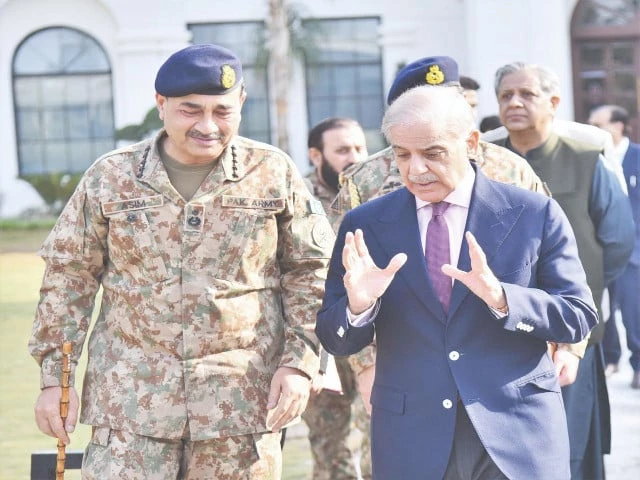
This is where Chief of Defence Forces and Chief of Army Staff Field Marshal Asim Munir, deserves due credit—not because he “solved” the Afghanistan problem (nobody can), but because the operation reflected discipline: tighter decision cycles, clearer thresholds, steadier messaging, and a response that looked planned rather than improvised. Pakistan appeared less surprised by events on its western front. That is not a small thing; it is usually the difference between a state managing a frontier and a frontier managing the state.
Just as important, this operation has highlighted a broader change inside Pakistan: the synchronisation of state machinery.
Pakistan’s weakness has often been that its institutions operate like separate departments in separate universes—one message from politics, another from enforcement, another from diplomacy, another from intelligence—creating gaps that hostile networks exploit. Under the CDF’s stewardship, the state has looked more “stitched together.”
Intelligence collection, kinetic response, border administration, and strategic communication have appeared to move in tighter sequence, reducing lag time between warning, decision, and action. That matters because modern threats don’t give governments the luxury of slow coordination: attacks are planned quickly, narratives are weaponized instantly, and financing routes shift overnight.
For ordinary Pakistanis, this kind of synchronisation translates into a simpler outcome: fewer surprises. When the state’s arms work together, it becomes harder for militants to exploit seams—crossing points that aren’t watched, legal loopholes, bureaucratic delays, or mixed public signals that create confusion. A more coordinated state also reassures the public in the most basic way: it looks present.
That sense of presence is what pushes back against fear, rumor, and panic—the invisible forces that can destabilise a society even when the battlefield is far away. In that sense, the CDF’s most valuable contribution may be less about any single operation and more about turning security from episodic reaction into an organised, continuous posture.
The real test will be whether Ghazab Lil Haq reduces the frequency and lethality of future attacks, shrinks the space for militant maneuver, and creates a firmer basis for controlled diplomacy. But measured against its immediate objective of restoring deterrence and reasserting that Pakistan will not be bled indefinitely at low cost, the operation has already achieved something important: it made Pakistan look steadier, more deliberate, and harder to casually test.
The author is an International Relations expert and an alumnus of London School of Economics.




COMMENTS
Comments are moderated and generally will be posted if they are on-topic and not abusive.
For more information, please see our Comments FAQ