
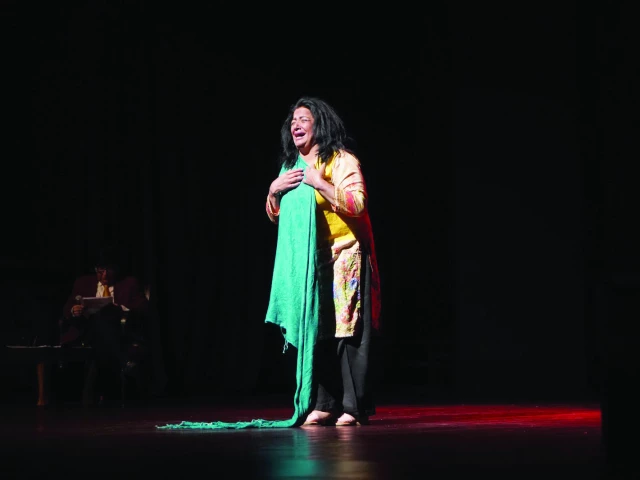
In the grand, often male-dominated archives of history, resistance is often measured by the size of a protest or the intensity of a battle. However, in the valleys of Kashmir, a different, more enduring form of struggle is taking place—waged in homes, fields, and silence—unfolding slowly across generations. This is the "everyday resistance" of women, a quiet but revolutionary force that turns the domestic sphere into a fortress, and culture into a shield.
For the women of Kashmir, resistance is not merely an occasional act of defiance; it is a way of being. As International Women’s Day draws close, attention often settles on figures like Asiya Andrabi, Fehmeeda Sofi, and Naheeda Nasreen, whose struggle, unlike them could not be incarcerated in Tihar jail. Beyond the prison walls, millions of other women are carrying out a silent rebellion in their kitchens, their courtyards, and shared spaces. Away from the headlines, they are performing the "survival labour," transmitting memory, sustaining the community and ensuring that despite decades of conflict, the Kashmiri identity is not just surviving—it is thriving.
The home as a political space
In a militarised environment, the boundary between the private and the public blurs. For a Kashmiri woman, the home is not external to conflict but embedded within it, a site of constant negotiation and adaptation. Scholars of Marxist feminism have often argued that "social reproduction"—the work of cooking, cleaning, and raising children—is what keeps a society running. In Kashmir, this labour is profoundly political.
When a mother insists on speaking Koshur (the Kashmiri language) to her children in an era where cultural assimilation is a constant pressure, she is performing an act of resistance. When she tells her children stories of their ancestors, or explains the significance of the Pheran and the Kangri, she is preserving a heritage that the state seeks to dilute. This is what we call the "politics of presence"—the refusal to let a culture be erased by ensuring its presence in the most intimate spaces of life.
The Zoon Dubb: A window to the world
In her evocative memoir Rumours of Spring, Farah Bashir introduces us to the Zoon Dubb—the traditional Kashmiri moon terrace. From this elevated wooden balcony, generations of women have watched the world outside. During curfews and lockdowns, the Zoon Dubb became more than just architecture; it became an observatory.
Women watched the movement of troops, the gathering of neighbours, and the changing of seasons. By observing and then narrating these events to their families, they became the keepers of the community’s "unofficial" history. This domestic observation is a vital counterpoint to official narratives. It proves that even when women are confined to their homes, their minds are traversing the political landscape, documenting every tremor of the earth and every change in the wind.
Cultural preservation: Lullabies of defiance
Culture is often the first casualty of conflict, but Kashmiri women have used it as a primary tool of survival. The use of traditional folk songs and lullabies to convey political messages is a long-standing tradition in the valley. During recent years, we have seen the emergence of "Lullabies of Resistance"—songs that weave the pain of the present with the hope of the future.
Consider the Kashmiri adaptation of the anti-fascist anthem Bella Ciao, titled Waliv Wathiv (Wake Up, Arise!). When women sing these verses at weddings or community gatherings, they are not just performing; they are engaging in a form of political education. They are ensuring that the spirit of defiance is tuneful, memorable, and impossible to arrest. This cultural production, led by collectives like Zanaan Wanaan, ensures that the struggle for identity is passed down through the senses—through the sound of the voice and the rhythm of the heart.
Lessons from the world: Women as the bridge of generations
Kashmiri women are part of the global sisterhood of defiance. Across societies under siege, women have ensured that the flame of resistance is passed to the next generation.
The mothers of the Plaza de Mayo (Argentina) have confronted the dictatorship through their Thursday marches in white headscarves.
The Palestinian women have turned the embroidery of Tatreez into a political map, ensuring that the geography of their homeland is etched into the fabric of their lives.
The white South African women became the "conscience" of the country, proving that resistance can be found in the simple act of standing still and bearing witness.
In all these examples, women took the trauma of the present and converted it into the resilience of the future.
The responsibility of memory
Documenting these lives is not just an academic exercise; it is a political responsibility. To write about the woman who cleans her house during a lockdown, or the journalist Masrat Zahra who continues to click photos despite the threat of the UAPA, is to bear witness to a miracle of human endurance.
Kashmiri women are proving that they are not "waiting to be saved." They are the ones doing the saving. They are saving their language, their stories, and their children’s sense of self. They are the archivists of a struggle that is being written in real-time.
The unconquerable spirit
On this International Women’s Day, as we look at the Valley of Kashmir, let us see past the traditional image of the victim. Let us see the "Iron Lady" Parveena Ahanger, the intellectual Farah Bashir, the once jailed Zamurad Habib, and the millions of unnamed women who keep the hearth fires burning.
Their resistance is found in the way they mourn, the way they sing, and the way they refuse to disappear. They have proven that while you can jail a person, you cannot jail a lullaby. You cannot incarcerate a memory. And you can never truly defeat a people whose women have decided that they will not be forgotten.
The resistance of Kashmir is feminine. It is cultural. It is eternal. And as long as the Zoon Dubb stands and the mothers speak Koshur, the soul of Kashmir will remain unconquered.
The author is a PhD researcher at National University of Modern Languages and a writer focusing on women’s resistance, human rights, and Kashmir advocacy.




COMMENTS
Comments are moderated and generally will be posted if they are on-topic and not abusive.
For more information, please see our Comments FAQ