
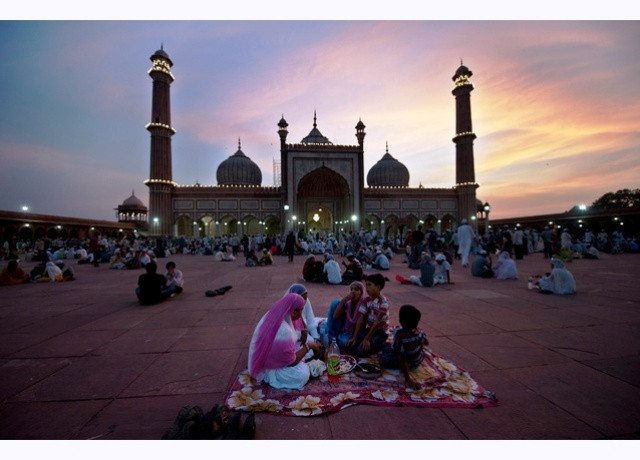
Every Ramazan, millions of Pakistani families brace themselves not just for the spiritual rigours of fasting, but for the economic strain that the holy month inevitably brings. Food expenditure in low-income households typically rises by 20 to 30 per cent during Ramazan due to increased consumption and price volatility.
For decades, the government's response was the Utility Stores Corporation, a sprawling network of subsidised retail outlets that promised affordable flour, sugar, ghee, and pulses. The promise, however, was rarely fulfilled at scale. What the nation often witnessed were long queues under harsh weather conditions, inconsistent stock availability, complaints of quality control, and leakages in subsidy distribution. Audit reports over the years repeatedly highlighted inefficiencies, delayed procurement cycles, and weak inventory management systems that limited the impact of commodity-based relief.
The decision to close the USC model for Ramazan relief and pivot to direct digital cash transfers under the Prime Minister's Ramazan Relief Package represents one of the most consequential social protection reforms in recent years. Instead of subsidising commodities through a multilayer supply chain, the state chose to transfer purchasing power directly to households.
Last year marked the first full-scale implementation of this digital approach. The government allocated Rs20 billion and committed to bypassing utility stores entirely. Nearly two million families received Rs5,000 each through regulated digital payment platforms such as JazzCash and EasyPaisa. According to official data released at the end of 2025, over 95 per cent of payments were successfully disbursed within the first ten days of Ramazan. Transaction reconciliation rates exceeded 98 per cent, and independent validation exercises reported minimal duplication or ghost beneficiary cases. Administrative costs were significantly lower compared to commodity subsidy operations, where logistics, warehousing, and retail overhead historically consumed a notable portion of allocations.
Building on those results, this year's allocation has been increased to nearly Rs40 billion. Coverage has expanded to more than twelve million families nationwide, with the per-family transfer raised to Rs13,000. This represents a six-fold increase in beneficiary outreach compared to the initial rollout. If fully executed, the programme will inject tens of billions of rupees directly into local markets across all provinces, stimulating retail activity in both urban centres and rural tehsils. Early projections from provincial administrations suggest that over 60 per cent of beneficiary households are located outside major metropolitan areas, making this one of the largest rural-targeted cash disbursement exercises conducted in Pakistan during Ramazan.
What distinguishes the current framework is its digital architecture. Beneficiaries are identified through the National Socio-Economic Registry and verified against NADRA's CNIC database. Eligibility filters incorporate poverty scorecards, household composition data, and cross-checks against government employment and tax records to reduce inclusion errors. Payments are routed through regulated financial institutions overseen by the State Bank of Pakistan, ensuring compliance with anti-money laundering standards and transaction transparency.
The National Information Technology Board developed the pmrrp.nitb.gov.pk portal, enabling citizens to check eligibility using their CNIC number. Within the first week of launch, the portal recorded millions of queries, reflecting high public engagement. A centralised data dashboard allows administrators to monitor disbursements in real time at provincial and district levels. Officials report that daily transaction volumes during peak days crossed one million payments.
Institutional coordination has been central to the programme's expansion. NADRA provides biometric and identity verification infrastructure. The PTA coordinates with telecom operators to facilitate wallet activation and outreach messaging. Millions of SMS alerts and automated calls were dispatched to inform eligible households. The State Bank supervises payment channels and ensures liquidity across agent networks, including branchless banking agents operating in remote areas. Commercial banks and fintech firms process transactions and provide cash-out facilities where required. State media and information departments amplify awareness campaigns to reduce misinformation and fraud risks.
Challenges remain. Digital literacy varies significantly across regions. Smartphone penetration is estimated at roughly half of the population, with lower rates among women in rural districts. SIM registration disparities persist, particularly among women who may not have devices registered in their own names. Connectivity gaps affect certain remote localities, and biometric verification occasionally fails for manual labourers whose fingerprints are difficult to scan. Addressing these structural constraints will require continued investment in connectivity infrastructure, gender-inclusive digital access policies, and grievance redress mechanisms.
Even so, the transition from two million digital payments in the initial year to a target of twelve million represents a structural shift in how welfare is delivered. A 24-hour control room, real-time monitoring systems, and a call centre that handled more than 200,000 queries within the first days of Ramazan demonstrate growing administrative capacity. Clear public messaging that no fees are charged and that citizens should rely only on official government domains has reduced opportunities for fraud.
Pakistan's Ramazan Relief Package is evolving from an emergency seasonal intervention into a scalable digital social protection framework. The older commodity subsidy model positioned the state as retailer, a role associated with operational inefficiencies and limited transparency. The digital transfer model treats households as decision-makers, allowing them to prioritise their own consumption needs while reducing leakages in the system. If the current momentum continues, and if connectivity and inclusion gaps are systematically addressed, this approach could lay the groundwork for a broader, year-round digital safety net that extends beyond Ramazan and reshapes the architecture of welfare delivery in Pakistan.
The writer is a poverty alleviation expert.




COMMENTS
Comments are moderated and generally will be posted if they are on-topic and not abusive.
For more information, please see our Comments FAQ