
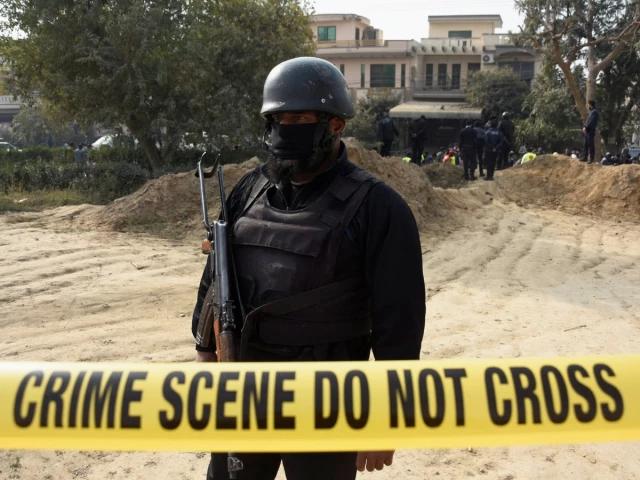
Target killing is one of the most divisive methods of terrorism that has been practiced in Khyber Pakhtunkhwa. Unlike other types of attacks that aim for achieving massive casualties, target killings are selective, symbolic, and deliberate. They are aimed at specific individuals whose death affects the influence of the state and fills the targeted individuals and their institutions with fear. For example, from 2014 through 2025, there was a trend in target killings in KP that symbolized only the changing tactics of terrorists.
Statistical examination of the target killing cases between 2014 and 2025 reveals that there are three distinct phases. In 2014, there were 16 reported cases, and then a massive increase was witnessed in 2015 and 2016 with 65 and 86 cases, respectively.
This corresponds to the retaliation from the militants and the disruption of terrorist infrastructure. Due to the impact of intelligence-based operations and policing initiatives, the number of cases decreased and stayed steady between 2017 and 2020, ranging from 31 to 46 cases annually. However, since 2021, the situation has worsened. There were 50 cases in 2021, which increased to 106 in 2022, 73 in 2023, 90 in 2024, and 117 till 2025. It represents the most critical phase of target killings in the KP region in the current last ten years.
One of the most alarming factors pertaining to this trend is how much security and Law Enforcement organizations have been affected. Police have been the major sufferers in this regard, with 442 police martyred and 90 others injured in target killing attacks from 2014 to 2025. There have been 38 FC martyrs and 9 others injured in such attacks, along with 23 military officers. Moreover, 27 have been martyred and 10 have been injured in target killings in Khasadar Forces.
Analysis of attacks on law enforcement shows some patterns of system vulnerabilities. A great proportion of police killings happens in connection with their daily movements to or from their posts, during investigations, or even at their houses. This shows that terrorists are doing their homework and watching their targets. They are not just trying to kill people they are trying to scare others.
There are several inter-linked reasons for the increase in the number of targeted killings that have taken place from 2014 through 2025, especially since 2021. One of the most crucial contributing elements for this increase is the shift in the regional security dynamics, which, in turn, encouraged the militants immensely. The terrorist groups have regenerated themselves and altered their patterns of the attack, such as mass killings, to targeted killings, which demand less infrastructure but have more influence.
Another important aspect that contributed to the situation would be the availability of international sanctuaries and free movement through porous borders. Even though there has been development in managing the borders, there are weaknesses that are exploited by the militant groups for planning, escape, and training.
Furthermore, intelligence and prosecution delay, low rates of conviction, and intimidation of witnesses would contribute to non-deterrence. Since there is lack of prosecution for target killing culprits, there is continuity in the culture of impunity.
Local facilitation and radicalization also act as a factor that sustains targeted violence. The urban cells and the sympathizers offer shelter, transportation, arms, and information pertaining to targets. Where there has been a historical presence of militants, fear and intimidation prevent the population from cooperating with security forces. This makes it possible for the networks responsible for target killing to rebuild even after arrests or neutralization of the most senior operatives.
To ensure minimal risk of targeted killing attacks, the government must employ a comprehensive approach to address such threats. To make intelligence-led policing effective, there must be improvements made to human intelligence networks through immediate information-sharing to ensure effective threat assessment.
For scalable security plans to be effective for high-risk personnel on the force, they must be formalized instead of remaining temporary. Targeted operations are necessary to neutralize the facilitating agents and city sleeper cells to ensure there are no elements to carry out targeted attacks.
The judicial and prosecution reforms will be equally important since they can significantly increase conviction rates and deterrence through expedited trials of terrorism cases, efficient witness protection procedures, and improved collaboration between investigators and prosecutors.
Border management needs to continue being strengthened through surveillance, biometric controls, and coordinated monitoring. Community engagement and counter-radicalization initiatives need to be undertaken to decrease local support for militant violence and rebuild trust between citizens and the state.
Target killings in KP thus constitute a strategic and evolving terrorist threat rather than isolated acts of violence. The need for such an all-encompassing response is highlighted by the dramatic increase between 2021 and 2025 and the consequent strain on Law Enforcement Agencies.
There is statistical evidence that militants are deliberately targeting the state's counterterrorism capabilities. Target killings are not just acts of violence they are a coordinated effort, by terrorists to destabilize the government. The government needs to respond with a strategy that includes improving intelligence, policing and the judicial system.




COMMENTS
Comments are moderated and generally will be posted if they are on-topic and not abusive.
For more information, please see our Comments FAQ