
Last month, while visiting my hometown, Hyderabad, I stopped at a small kiryana store. The owner wasn’t talking about technology at all. He was talking about time.
“Pehle roz ka hisaab raat ko hota tha,” he said. “Ab QR pe paisa aata hai, aur record bhi ban jata hai.” (Before, he would settle accounts at night. Now, payments come in instantly, and a record is created automatically.)
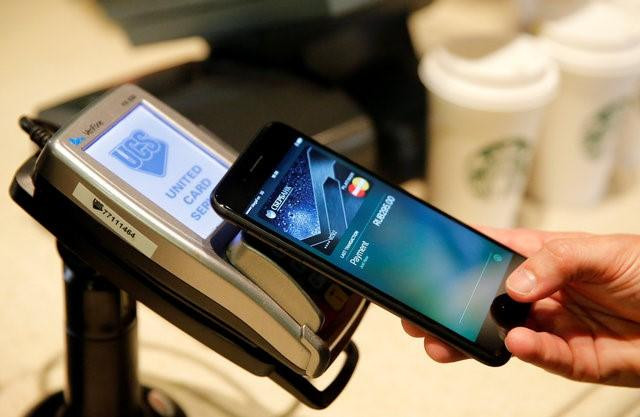
That "record" is the part of Pakistan’s digital shift we don’t talk about enough. We often discuss cashless transactions as a convenience. For most small merchants and micro-entrepreneurs, it’s something bigger: proof. Proof of sales, proof of cash flow, proof that they exist in the formal economy.
Pakistan is at a point where digital payments are no longer a niche behaviour. The rails are being used at scale, and the big question is: can we turn payment behaviour into financial capability, especially for small businesses and women?
What the numbers tell us
At JazzCash, we ended the year with 57 million customers. That scale matters because it indicates that digital usage is no longer limited to big cities or high-income segments.
But adoption doesn’t become a real “shift” until it reaches merchants. Over the year, we grew to 850,000 Raast-enabled QR merchants. This is where digitisation becomes part of daily life; tea stalls, pharmacies, small grocery shops, tuition centres, tailors - places that have traditionally been cash-only.
We processed Rs15 trillion in gross transaction value over the year. That volume isn’t a vanity metric. It is millions of routine decisions, repeated daily: pay digitally, receive digitally, keep the money moving through formal channels.
And digital payments are increasingly showing up in places where trust and transparency matter most. We disbursed Rs100 billion in welfare payments, supporting faster delivery, stronger traceability, and fewer leakages in the system.
MSMEs: where digitisation meets livelihoods
When a small business starts accepting digital payments, a second thing happens quietly: the business becomes easier to serve.
A shopkeeper in Faisalabad described it in a way I’ve never forgotten. He said he didn’t “need a loan,” he needed breathing room, something to manage inventory when prices moved, or when suppliers demanded cash up front.
That’s what MSME finance is in Pakistan. Not always large loans. Often small, frequent, short-term credit that helps a business keep operating.
Over time, this shift has translated into real credit access. In 2025, we disbursed around 57 million digital loans worth approximately Rs250 billion, largely to micro-entrepreneurs who would otherwise struggle to access formal credit.
The significance isn’t the headline figure. It’s what it reflects: sustained demand for formal, on-demand financing, and a clear signal that traditional credit models, built around paperwork, branch visits and long processing times, are not designed for the realities of Pakistan’s small businesses and informal economy.
Women’s inclusion is where the real test lies
If Pakistan’s cashless transition works only for people already comfortable with phones, banking, and documentation, then we haven’t really moved the needle.
In interior Sindh, I met a woman who runs a small home-based business, stitching and embroidery. She told our team something simple: she didn’t want to borrow from relatives anymore. She wanted her own financial identity.
That’s why women-focused financial products aren’t “CSR.” They’re core to inclusion. Women are often managing household budgets, running informal businesses, and making daily spending decisions. When they have a digital wallet, an account pathway, and a service they trust, the impact is immediate: more control, more privacy, and more access.
When insurance works the way it should
Climate stress in Pakistan is no longer abstract, and financial protection has to work when people are under pressure. During recent floods, we worked with EFU Life to activate instant digital insurance payouts in some of the country’s most affected districts, including Muzaffargarh, Multan, Dera Ghazi Khan and the Swat Valley.
More than 43,000 active insurance customers received instant digital claim payouts, including the highest-ever number of claims settled digitally in a single day. To address immediate needs, an initial relief amount of Rs. 1,000 was transferred directly to policyholders’ wallets, enabling families in remote areas to cover first-aid and basic necessities without delays or paperwork. Customers were also encouraged to submit additional claims for health-related expenses of up to Rs. 850,000.
For many of these households, this was the first time insurance worked the way it was meant to - fast, transparent and without friction. Moments like these are how trust in digital insurance is built and show how technology can deliver real protection to underserved communities when it matters most.
Digital rails are carrying real economic weight
Digital finance in Pakistan is no longer confined to convenience payments. Over the year, we processed Rs138 billion in international remittances and Rs527 billion through our payment gateway, a clear indication that digital rails are now supporting meaningful economic flows, from household incomes sent from abroad to payments that keep small businesses operating every day.
These aren’t peripheral transactions. They are central to livelihoods, commerce and economic stability.
What comes next
Pakistan has made tangible progress in moving from cash to digital payments. The next challenge is depth, turning access into capability.
- Can digital payments become the default for everyday commerce?
- Can transaction histories translate into savings and credit access?
- Can MSMEs build resilience, not just accept QR payments?
- Can women move from access to real financial agency?
- Can digital systems respond faster when climate and economic shocks hit?
For platforms like ours, the responsibility is to keep digital finance simple, reliable and trustworthy at scale. For policymakers and regulators, the focus must remain on interoperability, consumer protection, and enabling innovation that serves the broader economy.
Across Pakistan, the shift is already visible, in corner stores, home-based businesses, welfare disbursements and emergency payouts. The opportunity now is to turn digital rails into ladders, from payments to protection, from credit to growth, and from growth to resilience.
That is what Pakistan’s cashless moment is really about.




COMMENTS
Comments are moderated and generally will be posted if they are on-topic and not abusive.
For more information, please see our Comments FAQ