
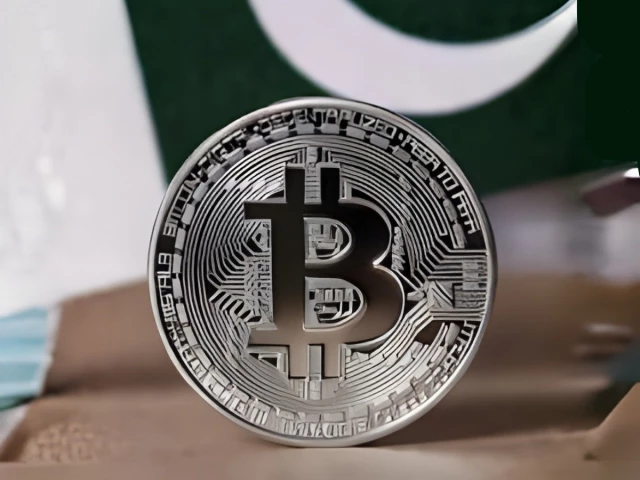
Every year, more than $30 billion in remittances finds its way back to Pakistan. That money comes from millions of Pakistanis working long hours in the Gulf, the UK, the US and countless other places. It pays for school fees, hospital visits, home repairs and the day-to-day moments that keep families going.
Sending that money home has never been as simple as it should be. Transfers move slowly, fees nibble away at the total and exchange rates often feel allergic to fairness. What should reach home in hours can drift for days before becoming available.
Then July 2025 saw a quiet but powerful shift. The government promulgated the Virtual Assets Ordinance and established the Pakistan Virtual Asset Regulatory Authority (PVARA), a structure designed to move crypto activity from the shadows to a monitored and legitimate space. Exchanges and custodians can now operate with licenses and clear boundaries instead of guesswork and fear of sudden crackdowns.
With that one change, the same digital infrastructure that already powers fast, low-cost transfers across the world can finally be built and offered inside Pakistan. Stablecoins and blockchain-based payment systems have moved from being untouchable to being usable under supervision and rules that actually make sense.
The timing is almost poetic. The country already has a deep pool of early adopters. Roughly 26 to 27 million Pakistanis hold crypto wallets, which puts the nation in the top tier globally on the Chainalysis 2025 Global Crypto Adoption Index. A young and digitally fluent population has been waiting for a signal that innovation is not only allowed but welcome.
Now the law exists. The regulator exists. The stage is set. The only real question is how quickly Pakistan can turn this new clarity into faster, cheaper and more dependable ways for families to receive the money their loved ones send home.
Pakistan’s remarkable crypto adoption in global context
Pakistan’s place in the global crypto landscape is far from modest. The Chainalysis 2025 Index puts the country third in the world, right behind India and the US. At the moment, there are an estimated 26 million to 27 million active wallets inside Pakistan.
That number carries weight. Out of roughly 240 million people, more than one in nine already holds some form of digital asset. Among those under 30, the rate is even higher. Many young adults have a crypto wallet long before they ever open a traditional bank account.
This wave didn’t start with big institutions. It grew quietly through freelancers managing cross-border payments, students exploring digital tools and overseas workers searching for cheaper ways to send money home. Most learned through apps, online communities and word of mouth rather than any formal campaign. They use these tools to receive remittances, soften the impact of currency swings or try financial options that banks never made accessible.
What makes the moment striking is the gap between public adoption and official policy. While other countries are still arguing over basic definitions, Pakistan’s population built one of the largest crypto user bases on the planet without any push from regulators. With the Virtual Assets Ordinance now in place, that grassroots ecosystem finally has a legal home.
From outright ban to comprehensive regulation
Rewinding to 2018 paints a very different picture. The State Bank of Pakistan issued a circular that pushed cryptocurrencies out of the formal financial system. Banks stopped touching related transactions, payment gateways shut their doors and the courts backed the stance. For six long years, anything involving digital assets lived in a strict no-go zone.
Move ahead to the first half of 2025 and the landscape looks completely different. President Asif Ali Zardari signed the Virtual Assets Ordinance 2025 in July, creating PVARA to license and monitor the sector. Activities that once triggered warnings or penalties suddenly had a defined legal path.
The Ordinance lays out an actual structure. Exchanges can now apply for licenses. Custodians can register. Wallet providers and stablecoin issuers follow clear compliance rules. There is even a "regulatory sandbox" — a controlled environment where companies can test new products under supervision before releasing them to the wider public.
The remittance revolution
Pakistan pulled in roughly $31 billion in remittances during the fiscal year 2024–25. That money keeps entire households on their feet. The painful part is how much of that money quietly disappears before it even reaches home. Each year, an estimated $2 billion to $3 billion gets lost to fees, currency spreads and layers of middlemen.
Stablecoins such as USDT and USDC flip the equation. Transfers on low-cost blockchain networks settle within minutes and usually cost a fraction of a per cent. A worker sending $1,000 from abroad can have $995 to $999 arrive in Pakistan, instead of watching the total shrink to $920.
The impact scales fast. Even if half of today’s remittance volume shifted to regulated blockchain channels, Pakistan could retain an extra $1.5 billion to $2 billion each year.
Challenges and risks that must be addressed
Of course, fast growth brings its own set of obstacles. Pakistan’s digital asset sector is moving from an informal, scattered landscape to a regulated one, and that transition will not be friction-free.
International partners have raised valid concerns. The IMF has previously highlighted the risks of subsidised electricity being allocated to energy-intensive crypto mining. Their position emphasises maintaining a level playing field and ensuring that innovation does not strain resources meant for households and essential industries. This is a reminder that the sector must grow sustainably, not at the expense of the national grid.
Then there is consumer protection. Refund processes, insured custody and responsive complaint channels need to be in place before the first deposit is made. Every licensed operator must also stay aligned with global AML standards and the guidance set by the Financial Action Task Force (FATF).
A pivotal economic moment
The Virtual Assets Ordinance and PVARA are not a finish line. They are the starting signal. For the first time, policymakers, regulators, universities, banks and startups find themselves working in the same field.
If they get this right, Pakistan can shift from being a country that mostly receives money to one that builds financial tools used far beyond its borders. Progress rarely arrives in dramatic leaps. It comes through small steps. One approved license. One newly trained developer. One family saving on remittance fees that used to disappear into processing costs.
The tools are ready. The people are ready. What happens next depends on how boldly and responsibly the country chooses to move.




COMMENTS
Comments are moderated and generally will be posted if they are on-topic and not abusive.
For more information, please see our Comments FAQ