
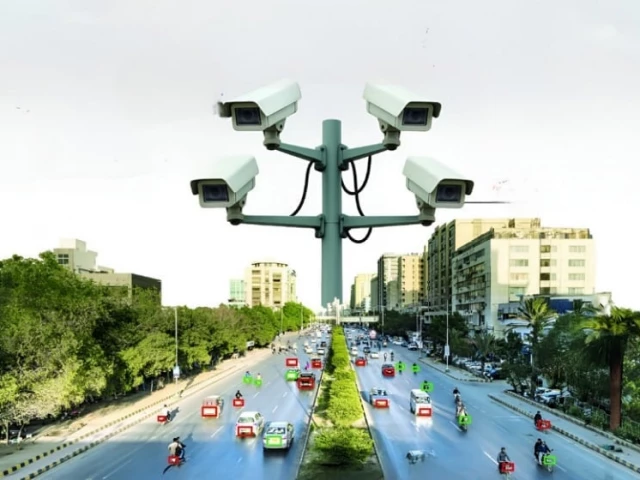
I am a law‑abiding driver, but the moment my wheels touch Sharae Faisal, my palms sweat. Not from speed, but from the fear of a five‑figure e‑ticket landing in my inbox days later. Karachi’s new AI‑powered e‑challan promises order: cameras read plates, software issues fines, and ‘on paper’ saves lives. In practice, the rollout has split the city. It’s not rebellion against rules, it is a revolt against feeling punished in a landscape of broken asphalt, dead signals, and delayed justice.
The numbers are dramatic: over 93,000 e‑challans in the first month, most for seat belts and helmets pulling in over Rs710 million in penalties. Authorities call it deterrence while commuters feel targeted. Citizens report challans arriving late, shrinking the ten‑day waiver window, or not reflecting on the TRACS app at all, as some learned of fines only after the penalties doubled. This is not digital inclusion; it is more like digital anxiety. Worse, mismatched plates and fines on stolen or parked vehicles erode faith that the system can tell right from wrong at scale. Karachi’s infrastructure compounds to this sting where only approximately 69 of 89 signals work, yet cameras watch precisely where governance does not. Citizens are not asking for immunity, they are asking for a fair fight.
To their credit, traffic leaders insist this “faceless” enforcement saves lives, aiming to cut fatalities from three per day to one; early data suggests accident drops in camera‑covered zones. They have introduced first‑time waivers via 11 Sahulat Centres and even fined heavy vehicles with six‑figure tickets for missing trackers which signals that accountability is not just for the weak and the poor. But accountability needs infrastructure. Karachi requires approximately 400 smart signals to make automated enforcement credible, and one pilot project sits at PIDC, while much of the city improvises at dead junctions. And governance needs legitimacy: when political parties and transport groups drag the system to court, the Sindh High Court refuses an immediate stay, which keeps e‑challan alive while demanding the authority explain itself – proof that the institution wants discipline without blind technocracy.
In Karachi, mobility is livelihood. A rider skipping a helmet isn’t heroic but a Rs5,000 to Rs10,000 fine can tilt a month’s budget, especially when signage is missing and routes are choked by construction and potholes. Heavy fines without functional signals look less like safety and more like fiscal extraction. The court captured the paradox by saying Don’t compare Karachi to Lahore, "every city has its own dynamics”. True! But those dynamics include poverty, informal transit, and a vast digital literacy gap. Enforcement that ignores these realities will entrench inequity, not curb chaos. Meanwhile, revenue headlines like Rs710 million a month only invite a harder question: where is the reinvestment, and how quickly will drivers see it? Officials tout a formula that allocates 70% of fines to road and traffic upgrades, yet past promises have lagged in delivery. Why not publish the ledger, map all upgrades, and let citizens judge for themselves?
Karachi needs e‑challans but not like this. Keep the cameras. Keep the deterrent. But calibrate and tie fines to context (progressive penalties for repeat offenders), fix signals before expanding surveillance, and guarantee due process with timely notices and functioning apps. Commit publicly to the infrastructure ratio, signal by signal, corridor by corridor. Audit TRACS for error rates, plate misreads, and waiver access; publish monthly dashboards in Urdu and English. Above all, treat mobility as a social contract, not a revenue stream.
The Sindh High Court has left the system running but asked for answers; the government should seize that grace to rebuild trust, not just collect fines. In a city where survival is a commute, e‑challans must save lives without taxing dignity. That’s not a softer stance, it’s a smarter one and the only path from fear on Sharae Faisal to safety everywhere else.
Taha Suhail is a technology expert and public-policy observer based in Karachi. He writes about business, technology, and digital transformation.




COMMENTS
Comments are moderated and generally will be posted if they are on-topic and not abusive.
For more information, please see our Comments FAQ