
A landmark US ruling
Judges will do well to study majority opinion in Affordable Care Act, see what role of judiciary is meant to be.
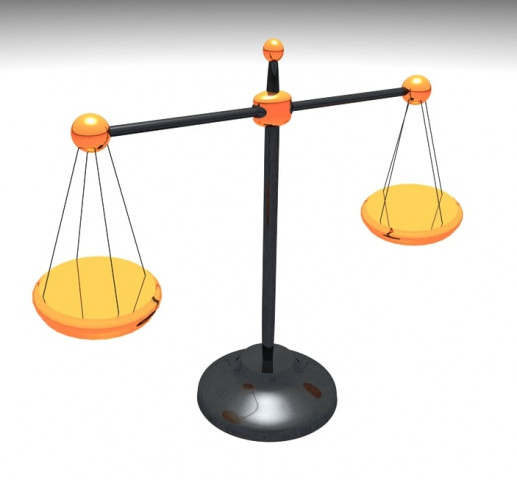
The timing of this landmark decision draws inevitable comparisons with our own Supreme Court. Justices in Pakistan have been extremely activist since their restoration, having their say on matters like electricity prices, which are normally left to the legislature. And then, of course, there was the recent decision to disqualify Yousaf Raza Gilani for contempt. Our judges have shown a lot of eagerness to quote scripture, poetry and cases from other countries in their verdicts. They would do well to study the majority opinion in the Affordable Care Act to see what the proper role of the judiciary is meant to be. Some would say that the Supreme Court is a lot closer to the PML-N than the PPP, both because of ideology and the fact that the former party was more closely involved with the lawyers’ movement. This bias has been evident in many of the verdicts it has passed since its restoration in 2008.
At the same time, it is possible to be a bit too harsh on our Supreme Court. They are trying to reverse decades of precedent where the Court was subservient to whoever happened to be in power. And while our Supreme Court may have removed a prime minister, it was just over a decade ago that the US justices inserted a president into power in a judgment that was blatantly political. Pakistan’s Supreme Court may have a long way to go but hopefully it will eventually be able to balance its independence with respect for the democratic process.
Published in The Express Tribune, June 30th, 2012.
LATEST

Indian university leaves AI summit after presenting Chinese robot as its own amid uproar

UAE president re-emerges in video with US senator after rumours about health

First Ramazan after truce brings flicker of joy in devastated Gaza

Russia, Ukraine peace talks in Geneva were substantive, head of Ukrainian delegation says

No secret nuclear tests by Russia or China, Kremlin says

New Bangladesh PM Tarique Rehman names cabinet after election win
MOST READ

Sri Lanka removes Pakistan from negative visa lists after Naqvi meeting

Punjab’s quiet acquisition of luxury Gulfstream jet spurs scrutiny

'The cheater has finally been exposed': Sannia Ashfaq fires back at Imad Wasim

IMF review tied to governance
SC adjourns Imran Khan’s Toshakhana, cipher, defamation cases indefinitely










COMMENTS
Comments are moderated and generally will be posted if they are on-topic and not abusive.
For more information, please see our Comments FAQ