Alerts
 
< >

Progress is like toothpaste
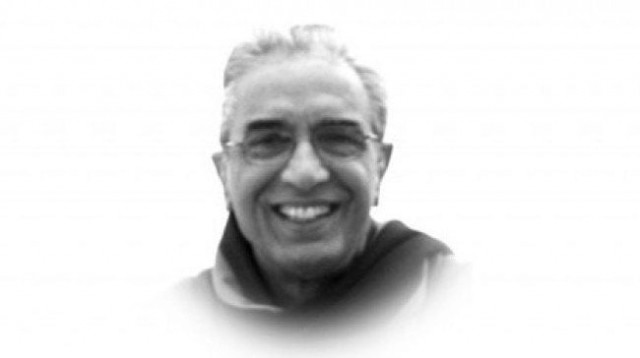
The writer is a human resource consultant currently based in New York (aziz.akhmad@tribune.com.pk)

In 1916 when the first Jewish judge of the US Supreme Court, Louis Brandeis, was nominated, the ruling establishment bitterly contested his nomination mainly because he was a Jew. He did get appointed but one of the judges, James McReynolds, refused to sit next to him. (Brandeis ended up being one of the most celebrated judges known for case opinions on freedom of speech and the right to privacy.) Anti-Semitism was rife in America, as was discrimination against blacks and other minorities.  The ruling America, including Congress, was predominantly made up of white, Anglo-Saxon, Protestant males.

Today, US President Barack Obama, a black president, has nominated a Jewish Harvard Law professor, Elena Kagan, a woman, to the Supreme Court to replace a retiring judge. If confirmed, which seems likely, Kagan will be the third Jewish judge on the present Supreme Court. For the first time in US history there will not be a single Protestant on the bench. The remaining six judges are all Catholic, including a black judge. This does not mean racism or discrimination is dead in America. But it does mean it no longer rules.

The point is that a nation’s progress depends on more than an increase in wealth. It also depends on how much the society moves towards inclusion and away from racial, religious and sexual discrimination. In fact, the enormous economic progress the US has made since World War II is attributed to the diversity of its population and the freedoms guaranteed to it in the constitution, and, of course, to education.

Other developed countries have also moved in the same general direction — forward. Even India, with whom we love to compare and compete, abolished the centuries old practice of ‘untouchability’ through its constitution in 1950. Pakistan, however, has moved backward.

Unbelievable as it may sound, Pakistan was a non-discriminatory society for the first two or three decades of its life, at least at the legal and official level. Muhammad Ali Jinnah had given the nation a vision of an all-inclusive society (his speech of August 11, 1947); the country had a 15-20 per cent non-Muslim population; the first federal cabinet included a Hindu, Jogendra Nath Mandal, as law minister and an Ahmadi, Zafrullah Khan, as foreign minister. Many Christians joined the air force; Christian missionaries ran some of the best schools and hospitals in the country. The anti-Ahmadi noises, emanating from the usual quarters, were either ignored or, when necessary, treated as a law and order problem.

But in 1974, Prime Minister Zulfikar Bhutto, falling prey to political expediency, amended the 1973 constitution to excommunicate the Ahmadis and, in his words, “solved the 90-year old problem”. That “problem” is now 126 years old, and doesn’t seem to go away.  The amendment paved the way for more discriminatory legislation, which unleashed intolerance and violence in the society. Laws are made for the well-being of citizens, not to persecute them. Discriminatory laws encourage violence. (Lynching of blacks in America until the early 20th century was also the result of prevailing discriminatory laws.) It is naïve to expect violence to go away while retaining such laws. They must be scrapped in order for the society to move forward.

As someone said, “progress is like toothpaste. You cannot push it back into the tube.”  We tried to, and look at the mess we have made.

Published in The Express Tribune, July 19th, 2010.

Aziz Akhmad 2 months ago

Reader Comments (18)

  • I think your description is not based on real issues. In USA things have improved because they are not obsessed with ideas which are 1500 years old. In Pakistan, everything has to be Muslim and you hear this talk on all hours of the day from most of the people. Pakistan is an Islamic republic ad does not accept anything non Islamic, like taking a hindu President or PM. Or a Christian or Ahmadi. These minorities are being tolerated that is all. In USA things are going towards common goal for all human beings, pakistan does not move on that issue. Narrowing down to Ahmadis being declared non Muslims is a non starter.

    SharifL 2 months ago
  • An excellent write-up and a brilliant ending. Pakistan was never conceived as an “Islamic” republic. As a matter of fact, all major religious parties (barring Ahmadis and Ismailis) deadly opposed its creation. Unfortunately, these parties have somehow hijacked the ideology of the State. Thankfully, these parties only have a nuisance value and have never been voted to power. If that had happened or if it ever happens (God forbid), Pakistan genuinely would become a security threat for its neighbours, as is evident from the following:

    QUOTE
    ***Human relations and associations are so integrated that no state can have complete freedom of action within its own principles, unless those same principles are in force in a neighboring country. Therefore, Muslim groups will not be content with the establishment of an Islamic state in one area alone**. Depending on their resources, they should try to expand in all directions. On one hand, they will spread their ideology and on the other they will invite people of all nations to accept their creed, for salvation lies only in it. **If their Islamic state has power and resources it will fight and destroy non Islamic governments and establish Islamic states in their place** [Maulana Maududi: Haqiqat-i-Jihad (Lahore: Taj Company Ltd, 1964), 64]*
    UNQUOTE

    One can well imagine what would happen with Pakistan as a result!

    The Government of Bangladesh has done the correct thing by banning all books of Mr. Maududi. The chief of the state-funded Islamic Foundation has said the late Jamaat-i-Islami founder’s books encourage “militancy and terrorism”. He added that the decision was taken as Maulana Maududi’s works are “against the peaceful ideology of Islam”.

    It is time to wake up, Government of Pakistan…

    Kashif Jahangiri 2 months ago
  • It is true that the enormous economic progress the US has made since World War II is attributed to the diversity of its population and the freedoms guaranteed to it in the constitution, and, of course, to education.This is just in line with the nature’s desire to design the universe with diveristy seen in every thing.To promote uniformity is is indeed to oppose the rules of nature.The question to address is wHether making sense of Pakistan allows diversity or uniformity.
    Pakistan might have remained a non-discriminatory society for the first two or three decades but was it possible to remain so when it is very rightly claimed that Pakistan came into being in the name of Islam and later on when objective resolution finally delineated the course this country must persue in future.
    It is also claimed that the Objectives Resolution, which combines features of both Western and Islamic democracy, is one of the most important documents in the constitutional history of Pakistan. At the time it was passed, Liaquat Ali Khan called it “the most important occasion in the life of this country, next in importance only to the achievement of independence”. It is included in the Annex of the current Constitution of Pakistan by virtue of Article 2A of the Constitution.
    So how can it be said that Pakistan was a non-disciriminatory state in the first two ro three decades or it could be wished to remain so for any long.
    ”Making sense of Pakistan” by Farzana Shaikh is a more radical analysis of the origin of Pakistan’s problems.It seems to be written in a difficult language for a person like I but its review is linked here for your kind intimation
    http://www.independent.co.uk/arts-entertainment/books/reviews/making-sense-of-pakistan-by-farzana-shaikh-1707702.html
    With due apology,respects and regards claiming that
    “in 1974, Prime Minister Zulfikar Bhutto, falling prey to political expediency, amended the 1973 constitution to excommunicate the Ahmadis paved the way for more discriminatory legislation, which unleashed intolerance and violence in the society”
    seems to me an oversimlified approach.
    Leader of Ahmadi’s was given ample time to make his standings clear and he took six days but instead of doing so he started preaching to that parliament.In the end he was aked to comment about those who do not believe in his vision of Islam.He categorically decalred them *Kafir*(the non-muslims).Now what should that parliament have done in response to him?

    Dr. Altaf ul Hassan 2 months ago
  • Leader of Ahmadi’s was given ample
    time to make his standings clear and
    he took six days but instead of doing
    so he started preaching to that
    parliament.In the end he was aked to
    comment about those who do not believe
    in his vision of Islam.He
    categorically decalred them
    Kafir(the non-muslims).Now what should that parliament have done in
    response to him?

    What do leaders of other sects call each other? Kafir; in case you did not know, shias and sunnis, and brelvis and doebandis have been doing it for centuries. So why not officially declare everyone kafir? Do I need to explain to you why shia mosques, and mizars are being attacked? It’s this mentality to justify attack on others for their beliefs that has opened this door to hell. We must put it right by denying any persecution or discrimination based on faith, among other things. That is how all prosperous countries do; we should learn from their example if we have any intention of avoiding the stone age which is pretty close already.

    Hasan 2 months ago
  • Both Kashif and Dr. Altaf have expressed their opinions and both have legitimacy. I think, we need to consider ourselves primarily as human beings where in this global village we all play a part. Unfortunately, Pakistan and some other Muslim countries, the obsession is so deep rooted with Islam, that anything else is considered evil. I like living in the west and would not like to live back home, where on one side there is so much corruption, selfishness and crime and on the other everybody singing songs of praise for Islam all day long. The number of times the name Allah is used,you think how good these people are, far from it. Has it helped the country getting more and more of Islam in our lives? I think not.

    SharifL 2 months ago
  • “With due apology,respects and regards claiming that
    “in 1974, Prime Minister Zulfikar Bhutto, falling prey to political expediency, amended the 1973 constitution to excommunicate the Ahmadis paved the way for more discriminatory legislation, which unleashed intolerance and violence in the society”
    seems to me an oversimlified approach.

    It may seem to be over-simplified, but the write does not deny the Truth of the statement concerning PM ZAB. So, it was he (with the help of other ruling establishment) who established a constitutional Islamic (Religious) Republic of Pakistan.

    The religious leaders and scholars have nothing to do with the present Islamic structure established in Pakistan. It is the gift of the so called secular leaders.

    “Leader of Ahmadi’s was given ample time to make his standings clear and he took six days but instead of doing so he started preaching to that parliament.In the end he was aked to comment about those who do not believe in his vision of Islam.He categorically decalred them Kafir(the non-muslims).Now what should that parliament have done in response to him?”

    In a secular state, the state has nothing to do with religion and the religion has nothing to do with the state. The religious affair came to the parliament simply because Pakistan is a religious state.

    If the Ahmadi leader declares all the other believers non-Muslim, the answer is not to declare Ahmadis non-Muslim, as the parliament did. Two (2) wrongs do not make one (1) right.

    If there was any legal possibility, the Ahmadi leader should have been punished..

    Muhammad Ahsan Khan 2 months ago
  • If the Ahmadi leader declares all the
    other believers non-Muslim, the answer
    is not to declare Ahmadis non-Muslim,
    as the parliament did. Two (2) wrongs
    do not make one (1) right.

    If there was any legal possibility,
    the Ahmadi leader should have been
    punished..

    How about punishing all other religious leaders too who call others kafir; that would be most prominent ulema.

    Don’t just single out Ahmadis.

    Hasan 2 months ago
  • “How about punishing all other religious leaders too who call others kafir; that would be most prominent ulema”

    @Hasan

    I totally agree with you. All religions should have the same treatment and equal rights.

    Unfortunately, Pakistan is a religious state, so, the state religion (?) dominates and rules the others!!

    Muhammad Ahsan Khan 2 months ago
  • It is common misconception that Ahmadis consider others to be non Muslims and the leaders of Ahmadi Jamaat pleaded their case well but were still excommunicated.

    Why does the government not release the documents of those meethings. What is there to hide.

    Sahal 2 months ago
  • Unfortunately, Pakistan is a religious
    state, so, the state religion (?)
    dominates and rules the others!!

    Hence killing of Shias and attack on Sunni mizars. Seems like only a tiny minority’s faith is the offical state religion.

    Hasan 2 months ago
  • I had posted a link to a video on youtube which is a collection of Kafir calling videos by our “ulemas”. The posting got stuck due to external link and has not been cleared by the moderator so far. You can find this video by its caption on youtube which is: “fatwa, deobandi kafir, brelvi kafir, ahle hadith kafir, kuttay, wahabi … “. This is a classic example of the saying: “Deen-e-Mulla Fi Sabeel-Illah Fasaad”.

    This Kafir calling is nothing new for the followers of the Mohammedan religion and it would be unjust to single out Ahmadis on this account. If the Parliament listens to all the “religious scholars” of Pakistan, I can well assure you that there will be less Muslims and more non-Muslims in Pakistan!

    What is important in the case of Ahmadis is that the State of Pakistan lost its image of a neutral arbiter when it passed the 2nd Amendment to the Constitution in 1974 and became a party to a religious difference. The 2nd Amendment was then followed by the Ordinance XX of 1984 which is the blackest of all laws in the history of the world. The State of Pakistan has damaged no one but itself in the process.

    The subsequent results have proved that the approach adopted has been very costly. Instead of being the end of a dispute, the 2nd Amendment only became the starting point for multiple issues, as the religious bigots realised that there was another weapon available to them that could also be used. Soon after Ahmadis were excommunicatedm, they started looking to their right and left to find out the next target. In summary, the 2nd Amendment has inculcated a sectarian mindset in the society. I think we can only become a tolerant society if we undo the wrongs committed in the past.

    Kashif Jahangiri 2 months ago
  • “Hence killing of Shias and attack on Sunni mizars. Seems like only a tiny minority’s faith is the offical state religion.”

    @Hasan
    Constitutional Pakistani religion is Islam. The two parties who are warring against each other belong to the same religion. The state can not be blamed for this internal friction. But state has the right to punish the culprits.

    I repeat that Islam is the state religion; but you are free to consider that this small fighting minority is the religion of the State! Who am I to object?

    Muhammad Ahsan Khan 2 months ago
  • @Muhammad Ahsan Khan

    “Constitutional Pakistani religion is Islam. The two parties who are warring against each other belong to the same religion. The state can not be blamed for this internal friction. But state has the right to punish the culprits.”

    You must be joking, Sir. Pakistan is not the only Muslim country on the globe and is also not the only country with different sects living together. ONLY the State is to be blamed for the mess Pakistan is in, as it brought religion into the affairs of the State.

    Kashif Jahangiri 2 months ago
  • @Kashif Jahangiri

    “ONLY the State is to be blamed for the mess Pakistan is in, as it brought religion into the affairs of the State.”

    From secular humanitarian point of view the state is responsible for any mess (the religion included). But Pakistan is not a secular state. There are 59 Muslim majority states, but only two are Islamic Republic.

    The Pakistani intellectuals expect a republican behaviour from the state of Pakistan. A Islamic Republic is not a Republic. First it is Islamic then any thing else. In Islamic citizenship Muslim and Kafir have different rights, woman is not equal man and Islamic Justice accepts unhuman treatment of the culprits.

    Once one has accepted that Pakistan is an Islamic Republic, it is naive and hopeless to expect a humanitarian and secular treatment.

    The state did not bring the religion in the state affair, the state (Pakistan) was founded on Islam. Without the demand of Indian Muslims to have their own Islamic country, Pakistan would not have come into being.

    Muhammad Ahsan Khan 2 months ago
  • Pakistan was not founded on Islam, it was created for Muslims of the sub continent. There is a clear distinction between the two and our founder Jinnah made this very clear in his Constituent speech.

    It was supposed to be a Progressive liberal Muslim state, as per the words of Jinnah.

    The religious parties of India opposed Pakistan, Maulana Madani and Maoududi were staunchly against Pakistan. It is a known fact that religion was not supposed to play any role in the business of the state.

    You are free; you are free to go to your temples, you are free to go to your mosques or to any other place or worship in this State of Pakistan. You may belong to any religion or caste or creed that has nothing to do with the business of the State

    Now I think we should keep that in front of us as our ideal and you will find that in course of time Hindus would cease to be Hindus and Muslims would cease to be Muslims, not in the religious sense, because that is the personal faith of each individual, but in the political sense as citizens of the State.

    Talha 2 months ago
  • @ Talha
    “Pakistan was not founded on Islam, it was created for Muslims of the sub continent. There is a clear distinction between the two and our founder Jinnah made this very clear in his Constituent speech.”
    “It was supposed to be a Progressive liberal Muslim state, as per the words of Jinnah”.

    Yes, I know that in favour of secular ideas of Mr. Jinnah, his admirers (Blind-Faith!) cite his speech that:

    “You are free; you are free to go to your temples, you are free to go to your mosques or to any other place or worship in this State of Pakistan. You may belong to any religion or caste or creed that has nothing to do with the business of the State.” This is the freedom for the religion

    This statement defines only half of the secularism, Freedom for religion. The full definition of secularism contains that:

    The religion has nothing to do in the state (Government!). This is the freedom from the religion.

    This second condition for secularism has never been pronounced by Mr. Jinnah.

    He wanted to have a constitution where the Muslim (Islam!) origin of the state is clearly mentioned. His wish was fulfilled by Liquat Ali Khan when he passed “Objectives Resolution”.

    On the basis of “Objectives Resolution”, Mr. Zulfikhar Ali Bhutto completed the present Pakistani constitution and Pakistan became “Islamic Republic”.

    Pakistan began with Islam and is marching towards more and more of Islam. The future of Pakistan may end with a Caliph (Dictator!)!!

    The religious leaders have nothing to do with the present constitution or the present Government’s Islamic fervour.

    BTW:- It is good to keep your heart open to receive the messages of the leaders (politicians) but it is better to keep the eyes open to watch their acts.

    Muhammad Ahsan Khan 2 months ago
  • This is why Begum Shahnawaz was noted for her opposition to Sardar Abdur Rab Nishtar’s proposition that Pakistan be an Islamic country, arguing that Jinnah envisaged it as a secular state.

    Better take your own advice and keep your heart open because delusional dreams of Ummah, Caliphate and what not shall never come to pass

    Talha 2 months ago
  • “This is why Begum Shahnawaz was noted for her opposition to Sardar Abdur Rab Nishtar’s proposition that Pakistan be an Islamic country, arguing that Jinnah envisaged it as a secular state”

    @Talha

    It was courageous stand of Begum Shahnawaz and some other opposition leaders.

    In my earlier comment I have given the definition of a secular state.(1) State has nothing to do with the religion (2) Religion has nothing to do with the state (Governing system). Jinnah envisaged only half of it (1).

    The result is “Objectives Resolution”. Do you deny this fact?

    “Better take your own advice and keep your heart open because delusional dreams of Ummah, Caliphate and what not shall never come to pass”

    Here only half of my statement is used which I consider an incorrect way of blaming somebody. I wrote: It is good to keep your heart open to receive the messages of the leaders (politicians) but it is better to keep the eyes open to watch their acts.

    I keep to my better part of advice and my eyes are always open. I write my observation and not my opinion.

    I am not dreaming of a Caliph but I have been observing all the developments from the birth of the state to this day and I conclude the end result.

    Personally, I will be happy to be wrong.

    Muhammad Ahsan Khan 2 months ago

Leave Your Reply Below

Your comments may appear in The Express Tribune paper. For this reason we encourage you to provide your city. The Express Tribune does not bear any responsibility for user comments.