Sunny
High: 35°C
Low: 27°C
Alerts
 
< >

The terrorist’s mindset
Published: May 9, 2010

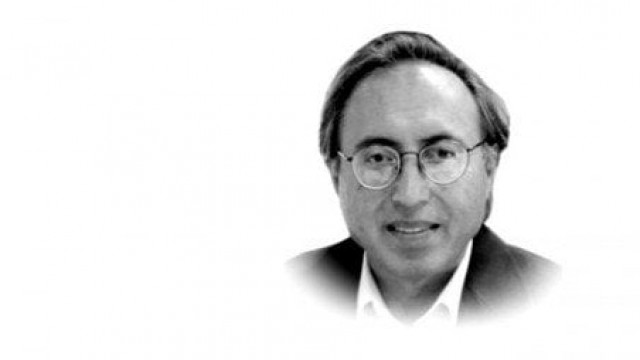
Rasul Bakhsh Rais is professor of political science at LUMS. (rasul.rais@tribune.com.pk)

The debate on what triggers a terrorist mindset has evaded the right questions and sensible answers. One end of this debate is too wide — encompassing everything from poverty, social underdevelopment to quest for political empowerment and justice. The other is too narrow and has centred on religion and madrassahs that impart Islamic education in a traditional way. But neither satisfactorily explains the ‘terror mind’.

Let us begin with the latest catch, Faisal Shahzad, the accused in the failed car bomb attack in the Times Square, New York. He doesn’t fit the typical profile of a terrorist that most Pakistani media experts generally discuss. He belongs to a rather privileged social and economic background and received his education in the United States and worked in that country for several years.It is the same profile of scores of terrorists convicted or facing trials in Britain and some other European countries. The social and professional background of 9/11 bombers is no different; they all came from a middle-class social background, were mostly well-educated, had been in decent professions and had lived a good part of their lives in the West.

How can we then understand and explain their mindset? First, we must change the lenses through which we examine terrorism. And when we do that, we will see a very different but equally disturbing picture. It is not religion but ideology that is motivating some young Muslims both in our part of the world and in the west to undertake the deadly missions such as the one Faisal Shahzad allegedly planned.

Religion, or for that matter, militarist nationalisms have shaped terror mind; that is not in dispute. What is in dispute is the assertion that it is always religion, and in our case, it is Islam that has put these young Muslim men on the terror road. Compared to religion, Islam or any other, ideology is shaped by political worldview and by a deep desire to change it what that ideology interprets as wrong. Therefore, it is essentially the political worldview influenced by sense of grievances, humiliation, failure and injustice that is at the root of modern day terrorism from the Tamil Tigers to the Taliban. It is not for the first time that we have seen linkage between frustration and anger producing aggressive attitude. This is a welldiscussed theme in the literature on conflicts.

What is truly puzzling for many Pakistanis and others in the West is how and why relatively successful, highly educated professionals with a vast variety of opportunities and prospects for success have embraced terrorism. The answer may not be so simple to their internal transmutation though. One possibility are their political ideas of injustices against Muslims and their reading of history of colonisation and post-colonial manipulations as essentially imperialistic and dehumanising has made them think of changing an unjust world.

Reader Comments (11)

  • Urban Soul
    May 10, 2010 - 11:56AM

    From Pakistan to Iraq, London to New york all the carnage and terror can be traced back to Saudia, and their brand of Islam, the Product which was to serve the dictatorial regimes all over the world gone terribly wrong.Recommend

  • May 10, 2010 - 2:22PM

    Reference to Urban Soul. Isn’t Saudi Arabia a disctatorship?Recommend

  • M. Abid
    May 10, 2010 - 5:57PM

    Rais Saheb, go and take rest, if you can’t explain the phenomenon! Or you don’t want to do so because the answer could unveil your own friends in the intelligence agencies!Recommend

  • Rasul Bakhsh Rais
    May 11, 2010 - 12:01AM

    Abid Sabib: I don’t know who you are, I don’t have any desire of knowing who you are or what you do or where you live. Since I am a sort of public person and have been commenting on national and international public affairs for more than three decades both in the national as well international media, I feel disappointed by your insinuation “Or you don’t want to do so because the answer could unveil your own friends in the intelligence agencies!”: This is what you say when you don’t have an argument. What you wrote also reflects a typical Pakistani mindset, throw some dirt on anyone who has a different point of view or has not said precisely what you want him to say. As a public person and with a track record on taking on the corrupt of Pakistani society, despotic rulers, including those whom you refer as “my friends” I would not let you go free for saying what you did. The attitude you reflect is also typical of feudalistic culture–intolerant of diversity and denying others legitimacy if they have some other explanation of some issue than the one you been drilled in your mind. May be, you didn’t capture my argument or had intellectual depth to appreciate it. May be you need to climb certain notches up the bar of integrity to engage intellectually on such an important subject as the “terrorist mindset”. Or, may be, it is sheer lack of knowledge or any capacity to learn with open spirit and expose yourself to alternative explanations. And finally a free, priceless advice; grow up, reflect deeply on what you said, and stop throwing dirt if you lack the merit to engage intellectually and make an argument.Recommend

  • Yasir Qadeer
    May 12, 2010 - 9:57AM

    Interesting observation. I believe youth should be given ample opportunities to excel intellectually. Unless the extremist mindset is erased from our nation, we can expect more Faisal Shahzad’s.Recommend

  • May 12, 2010 - 2:24PM

    Interesting article and a very interesting debate. i have no doubts in saying that I whole-heartedly stand by Rais sahab’s arguments. What people like Mr Abid need to understand is that in a country as diverse as Pakistan, we cannot afford to undertake initiatives that crush dissent, either through force (as seen under military rule) or even through the public sphere. In Pakistan, what we now need to understand is that the main need of the time is to undertake a holistic approach to understand the real causes of terrorism. It is very easy to cite conspiracy theories and blame RAW-Mossad and the CIA for everything wrong that is happening in Pakistan. The really hard part is that to undertake a self-introspection that is very much required in order to get to the root causes of terrorism.

    A read through of journalist Steve Coll’s book ‘Ghost Wars’ gives a good account about how the ISI and Pakistan’s military establishing actually created these extremist infrastructures in order to maintain their own strategic interests in Afghanistan. Taken from a military point of view, the strategy succeeded. Pakistan was able to erect a pliant regime in Afghanistan and it also managed to bog down the Indian Army in Kashmir.

    But however, thats where tactics end. Generals are not taught to think about socio-economic impacts of military strategies. Trainings given at military academies are more about fighting wars. Trainings that soldiers get enables them to think about everything in terms of targets achieved. Generals are not taught to manipulate and plan and administer good governance. Thats the job of politicians. And the fact that Pakistani politicians have consistently failed to administer good governance is clearly reflected from the fact that even when the game of prime-ministerial musical chairs was going on between Nawaz Sharif and Benazir Bhutto, this extremist infrastructure continued to be strengthened under the watchful eye of Pakistan’s military establishment.

    It was the failure of our politicians to rein in this infrastructure. It is this failure that we need to address with the intention of coming up with good actions and governance. My major criticism of Benazir Bhutto is that as against all the grandiose ideas that she had penned down in her autobiography ‘Reconciliation, Islam, democracy and the West’, she consistently failed to act and administer good governance when she was Prime Minister twice. As against popular perception, it would be right, in my opinion to say that as against what President Zardari and the notorious levels of sycophancy which are now prevalent in the PPP, the prime destroyer of the legacy of Zulfiqar Ali Bhutto, (who i think was the best leader we had after Quaid-E-Azam) was none other than her own daughter.

    For certainly, I believe that as most of Pakistan’s problems, including terrorism, were nearly self-inflicted, the solutions to these problems should come from within our society. this for sure cannot happen till the time we do not use our cultural, racial and ethnic diversity as a strength.

    We need a vibrant and multilingual news media that can channel a variety of opinions throughout the length and width of our nation. Kudos to Express Tribune for coming up with such a good forum for debate.!!!Recommend

  • May 12, 2010 - 2:27PM

    Also, I would like to share these two links of articles written by me, published at a website. people’s opinions on both of them would be appreciated.

    “Failing to Make Direct Contact With the People, The US is Further Alienating Pakistan”
    http://chowk.com/articles/16501

    21st Century Terrorism and Wars Against Terror
    http://chowk.com/articles/17056

    @ Rais sahab. Sir I look forward to read your reply to my two postings,

    Thank you for a good article!

    Mehroz!Recommend

  • Sadia Hussain
    May 17, 2010 - 4:28PM

    The root causes of terrorism are so many and mutually cohesive thus it’s hard to determine what formulates the terrorist mindset. Social deprivation, isolation could be one of many factors. However this alienation is due to lack of initiative on part of the west to engage the Muslims in a constructive debate and the failure to enlightened Muslims to counter the militant propaganda.Recommend

  • M. Amir Hamza Khan
    May 19, 2010 - 9:35AM

    Dear Sir,
    The assertion that ideology plays a major role in the mindset of the terrorist cannot be disputed. However, the role of real life experiences in the making of a terrorist is also important. We know from the field of psychology that a person’s personality and mindset develops from real life experiences. Hence Faisal Shahzad’s or any other terrorist’s actions can be seen to be motivated by ideology and a desire to bring about change in an unjust world. Or his ‘occidentalism’ and violence could be a natural reaction to years of exposure to ‘orientalism’, ‘racial profiling’ or ‘societal alienation’. Hence, there is a need to distinguish between reactive terrorism and proactive terrorism because the solutions to both are equally complex but also different.Recommend

  • Jun 2, 2010 - 5:56PM

    Also check this link guys…

    http://theburningissue.wordpress.com/2010/03/14/53/

    any feedbacks on this would be appreciated at that page….Recommend

  • madiha.shah
    Jun 2, 2010 - 6:19PM

    You can also send submissions at: blog@tribune.com.pk

    (Web Team)Recommend

More in Opinion

X