<?xml version="1.0" encoding="UTF-8"?>
<rss version="2.0"
	xmlns:content="http://purl.org/rss/1.0/modules/content/"
	xmlns:wfw="http://wellformedweb.org/CommentAPI/"
	xmlns:dc="http://purl.org/dc/elements/1.1/"
	xmlns:atom="http://www.w3.org/2005/Atom"
	xmlns:sy="http://purl.org/rss/1.0/modules/syndication/"
	xmlns:slash="http://purl.org/rss/1.0/modules/slash/"
	xmlns:media="http://search.yahoo.com/mrss/"
	>

<channel>
	<title>The Express Tribune &#187; Fahad Faruqui</title>
	<atom:link href="http://tribune.com.pk/author/931/fahad-faruqui/feed/" rel="self" type="application/rss+xml" />
	<link>http://tribune.com.pk</link>
	<description>Latest Breaking Pakistan News, Business, Life, Style, Cricket, Videos, Comments</description>
	<lastBuildDate>Wed, 22 May 2013 16:31:44 +0000</lastBuildDate>
	<language></language>
	<sy:updatePeriod>hourly</sy:updatePeriod>
	<sy:updateFrequency>1</sy:updateFrequency>
	<generator>http://wordpress.org/?v=3.5.1</generator>

		<item>
		<title>Six years in hell</title>
		<link>http://tribune.com.pk/story/370213/six-years-in-hell/</link>
		<pubDate>Sun, 29 Apr 2012 05:31:38 +0000</pubDate>

		<guid isPermaLink="false">http://tribune.com.pk/?p=370213</guid>

		<description>
		<![CDATA[
			<a href="http://tribune.com.pk/story/370213/six-years-in-hell/">
				<img src="http://i1.tribune.com.pk/wp-content/uploads/2012/04/370213-gitam-1335448591-805-160x120.JPG" width="160" height="120" alt="" />
			</a>
			<p><p><strong>Speaking to former Guantanamo detainee 727 was like talking to a prisoner of Azkaban, that terrible prison guarded by soul-sucking Dementors from JK Rowling’s Harry Potter series. Perhaps the image of a Dementor sucking out happiness from one’s body will help you visualise the torture detainees between the ages 13-98 have endured since the prison camp opened its gates to enemy combatants and terror suspects in 2001.</strong></p>
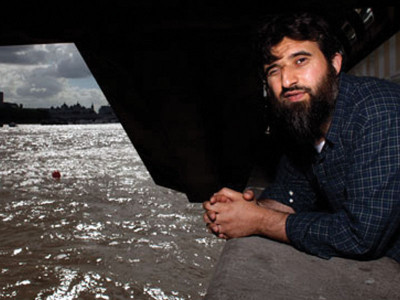
<p>This is the story of Omar Deghayes, a British-Libyan who spent nearly six years at Guantanamo. He narrates the ordeals he faced from the time he was picked up from a rented villa near Liberty Market in Lahore to when he was finally set free.</p>
<p>Deghayes’ struggle against government authorities started long before he reached Guantanamo. He was a mere 10-year old boy living in Libya, when his uncle received a call from Muammar Qaddafi’s loyalists telling him to claim the dead body of his father, a solicitor who had been disliked by the regime. The family was put on the exit control list. If they had to leave Libya, even for medical purposes, one family member had to stay back as a ‘hostage’. When Deghayes was 17, his family managed to escape by forging travel papers and sought political asylum in Britain.</p>
<p>In the UK, the family settled in Saltdean. At college Deghayes studied Law and, while his family had also been highly secular, it was during his undergraduate years that his interest in the Islamic legal system and religion peaked. While still at college, he travelled to Bosnia for volunteer work and the experience had a profound effect on him. “It made me think of injustices, oppression, people being killed and human rights,” said Deghayes.</p>
<p>After finishing a Legal Practice Course in England, he took a break to visit friends in the Far East. He went first to Malaysia and then travelled across Pakistan. Once he reached Peshawar, he discovered that he could easily cross the border and go to Afghanistan. He had always been intrigued by the country and was curious to see how Shariah was being interpreted under Taliban rule.</p>
<p>“You cannot rely on UK or US-based media, especially when it comes to Islam. If something doesn’t suit their interest, they will brand it as extreme and fundamentalist,” he said. “I wanted to see for myself what was happening in Afghanistan.”</p>
<p>This was the decision which would eventually land him in Guantanamo.</p>
<p>In 1999 he crossed into Afghanistan. Once there, he married an Afghan woman and tried to set up a legal consulting office in Kabul. His wife gave birth to a baby boy on 24 September 2001, just 14 days after the event that would change his life forever.</p>
<p>Then came the US invasion, and he desperately tried to shift his family to a safer place.</p>
<p>“Our house was very close to the airport in Kabul,” he said. “and [US forces] planes were dropping bombs on civilians.”</p>
<p>They first shifted to Laghman, but when the bombings intensified, they left Afghanistan for Lahore. He was in Lahore four months, during which time he tried to find ways to get a passport made for his Afghan wife, who had never had any identification documents.</p>
<p>One day, nearly 50 armed men, with the slogan ‘NO FEAR’ emblazoned on their jackets, stormed into his villa, handcuffed him, and took him to a fortress-like prison in Islamabad. During this period of incarceration, he was taken to a house to meet officials from US and UK agencies before being transported back to prison. This happened numerous times.</p>
<p>“They’d ask questions like: Why were you in Afghanistan? Where were you in Afghanistan? Did you meet Osama bin Laden? Do you know anyone from alQaeda?” said Deghayes.</p>
<p>In Islamabad, he also met a woman, who seemed higher in rank than those who’d been previously interrogating him.</p>
<p>“This woman said something about the Taliban mistreating women and that Islam teaches its followers to mistreat women. I didn’t like that, so I answered back saying: ‘Islam doesn’t tell its followers to mistreat women. We protect them and look after them. And treat them as if they were very precious,’” said Degahyes.</p>
<p>After this it was decided that he would be dispatched to Bagram. The former detainee is of the opinion that the Americans had been paid to bring in any man of Arab descent in Pakistan, who had visited Afghanistan. A few days later, he was taken to the airport in Islamabad and handed over to the marines for transfer.</p>
<p>“It was not like the pictures you may have seen, which show a row of people tied down to the floor,” he said. “The way we were transferred, we were many, many people on top of each other like cargo and then chained to the floor and blindfolded.”</p>
<p>In Bagram, every time prisoners were caught speaking, they would be chained to the mesh in a stress position. Their head would be covered with a black hood. “There were times we would collapse from suffocation,” he recalls.</p>

<p>Day and night he was interrogated by British intelligence, FBI and CIA. “I was forced on my knees and beaten during those interrogations,” he said bitterly.</p>
<p>Frightened and unsure of what would happen to him, he would throw-up whatever he ate. He was transported to another prison camp, a long journey spent in hallucinations brought on by weakness and exhaustion.</p>
<p>“And then we were in Guantanamo,” he said with a sarcastic laugh.</p>
<p>Like everyone else in the prison, detainee 727 lived in solitary confinement, in a three by two metre cabin, for the first month. Because he would not take abuse without striking back, he endured the harshest treatment, spending most of his 5 years and 7 months at the camp locked up in isolation.</p>
<p>During interrogation, they would have him stand in stress positions for hours on end. These positions ranged from tying his hands to his feet so that they touched the floor, to a standing position in which they would tell him that there was live wires attached to hand, and if he moved he would get electrocuted.</p>
<p>“You would be hooded,” explained the former detainee, “so you wouldn’t know what was happening in the room.”</p>
<p>Whether it was Bagram or Guantanamo, the questions asked were the same:</p>
<p>“Why were you in Afghanistan? Where were you in Afghanistan? Did you meet Osama bin Laden? Do you know anyone from alQaeda?”</p>
<p>The abuse continued outside the interrogation rooms as well. Once, an officer crushed his finger in a door, and held on to it, hoping to make him scream. Deghayes suppressed his pain, unwilling to allow the officer the pleasure he would get from his screams of agony.</p>
<p>“I lost my finger — I have iron pieces in it and I can’t bend it properly.”</p>
<p>Another time, they broke his nose while raining kicks on his face with their boot-clad feet.</p>
<p>To set an example to the other prisoners for fighting back, the guards gouged not just Degahyes’ eyes with their bare fingers, but also those of every other prisoner in his block. He still can’t see clearly from the right eye. For six years, his cell was brightly lit day and night so that he wouldn’t be able to sleep. The airconditioners were on full blast, all the time.</p>
<p>“For many months I was locked up in what was essentially a freezer,” he said.</p>
<p>As if the physical abuse wasn’t bad enough, these guards played mind games to break the prisoners’ spirits. Deghayes longed to hear from his family, but didn’t receive a single letter for five years. When he finally started getting letters, the guards would censor vital parts, which would frustrate him. One letter read: “your son likes” and the rest of the sentence was blacked out.</p>
<p>But he suffered the most when the guards abused his religion.</p>
<p>“This was one thing that infuriated all the inmates,” said Deghayes. “They would take a copy of the Holy Quran, and throw it in a toilet, or on the floor. Sometimes you would come back to your cell and find boot stains or abusive words written inside the Quran.”</p>
<p>The abuse was regular throughout his time there; it didn’t ease up if the guards didn’t get any information from the detainee.</p>
<p>“The policy in Guantanamo was that they would agitate you every two months,” said the former detainee who now lives in London. “They want you to fight back. The interrogators said, ‘We will release you one day, but we will make sure that we have made you broken wretches, so that you won’t go back to jihad. And your family, your mothers and sisters, will be working just to keep you alive.’ So this was their intention.”</p>
<p>How were the prisoners able to keep their sanity intact? Many detainees suffered from mental health problems, but Deghayes kept himself sane by following a rigid routine. Though there wasn’t much physical activity possible in solitary confinement, he did push-ups every day. He dedicated his mornings to memorising the Quran, which he then revised in the afternoons.</p>
<p>The prisoners were able to communicate with others by shouting out loud, speaking into the air conditioning duct and talking into the sinkhole and then cupping an ear over it to hear the response. Deghayes spoke to prisoners from all walks of life and myriad nations. “There were teachers, linguists and journalists, there was a lot to learn from them,” he said.</p>
<p>After five years and seven months of detention without charge, Degahyes was finally released in December 2007. “The only thing these kind of prisons achieve is more hatred, turning more youngsters toward extremism,” he said, looking back at his experiences.</p>
<p><em>Published in The Express Tribune, Sunday Magazine. April 29<sup>th</sup>, 2012.</em></p>
</p>
			<br clear="all"/>
		]]>
		</description>

		<media:content width="424" height="318"
							isDefault="true" medium="image" url="http://i1.tribune.com.pk/wp-content/uploads/2012/04/370213-gitam-1335448591-805-640x480.JPG">
			<media:title>gitam01</media:title>
			<media:description>In Bagram, every time prisoners were caught speaking, they would be chained to the mesh in a stress position.</media:description>
			<media:thumbnail url="http://i1.tribune.com.pk/wp-content/uploads/2012/04/370213-gitam-1335448591-805-160x120.JPG" width="160" height="120" />
      </media:content>

		<wfw:commentRss></wfw:commentRss>
		<slash:comments>27</slash:comments>
	</item>
		<item>
		<title>Ready, willing and able</title>
		<link>http://tribune.com.pk/story/319811/ready-willing-and-able/</link>
		<pubDate>Sun, 15 Jan 2012 07:27:17 +0000</pubDate>

		<guid isPermaLink="false">http://tribune.com.pk/?p=319811</guid>

		<description>
		<![CDATA[
			<a href="http://tribune.com.pk/story/319811/ready-willing-and-able/">
				<img src="http://i1.tribune.com.pk/wp-content/uploads/2012/01/319811-cartoon-1326288772-180-160x120.jpg" width="160" height="120" alt="" />
			</a>
			<p><p><strong>When the New Year approaches, most of us prepare to rattle off a laundry list of things that we plan to change in our lives in the coming year. </strong><strong>We may want to lose weight, find a better job, or devote more time to studying to get accepted into a top university, and so on. About a month or two into the year, many of us will abandon these resolutions and simply blame it on unavoidable circumstances or “fate.” If God wanted something to happen in our lives then it would, right? </strong></p>
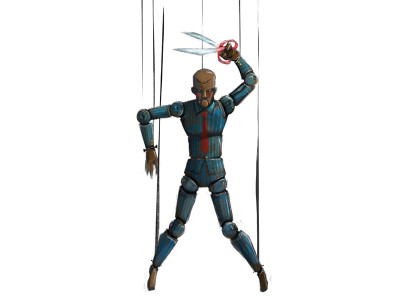
<p>I began pondering the question of free will when I was in elementary school. I used to wonder if I would get the grade that I was predestined to have regardless of whether I had studied or not. The local mullah who taught me the Holy Qu’ran at the time said: “You don’t even have the power to lift a pencil without God’s will.” His fatalistic teachings in mind, life seemed to be like a television drama where I needed only to wait for a fixed plot to unfold.</p>
<p>That was not the ideal lesson to receive as an impressionable youngster because it can lead one to wonder how meaningful human action is and to what degree we should make an effort to actualise our dreams. If the circumstances of my life are written in stone, God has left me no choice than to align my desires with what He has decreed for me. From this vantage point, I have little incentive to put in the effort to pursue my goals.</p>
<p>If our lives are completely scripted, a letter for a dream job or a loan to start a business should magically arrive on our doorsteps, and surely, it’s only befitting to expect a serendipitous meeting with your true love. Just say “insh’Allah” (God willing) and the pieces of the jigsaw puzzle of one’s life will fall in place.</p>
<p>This perception is flawed in my view, because while God may give us the puzzle pieces, we must use the intellect and strength He has granted us to put the pieces together.</p>
<p>Understanding the degree of a human being’s free will has been debated since the time of the last prophet. According to Islamic scholar Abdallah Adhami, the companions of Prophet Muhammad (PBUH) often asked, “f-ma’l ‘amal,” meaning “what is the point of doing work?” or “what good are deeds?”</p>
<p>The importance of human action as a prerequisite for success in any intended pursuit is emphasised many times in the Quran and Hadith. Citing an axiomatic prophetic principle, Imam Adhami described how the ummah (community) of the last prophet should be “dynamic and committed to action”: “If the Hour (end of the world) were to arrive while you were just about to plant a seed into the ground, you should go ahead and plant it.”</p>
<p>God does not desire us to sit around and wait for our lives to happen. We learn that it is only through our effort to change our internal disposition that we can change our circumstances. “God will not change the condition of a people until they change what is in themselves.” (Quran 13:11)</p>
<p>This gives a renewed meaning to “insh’Allah” that, in essence, counters overdependence on predestination. We have the ability to pursue our goals and make decisions, but God has prior knowledge of the choices we will make using our free will and intellect.</p>
<p>Still, while rejecting the idea of Jabr (complete predestination), I was left grappling to understand where I belong in the continuum between free will and predestination. Tim Winter, a lecturer of Islamic Studies at Cambridge University, described the orthodox Muslim doctrine of ‘acquisition’, or kasb, to explain how our free will operates. “Our acts already exist (for God, time has no reality), but we can acquire them through the moral dimension of the ruh (human consciousness).”</p>
<p>So we aren’t controlled by a “joystick” placed aside the Divine Throne in the seventh heaven and, rather, human agency is needed to realise predetermined outcomes.</p>
<p>Indeed, why would God have created Adam and allowed Satan to freely lead men astray until eternity — unless he was picked to play the part of an antagonist? If humans were to live on predestined commands, then who is doomed to hell or who is raised to heaven would be purely arbitrary.</p>
<p>In essence, the fact that God has foreknowledge of our decisions does not negate the fact that we as humans have the free will to make those decisions.</p>
<p>Rumi scholar Kabir Helminski pointed to the importance of developing will, the capacity to choose consciously in the moment, to our spiritual path. “It is what makes us human more than anything else,” he wrote. “The highest development of spirituality is the development of will — in the end we will offer that will to God. In a sense that is the end of will, but really it is the end to all the obstacles and resistances from the nafs [ego] that block true will.”</p>
<p>Mr. Helminski’s thoughtful response reminded me of the 8th century Sufi ascetic Rabi’a al Adawiyya, who was seen in the streets of Basra carrying a lit torch in one hand and a bucket of water in the other. She said she wanted to set fire to paradise and extinguish the flames of hell so that people would devote themselves to God for God’s sake. Resigned to God’s will, she was neither motivated by the desire for eternal bliss in heaven nor the fear of hellfire, and through this metaphorical act, she hoped that the people of Basra would transcend materialism and turn to reality.</p>
<p>All of the prophets, from Adam to Mohammad, may God be pleased with them, worked hard to spread the message and remained patient through many trials and tribulations.</p>
<p>Ultimately, the chance that we would be able to realise our dreams — whether it is success in exams, job, or even a relationship — without putting in our heart and soul into them is next to nil.</p>
<p>Similarly, as much as I would have loved to see this article write itself, it didn’t.</p>
<p>In the end, we are responsible for our actions, successes and failures. In attaining our dreams and turning our New Year’s resolutions into reality, we should put forward our utmost effort rather than blindly holding ‘fate’ responsible for our failure to do so.</p>
<p>Wishing you all a productive New Year!</p>
<p><strong> </strong><strong>Fahad Faruqui is a writer and educator. You can email him at fahad@caa.columbia.edu or connect with him on Twitter @fahadfaruqui</strong></p>
<p><em>Published in The Express Tribune, Sunday Magazine, January 15<sup>th</sup>, 2012.</em></p>
</p>
			<br clear="all"/>
		]]>
		</description>

		<media:content width="424" height="318"
							isDefault="true" medium="image" url="http://i1.tribune.com.pk/wp-content/uploads/2012/01/319811-cartoon-1326288772-180-640x480.jpg">
			<media:title>cartoon</media:title>
			<media:description>Only when we let go of our fatalistic thinking, can we change our lives.</media:description>
			<media:thumbnail url="http://i1.tribune.com.pk/wp-content/uploads/2012/01/319811-cartoon-1326288772-180-160x120.jpg" width="160" height="120" />
      </media:content>

		<wfw:commentRss></wfw:commentRss>
		<slash:comments>2</slash:comments>
	</item>
		<item>
		<title>Beyond the veil</title>
		<link>http://tribune.com.pk/story/23471/beyond-the-veil/</link>
		<pubDate>Sat, 26 Jun 2010 20:25:27 +0000</pubDate>

		<guid isPermaLink="false">http://tribune.com.pk/?p=23471</guid>

		<description>
		<![CDATA[
			<a href="http://tribune.com.pk/story/23471/beyond-the-veil/">
				<img src="http://i1.tribune.com.pk/wp-content/uploads/2010/06/Comment-80x45.jpg" width="160" height="120" alt="" />
			</a>
			<p><p><strong>An episode of the popular MTV series ‘True Life’ titled ‘Resist the Power, Saudi Arabia’ profiles passionate Saudis grappling with marginalisation and the desire for change in a rigid society. They’re not lobbying for familiar Western notions such as the removal of the burqa, or the right to public displays of affection. They’re seeking moderation.</strong></p>
<p>Participants of the show unflinchingly voiced concerns that may seem trivial to outsiders, but they are more radical than demands for democracy because they strike at the core values of Saudi society.</p>
<p>The documentary is as long as a feature film, and what it lacks in action it more than makes up in dramatic tension. Its energy lies in the powerful and perhaps dangerous questions it raises. Some Bedouins (the self-proclaimed “original Saudis”) condemn the documentary, blaming the “perversion of culture” on naturalised Saudis who failed to uphold traditional norms.</p>
<p>But not all Saudis have reacted this way. While Muna AbuSulayman, the secretary-general of Alwaleed Bin Talal Foundation, admires the courage of the subjects for speaking out, especially given the kind of consequences they might face, she nevertheless finds the episode one-sided. “We [Saudis] have been ridiculed, discriminated against and portrayed as monsters; society has had enough of that.” On the other hand, writer Eman Al Nafjan argues for greater openness: “No good has come of our defensive, hide the dirty laundry approach, we just come off looking more closed and isolated.”</p>
<p>If that was the goal of this particular “True Life” episode, then it has exceeded its brief, causing a brouhaha that may actually lead to change. But who are these Saudis who dared to speak publically about the society they seek to change? And what do they so desire?</p>
<p>Fatima wants to brighten up the wardrobe of Saudi women, who are traditionally dressed in loose black robes and a miserly draped hijab that is sometimes coupled with a niqab. Though coloured abayas may not seem a radical notion — especially for girls who would welcome the trend — riding a bicycle wearing an Arsenal soccer shirt with a cap in a bid to pass off as a man is enough to get arrested. That happened recently when 10 ‘Emo’ girls in Dammam were apprehended for a “fashion error”. They were released after submitting written apologies.</p>
<p>I studied with one such Saudi Emo girl a decade ago at Columbia University, who turned atheist because she perceived that her society ridiculed individualism. Nothing would convince her that society and religion are two different entities, which can overlap for better or worse — in her case for the worse. Coercive means to impose moral laws has never had a positive outcome, which is also evident from recent incidents. On May 20, a married Saudi woman shot at police officers after she was caught in “illegal seclusion” with a namehram man in the city of Ha’il; her husband has filed a complaint against her and asked that she be stripped of her citizenship. Just a few days earlier, another woman beat a religious police officer in the city of Al-Mubarraz for asking her to verify the relationship of the man she was with.</p>
<p>Amongst those portrayed in the documentary are Ahmad, a young human rights activist, struggling to bridge the chasm between rich and poor or raise levels of female emancipation. Ahmad’s social concerns are probably well known, but the widening economic disparity may come as news to those who have the Sex and the City 2 image of the Middle East. Poverty in Saudi Arabia is widespread, numerous live in huts and survive on dates — only a fraction of society is thriving and it is they who are seen vacationing in London, New York, Munich and Vienna.</p>
<p>The days of state controlled TV channels that concluded with a national anthem and recitation of the Holy Qu’ran are history. Today, the youth is exposed to elements ranging from terror profiling to pornography (despite filters) to the girl draped in black at the mall (love at first sight waiting to happen).</p>
<p>Many teenage Saudis today are struggling to choose between conservative ideology at home and the world outside. They are torn between tradition and modernity in a society that has made it difficult for them to form identities uniquely their own. Rather than providing guidance geared towards acquiring wisdom through hard experience — something that frankly takes time and work —Saudi society is following a different and easier tack. They are given a list of dos and don’ts, most of which don’t make sense to them, and the threat of imprisonment and whipping sticks if they fail to comply. What needs to be done is fairly obvious. But is society ready for change?</p>
<p><em>Published in The Express Tribune, June 27<sup>th</sup>, 2010.</em></p>
</p>
			<br clear="all"/>
		]]>
		</description>

		<media:content width="424" height="236"
							isDefault="true" medium="image" url="http://i1.tribune.com.pk/wp-content/uploads/2010/06/Comment-448x249.jpg">
			<media:title>Comment</media:title>
			<media:description>An MTV documentary on young Saudis portrays how the youth is struggling to choose between conservative ideology at home and what the world has to offer</media:description>
			<media:thumbnail url="http://i1.tribune.com.pk/wp-content/uploads/2010/06/Comment-80x45.jpg" width="160" height="120" />
      </media:content>

		<wfw:commentRss></wfw:commentRss>
		<slash:comments>1</slash:comments>
	</item>
	
</channel>
</rss>
<!-- Performance optimized by W3 Total Cache. Learn more: http://www.w3-edge.com/wordpress-plugins/

Page Caching using apc
Database Caching 17/30 queries in 0.024 seconds using memcached
Object Caching 647/721 objects using apc

 Served from: tribune.com.pk @ 2013-05-22 21:31:54 by W3 Total Cache -->