The Express Tribune » Jahanzaib Haque http://tribune.com.pk Latest Breaking Pakistan News, Business, Life, Style, Cricket, Videos, Comments Sat, 19 May 2012 19:02:36 +0000 en hourly 1 http://wordpress.org/?v=3.2.1 Beware of the bubble you live in http://tribune.com.pk/story/367097/beware-of-the-bubble-you-live-in/ Thu, 19 Apr 2012 17:59:36 +0000 http://tribune.com.pk/?p=367097

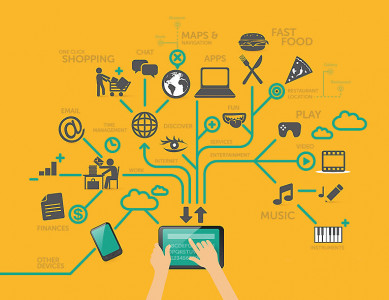
Here’s a scary thought — the internet is a system of control that is increasingly designed to present a myopic view of the world, using your personal data against you to ensure you get exactly what you want, fulfill all your desires and interests in exchange for ensuring you never encounter any material that is challenging or presents a counter narrative to your preferences.

Currently, the range of preferences seems limitless, but inevitably myopia will result in tunnel vision and the fear is that rather than being a force to unite people, the internet will be an alienating force, dividing people, quantifying them into digital groupings and tribes who only interact with themselves and the information they wish to consume. You may already be trapped in a ‘filter bubble’ on Google or Facebook without knowing it, or perhaps knowing it and loving it, but left woefully devoid of perspective. To quote Mark Zuckerberg here: “A squirrel dying in front of your house may be more relevant to your interests right now than people dying in Africa”.

Sounds ridiculous? Let me play the devil’s advocate and take a look at the philosophy that drives The Express Tribune’s website: social friendly, give the consumers what they want, let them have a say in what is important. We have a most popular, most commented and most emailed box, telling others what everyone is interested in. Our blog site is designed so that the top five blogs displayed are automatically chosen based on algorithms around the number of comments on a post. The third party widget at the bottom of each blog that offers other stories “you might like” is built to display related blogs, but its algorithms also aim to show the blogs that get the most clicks. Increasingly, you will see the same blogs appearing in this widget again and again and again. It’s all automated. The editorial selection is, therefore, made by clicks and algorithms, not editors. I freely admit that a fair amount of editorial decision-making on the website is based on real time analytics data that indicates what trends are catching the audience’s attention.

How about taking a look at Google, which is increasingly attempting to make search tailor-made to your user profile. To quote an anecdote by political and internet activist Eli Pariser from his TED talk: “I asked a bunch of friends to Google ‘Egypt’ and to send me screen shots of what they got … when you do read the links, it’s really quite remarkable. Daniel didn’t get anything about the protests in Egypt at all in his first page of Google results. Scott’s results were full of them. And this was the big story of the day at that time. That’s how different these results are becoming”.

Being a fierce internet advocate of the idealistic ‘the internet can do no wrong’ bent, I find it hard to accept that the online space will become a place where we only see what we want to see, not what we need to see; a world where freedom is an illusion maintained by new centres of control. In the battle over the draconian Protect IP Act and Stop Online Piracy Act, I was firmly on the side of Wikipedia, Google, Yahoo, Reddit et al. in believing the legislation was aimed at systematically curbing freedom of the internet, but I had to pause for a second when I read the Recording Industry Association of America’s  response to the online onslaught that effectively killed the legislation: “It’s a dangerous and troubling development when the platforms that serve as gateways to information, intentionally skew the facts to incite their users and arm them with misinformation … it’s very difficult to counter the misinformation when the disseminators also own the platform”.

So if online companies — news or otherwise — have political will and are ready to act on it, using it to sway public opinion in their favour, is this the shape of things to come? Will assumed oases like the The Express Tribune website provoke and challenge, or feed into the illusion of a Pakistan based on the profiles of the users visiting the site. It’s definitely not such a black and white online world right now, but it is worth pondering what will happen when we move from organic, human gatekeepers of information to digital algorithms — The Matrix, anyone?

Published in The Express Tribune, April 20th, 2012.


]]>
Jahanzaib Haque New The writer is Web Editor of The Express Tribune and tweets @Jhaque_ jahanzaib.haque@tribune.com.pk 10
Web: I love my job http://tribune.com.pk/story/363309/web/ Thu, 12 Apr 2012 06:35:32 +0000 http://tribune.com.pk/?p=363309

It was the end of 2010 when our publisher, wrapped up one of our meetings with a casual “So I guess this is it huh? 12-13,000 people a day is the daily limit for a Pakistani newspaper in English.” He had that look in his eye; one of a wild dream of online publishing glory lost, but at least we tried our best and did a good job. I remember looking back at him incredulously and saying, “Not at all. This is just a fraction of our reach – we’ve only begun to explode!”

It is now 2012 and I am taking my daily dip into the vast ocean of Google’s real time site analytics. It’s only afternoon and we have 726 active visitors on the site – we’re averaging 75,000 unique visitors a day now. My comment moderation team is cracking up as they approve comments bashing ET for “biased reporting” against Imran Khan. They love having the freedom to approve any/all comments bashing the newspaper – besides, one of the moderators is a PTI supporter.

I feel calm and in control. What was once a desk of four people stuffed in a room that was meant to be a store room back in 2010, has exploded into a team of 15 in its own hall with access to over 100 reporters across Pakistan. A lot has changed, and my team can feel it too. We still frantically take notes from the TV as breaking news happens, but at the same time the phone is ringing with our own reporter calling in the updates; he’s finally realised the importance of his byline making it to the website.

As I switch over from browsing analytics to scanning Twitter for news leads, I try to remember when our paper fundamentally made the switch to an unofficial ‘digital first’ strategy. It’s hard to put a finger on it, but the website is sucking me back into its 24-hour cycle. I’ve got a direct message on Twitter asking me to report on the target killings in Karachi. I pass the message on to my shift in-charge who dials our Karachi crime reporter. Our crime reporter will be emailing a few paragraphs and a police quote from his smartphone – deadline: 15 minutes. Another 15 minutes for one of my subs to edit the story and add in the necessary contextual background. I thank my Twitter friend for the update, and remind the team to follow protocol and send the story over to the city desk for the print edition; convergence at its streamlined best.

The blog desk is sorting through their roster of regular bloggers to see who can address the latest spate of killings with a fresh angle while squabbling over whether an incoming rebuttal to an Imran Khan op-ed trumps a blog on an Islamic SMS spam. I’m free. Sort of. I still have to decide whether introducing a word limit to our comments section would actually play against or in favor of the trolls that inhabit our site.

I love my job.

Published in The Express Tribune, April 12th, 2012.


]]>
Jahanzaib Haque New My comment moderation team is cracking up approving comments bashing ET for “biased reporting” against Imran Khan. 6
No journalism free of bias http://tribune.com.pk/story/360229/no-journalism-free-of-bias/ Thu, 05 Apr 2012 17:32:15 +0000 http://tribune.com.pk/?p=360229

Story after story the comments are always the same. “Why is this paper so biased towards liberalism and secularism? Very unethical”, “Why are you always covering every small issue of minorities? Pakistan has so many problems”, “immature writing to attract youth”, and so on.

For the thousandth time, there is nothing unethical about setting an agenda for a newspaper or media organisation. Let us not be naïve or ignorant; all media groups have an agenda, it is not even an open secret, it is often written down as is the case with this newspaper. It has been stated that The Express Tribune hopes to fight “the twin menace of extremism and economic decline by spreading liberal ideas and mobilising the young people of Pakistan”.

There is nothing illegal about promoting liberal ideas or focusing more on attacks on minorities compared with other issues, or trying to get young people to read the newspaper by creating content that interests and attracts them. If you don’t like the agenda, don’t read the paper, but enough of this shock and awe over how much space say a Pervez Hoodbhoy is given over a Shireen Mazari, or why Veena Malik is covered at all. Let us end the inane criticism of how the paper needs ‘balance’ — the balance is there as long as you can read the ingredients in the mix.

No, the agenda is not what you should be upset about; we all have one, even on a personal level. Send three different reporters to cover the same event and you will receive three different reports, which — even if all three report the facts truthfully — in their very choice of words will add on a layer of subjectivity that would make all three reports different. I myself have no qualms about labelling myself a left-leaning liberal and a secularist. I wear my biases on my sleeve — it is honesty that compels me to do so, in order that the reader knows where my work is coming from. Thus, calling me out for being a liberal or a secularist has no meaning.

I would go as far as to argue that there is no journalism free of bias. This is not some radical philosophical stance requiring Baudrillardian leaps into the ‘desert of the real’ or a discussion on whether language can ever convey the true nature of reality. People consume news from a source, not because it is unbiased and presents the whole truth, but in spite of (or in preference of) its biases and certain version of the truth. All regular consumers of news innately turn to multiple sources to build a complete picture, knowing full well what agenda each source comes with.

No, the question is not — why do you have ‘X’ agenda; it is why you are not transparent about your agenda. Why is it not written out and publicly accessible so we, the citizens, know where you are ideologically operating from? This would be a more pertinent question, as it would then be possible to hold the journalist or media group accountable based on the agenda they set themselves. Here in Pakistan, there is an even more important question to be asked of journalists and media groups: why does your agenda on issues shift depending on the medium, i.e., from English to Urdu? Why do two different papers within the same media conglomerate have a different, often opposing stance on various issues? How is it that your news channel is reporting on and exposing black magic charlatans, yet your dramatised programme 45 minutes later features a ‘psychic’ investigator who describes the ‘real’ powers of these same ‘black magicians’.

Yes, every journalist and every group has an agenda. The question is not whether or why the agenda exists, but whether it is being followed, whether it is transparent and whether it is being upheld across the board.

Published in The Express Tribune, April 6th, 2012.


]]>
Jahanzaib Haque New The writer is Web Editor of The Express Tribune and tweets @Jhaque_ jahanzaib.haque@tribune.com.pk 40
How to say yes to online censorship http://tribune.com.pk/story/348993/how-to-say-yes-to-online-censorship/ Mon, 12 Mar 2012 18:34:19 +0000 http://tribune.com.pk/?p=348993

There are two opposing narratives being discussed about the government’s call for a national level internet blocking and filtering system, and both must be understood to find a path forward.

On the one hand, NGOs, internet monitoring groups, parts of the press and civil society are up in arms against the threat this proposal poses to freedom of expression and the right to information. On the other hand, we have a second narrative by Internet Service Providers (ISP) representatives, IT experts and tech bloggers who claim that the intent of a system capable of blocking up to 50 million sites is to speed up and ensure accuracy of the process, as currently ISPs have to manually block sites — a tedious and error-prone process. ISPs and the authorities are flabbergasted to find their efforts to streamline this process being ‘demonised’ by ‘propaganda’ aimed at ‘twisting’ their efforts into a freedom of speech or the right to information issue.

According to this narrative, the National ICT Research and Development Fund, which floated the proposal, is merely trying to offer local IT companies an opportunity to develop this system. How can something that creates jobs and enhances the capacity of local companies while not introducing anything new (policy-wise) be bad for Pakistan? This must be a conspiracy to defame the nation. This narrative also includes the cultural mantras of ‘porn destroys the moral fabric of society’, ‘blasphemous content cannot be tolerated’, ‘Baloch separatists should not be allowed a voice’. How can this narrative be reconciled with that of a government out to clamp down on the internet?

It cannot be denied that www.rollingstone.com is blocked due to a single anti-Pakistan army article. It cannot be denied that Baloch news websites are blocked en masse, with no accountability regarding who judged what specific content to be ‘too separatist’. It cannot be denied that all of Facebook was banned for hosting blasphemous content causing great harm to the fledgling local online economy. Now, doesn’t the narrative of an imminent threat to the internet by a better, faster blocking system make sense? It does.

Now to reconcile the two narratives. Yes, completely uncensored internet does not exist — there are things that need to be censored. This much should be acceptable to all. But how do we choose what is to be censored and how should it be censored? Sure, an automated system makes sense, but given the government’s history, this system should not be allowed without explicit involvement and monitoring by independent bodies. There is a trust deficit that the government needs to fill by taking the public on board and speaking directly to the pressure groups they feel are ‘conspiring’ against them. Additionally, the system must work for the public good and not cater to public sentiment i.e., sites cannot be banned due to pressure from a public outcry as was seen in the blanket ban on Facebook.

The Pakistan Telecommunications Authority (PTA) must issue a list of the blocked websites with explanations for who blocked the site and for what reason, under which law, along with the length of the ban. No ban should be put in place without court approval and due discourse with independent entities set up to safeguard the rights of the citizens. Any ban on a site should be preceded by a prior warning sent to the webmaster, possibly including a two/three strike system. A notice of an implemented ban should be sent to the site owners and announced publicly and there should be a clearly established system for challenging the ban.

As yet, the PTA and the government have made no overtures to suggest they want to be held accountable or want to develop a system after consultation with the citizens they serve. Till they do, the ongoing and upcoming censorship of the internet in Pakistan must be fought tooth and nail.

Published in The Express Tribune, March 13th, 2012.


]]>
Jahanzaib Haque New The writer is Web Editor of The Express Tribune and tweets @Jhaque_ jahanzaib.haque@tribune.com.pk 17
The great (fire)wall of Pakistan http://tribune.com.pk/story/345378/the-great-firewall-of-pakistan/ Sun, 04 Mar 2012 15:22:36 +0000 http://tribune.com.pk/?p=345378

First they came for the Baloch websites, silently, without any justification. Then they banned YouTube and Facebook for weeks in the name of blasphemy. Then came the crackdown on online porn, with over 13,000 sites blocked. Then came the end of Pakistan’s access to Rollingstone.com, due to a single article criticizing Pakistan’s level of military spending.

The modus operandi is almost always the same; instructions are passed from the government, establishment or courts to the Pakistan Telecommunication authority (PTA) who then sends a notice to all internet service providers (ISPs) to block the sites. To legitimize the steps taken, directives and legislation are introduced such as the Pakistan Telecommunications (Re-organisation) Act, 1996 that criminalises vague and broad offenses, banning the dissemination of “false” or fabricated” content, or the even vaguer, “mischief.”

The ISPs do not protest, or question whether their customers’ right to information or freedom of expression is being trampled on. They do not even inform their customers that a block has been put in place, or provide a publicly available list of sites blocked along with legal grounds (if any) for blockage. All the customer gets is a single line message upon trying to access a site: this page has been blocked, by orders of the PTA – and now, we may well be getting that message for up to 50 million more sites in Pakistan.

In a bid to establish what is being termed ‘the great (fire)wall of Pakistan’, the government has floated a request calling for proposals to ensure blocking and filtering of “undesirable content” at a national level. The National  ICT Research and Development Fund has sought bids for a system that “should be able to handle a block list of up to 50 million URLs with a processing delay of not more than 1 millisecond.”

The implications of such capabilities in the hands of the above institutions, given their history of abuse and lack of cognizance of citizen rights (not to mention servitude to extremist pressure groups), is terrifying. Internet in Pakistan, even with its limited penetration has been the only independent, partially free space for the exchange of information and ideas. To see that come to a quick, strangulated end by having policies and systems set up to censor huge swathes of the online space can only come from individuals/institutions that are fundamentally ignorant of the damage they are inflicting.

To best judge how skewed the priorities of those carrying out this censorship of the internet is, one only has to Google for jihadi literature and websites of anti-state/banned groups such as Hizbut Tahrir Pakistan, to see how they operate online with impunity. Needless to say, the ongoing and upcoming blockage and filtering of web content is likely not a case of good intent, flawed execution.

It is now up to the Ministry of Information Technology to prove to its citizens how exactly their censorship efforts are for the public good, and how they can be held accountable in any instance of violating local or international laws, given that the UN has declared internet access a human right.

Keeping in mind that the PTA’s attempt to ban up to 1,500 words on SMS was thwarted by the combined efforts of civil society, telcos and mass media coverage, there is hope that further blockage of the internet in Pakistan could be nipped in the bud.

At this stage, the average Pakistani must understand that this is not a “good move” to save our youth from “evil” pornography and it is not a “blessing” that will “protect” us from blasphemous content – those orchestrating online censorship are doing it to service themselves or the pressure groups acting upon them, and the impact of this will only be felt once it interferes directly in your life. Imagine the slippery slope from censoring porn and anti-establishment content to censoring your political views, blocking your blog on art, blocking your online forum such as this newspaper’s website for hosting comments deemed ‘undesirable content’. This is all just one step away.

Published in The Express Tribune, March 5th, 2012.


]]>
Jahanzaib Haque New The writer is Web Editor of The Express Tribune and tweets @Jhaque_ jahanzaib.haque@tribune.com.pk 54
The media — in the near future http://tribune.com.pk/story/339673/the-media--in-the-near-future/ Tue, 21 Feb 2012 17:00:33 +0000 http://tribune.com.pk/?p=339673

Welcome to 2015. Pakistan has 3G and 4G mobile services active, with millions of subscribers ranging from the elite, all the way down to the lower classes, since now, cheap Chinese manufactured smart phones and tablets have flooded the local market. With mobile penetration climbing beyond the massive 60 per cent as seen in 2011, the media boom the country saw in the 2000s has now entered, kicking and screaming, into its second great transition — convergence between new media and old.

The force of global technological progress and consumer demand led to this new world; one in which breaking news is now spread faster — through Twitter and Facebook — than any local media group could manage on its own. Television still does breaking news, but fewer and fewer people turn to their TV sets to watch the news, as online streaming on the go is a more convenient access point. Newspapers still exist, but their print circulation is now a show piece — a rubber stamp of legitimacy to what have essentially become online entities. This shift, however, has proven to be a blessing, as suddenly, online newspaper outlets find themselves to be just as relevant as their broadcast competition, and audiences do not differentiate where the breaking news comes from in the online world.

Advertisers have wisened up and have finally learnt that return on investment should be based on actual, measurable results — something the internet provides in abundance and something that TV and print both could not offer. Even worse for the media moguls, their lies about ratings, reach and print circulation numbers, now lie exposed in the dynamic online space, where actual reader/viewer interest is visible. With the shift in advertising (strategy and spend) many newspapers and TV channels have shut down, or are in the process of closure, unable to respond to the demands of the new media landscape. The only media groups left are those who had diversified enough, moved to integrate with the internet enough and had at their core, a real dedication to journalism.

The big question facing the local media moguls now is how to maintain high quality journalism on the economics of a largely online business model. Set up pay walls? Create new forms of online goods related to news? Convince advertisers to increase internet ad spend? Earn through mobile apps? Many are looking abroad for answers, hoping to apply the lessons learnt by global media. Things look grim for the media moguls, yet at the same time, the democratising effect of the internet has also resulted in something beautiful; the number of media outlets have reduced, but the content has tightened up and delivers what people actually want to see and read.

While in 2012, there was a real fear that tailoring content to match the (very measurable) desire of the online public would result in a massive, degenerative groupthink that would reduce journalism to a cheap carnival, the reality in 2015 illustrates the diversity of communities and demand for content, even in Pakistan. Yes, there are cheap tricks being used to draw in audiences, but unlike TV or print, there is no lack of space, so all forms of content can exist in parallel without competing. Additionally, there are niche audiences out there for all forms of specialised information and, thankfully, it is these niche segments who are more than willing to pay for the information with their credit cards, or PayPal, which was allowed to operate in Pakistan sometime in 2013.

What lies ahead? Perhaps a cutting edge telco experiment with making mobile phone credit a currency for purchasing content online? Perhaps, an ambitious media group collaborates with a local IT firm to create its own low-cost tablet for sharing its content. Whatever the case, these are both troubling and exciting times to be in the news business.

Published in The Express Tribune, February 22nd, 2012.


]]>
Jahanzaib Haque New The writer is web editor of The Express Tribune and tweets @Jhaque_ jahanzaib.haque@tribune.com.pk 8
Why a ban on porn sites is futile http://tribune.com.pk/story/335423/why-a-ban-on-porn-sites-is-futile/ Sun, 12 Feb 2012 16:56:57 +0000 http://tribune.com.pk/?p=335423

There are three big problems with banning and blocking pornographic websites in Pakistan, ranging from the most basic — it does not work — to the more troubling ‘saying yes to banning porn is saying yes to state oppression’, to the most deeply worrying ‘our national identity seems to be one of a imbecile out to harm himself’.

Let’s address the most basic problem first. The reason why a ban on porn can never work is because of a simple economic principle — where there is demand, there will be supply, and the demand is going nowhere. Those who want to see porn online will do so. Their options are unlimited. For every 13,000 porn sites the Pakistan government blocks, there are over 327 million other pages to browse as porn accounts for 12 per cent of all online visits and 35 per cent of all downloads worldwide. If the PTA somehow convinced our local ISPs to block all 327 million pages of porn, the filtering system would strangle all internet in Pakistan, not to mention, by the time such action was taken, there would probably be a million new porn sites out there. Let’s also not forget that proxy servers (sites that change your IP to different locations) make all 13,000 blocked sites available. How easy is it to use a proxy? About a single Google search or browser extension away, rendering the whole blocking exercise (not to mention its cost) redundant. It is unfortunate that our esteemed judiciary and government servants are so technologically challenged that they probably cannot understand this basic problem even if it is written for them on paper.

Next is the more troubling ‘saying yes to banning porn is saying yes to state oppression’. Banning porn is a slippery slope to say the least. This government is already known to block websites in the name of such open ended phrases as ‘national interest’ so do we really want to give them allowance to censor us further with the (mis)use of the words ‘obscenity’ and ‘pornography’? Who gets to define what is obscene and what is pornography? Is Titian’s Venus of Urbino pornography? And if so, should we block Wikipedia and ban all import of Encarta Encyclopedia CDs, as that is where I first saw this masterpiece at age 14? What is obscene? Is Sex and the City obscene? It may be to our rabid mullah folk, and since they have the upper hand in this country devastated by politicized religion, can we expect a ban on YouTube in any number of very real dystopian future scenarios? Most certainly, such oppression is just a step away from banning porn.

This brings us to the most worrying and saddening aspect of the decision to block porn — that of the floundering, decaying, most pathetic creature that has become our national identity. What does this attempt to ban and block porn say about us? Does it suggest that we are stupid and ignorant? Does it suggest that we are infantile, delusional and very naïve; given that we do not even see that the issue is not the availability of porn online, but the demand that exists for it? Yes, it does. Does it suggest that we are unabashedly willing to stab ourselves in the foot again and again?

It seems that way, given that we have not learnt anything about how our government and courts may ban anything unannounced, indefinitely, from Baloch news sites to Rolling Stone magazine to SMSs about finger food and athletes foot. This to me is the most tragic aspect of the ongoing ban and blockage of porn: the fact that is speaks of a nation that is moving backwards; immature and proud of it to boot. It is a dangerous state to be in, and one any sane person should fight against.

Published in The Express Tribune, February 13th, 2012.


]]>
Jahanzaib Haque New The writer is web editor of The Express Tribune and tweets @Jhaque_ (jahanzaib.haque@tribune.com.pk) 105
After Maya Khan, CFRM to hold Pakistan media accountable http://tribune.com.pk/story/332333/after-maya-khan-cfrm-to-hold-pakistan-media-accountable/ Sun, 05 Feb 2012 14:50:23 +0000 http://tribune.com.pk/?p=332333

The public outcry and eventual firing of Samaa TV show host Maya Khan may have been a spontaneous event, but this episode has laid the ground works for future media accountability in the shape of the newly established Citizens for Free and Responsible Media (CFRM).

This independent group of concerned citizens not only gave shape to the public outburst against Maya Khan in the form of emails to Samaa TV Chairperson Zafar Siddiqi and an online petition signed by over 5,000 people, they also successfully held A-Plus TV accountable for their show Thori Si Bewafai , a show featuring (allegedly staged) vigilante-style raids on couples. As result of which, within a couple of hours of a petition having been put forward, the host of the show Shamoon Abbasi announced quitting the show. In a detailed message in response to the CFRM, Abbasi claimed to have quit the show as he personally disagreed with its format, and claimed he was only briefed on the show’s script upon reaching shoot locations.

In light of these cases, the CFRM released a press release on Saturday, stating:

“The degree of participation shown and encouragement by media consumers led us to come together under the umbrella of ‘Citizens for Free and Responsible Media (CFRM), Pakistan’. We function as a non-hierarchal platform with decisions taken by consensus among the core group members, with inputs from media consumers who can now join us on our Facebook page. People can also point out media transgressions and give their inputs here, to do their bit to ‘reduce the social cost of silence’.”

The CFRM has already gained over 700 followers on their Facebook page, which features updates on possible media infringements and articles related to media ethics. According to the CFRM, the goal is “…not to get channels banned or to get TV hosts or journalists fired, but to encourage channels to evolve their own set of guidelines and code of ethics in conjunction with senior producers, journalists and concerned citizens, to ensure that privacy and human dignity are not violated. We urge them to make these guidelines public…We also urge them to incorporate a channel for media consumers to approach in case of complaint or redress, and appoint internal ombudsmen for this purpose. We also urge the industry to revise the current ratings system, and align the ‘quality of content’ with the ‘quantity of viewership.’”


]]>
CFRM media pakistan Samaa TV show host Maya Khan was fired after pressure from the CFRM. 15
The watchers must watch the watchers http://tribune.com.pk/story/330451/the-watchers-must-watch-the-watchers/ Wed, 01 Feb 2012 18:17:34 +0000 http://tribune.com.pk/?p=330451

Much ado has been made of the firing of Samaa TV show host, Maya Khan, after her televised park raid. One of the key questions raised again and again, increasingly so by a momentarily introspective media, has been: who will watch the watcher? If journalists have turned to scum, or in the case of Maya Khan, if frolicking morning show hosts are not even aware of what they have done wrong in publicly harassing young couples, who will hold them accountable?

There is a simple answer to that. And no, it is not the duty of the public at large, though they too, as we have seen in Maya Khan’s case, have a role to play as well.

No dear journos and columnists, it is actually our duty and we have failed at it miserably.

For too long, media groups either from a misguided notion of journalism ethics or from a fear of entering a tit-for-tat war against each other have avoided, nay grossly neglected reporting on the media itself. While across the world we see ‘media reporting’ with specialised media reporters and full-fledged media desks, this very critical role of covering the very personalities, programmes and companies that make the news has yet to be taken up by any local news organisation.

Why this hesitancy? For some, it is outright ignorance of the fact that reporting on the media is news and plays as critical a function as reporting in any other field. Then, there is an old vanguard of local journalists and columnists who feel it is ‘not the done thing’ i.e., it is somehow a ‘low blow’ to report on a fellow sahafi and competitor. Lastly, and perhaps most critically, there are the media owners themselves, who discourage or would actively oppose such reporting as it would not only risk exposing their own dirty laundry and/or failures in the inevitable public exchange of information but it would also likely result in a new front of legal battles, notices and God forbid, a code of conduct for the media that would seriously restrict their current sab kuch chalta hai attitude to the news.

Suddenly, the media would be held accountable, by the media itself. It would be a form of public internal policing. Inevitably, media reporters and media critics would move on from the ‘tit-for-tat’ wars, pointing out illegalities in the actions of each other (which at this point would be hugely beneficial for all but the media owners), to critiquing all sorts of elements that make up the media. Do we have a plagiarism issue in local media? Yes we do and that would be exposed and eradicated. Do we have reporters that no longer report but just copy whatever they see and hear on other news channels? Yes we do, but with media desks monitoring and reporting on such instances, it would be exposed and this dangerous trend would be eliminated. Do we have terrible morning shows, which dish out content for an audience they assume are imbeciles? Yes, and that too could be reported on, discussed and exposed, resulting in better programming.

Unfortunately, most media folk and media owners are short-sighted to the point of blindness. They are stuck in an old world of old fears and prefer to stick to their rotten (and it is rotten) industry, making do with the status quo and making key decisions based on hunches and ‘good experience’ from their limited exposure of having worked in a media company or two.

That is why no local news channel or newspaper has a dedicated media desk, even though in media-obsessed Pakistan, it is completely logical that the public would lap up any reporting done on the very journalists, columnists and TV shows that dominate their lives. The answer has been staring us in the face for quite some time now: the watchers must watch the watchers and to spare this article from another cliche dominating local journalism, I will present the solution.

Mr/Mrs media owner, set up a media desk with two to three dedicated reporters and you will lead the pack, change history and help Pakistan a great deal. As a bonus, you will also make a lot of cash in the long-run.

Published in The Express Tribune, February 2nd, 2012.


]]>
Jahanzaib Haque New The writer is web editor of The Express Tribune and tweets @Jhaque_ (jahanzaib.haque@tribune.com.pk) 9
The trouble with: Flying PIA http://tribune.com.pk/story/327529/the-trouble-with-flying-pia/ Thu, 26 Jan 2012 12:32:39 +0000 http://tribune.com.pk/?p=327529

Facts, figures and opinion below are based on past articles run in The Express Tribune:

• Pakistan International Airlines is suffering a loss of Rs70.7 million per day.

• PIA has already lost Rs110 billion over the past three years.

• Despite the crippling losses, PIA employees (retired and serving) enjoy free travel in Pakistan and abroad.

• Cancellation of around 1,200 PIA flights between Aug-Nov 2011 inflicted Rs410 million loss to the airline.

• PIA’s downhill trend is aided by its powerful unions which force key deals to fall through, shut down airports.

• Over the past three years 2,171 people have been recruited in PIA, which has suffered losses worth Rs100 billion in the same time period.

• PIA recruited 237 people in 2011, 1,179 in 2010, while 684 appointments were made in 2009 and 56 in 2008.

• Thousands of PIA employees sacked by Nawaz Sharif’s government were reinstated by the PPP in 2008.

• The number of people hired by the PPP government is the highest in the history of the national flag carrier.

• The total number of airlines authorised to operate on commercial basis is six, including PIA, Air Blue, Shaheen Air, Indus Air, Bhoja Air and Pearl Air.

• This local competition enhances losses of the national flag carrier.

• In 2011, Iran shut its airspace to Pakistani aircraft due to a six-month $600,000 backlog in transit payments.

• PIA’s aging fleets of aircraft have faced increasing technical issues, forcing many planes to be grounded in 2011.

• On September 28 2011, 10 PIA aircraft, out of a fleet of 39, were grounded allegedly due to technical faults.

• On September 27 2011, flight PK-369 made an emergency landing at Multan Airport due to a malfunctioning generator.

• 24 hours later, UAE-bound flight PK-255 had to land in Karachi due to the same issue.

• On August 6, 2011, PK-745 had to make an emergency landing in Karachi after its landing gear failed to retract.

• On September 2 2011, PK-501 carrying 21 passengers and PK-508 with 32 passengers had to make ‘technical landings’ after engine failures.

• On December 12 2011, 11-19 of PIA’s 39 aircraft were believed to have been grounded for technical reasons.

• A potential reason for technical deficiencies in aircraft is the plummeting standards of engineering in the airline.

• Seven out of 26 local airports were closed down due to suspension of PIA flights on account of insufficient traffic load.

• Despite all this, PIA fights on the domestic sector fly with full loads due to lack of viable alternatives.

• The national carrier continues to cost Pakistan billions of rupees.


]]>
21