<?xml version="1.0" encoding="UTF-8"?>
<rss version="2.0"
	xmlns:content="http://purl.org/rss/1.0/modules/content/"
	xmlns:wfw="http://wellformedweb.org/CommentAPI/"
	xmlns:dc="http://purl.org/dc/elements/1.1/"
	xmlns:atom="http://www.w3.org/2005/Atom"
	xmlns:sy="http://purl.org/rss/1.0/modules/syndication/"
	xmlns:slash="http://purl.org/rss/1.0/modules/slash/"
	xmlns:media="http://search.yahoo.com/mrss/"
	>

<channel>
	<title>The Express Tribune &#187; Mohammad Arifeen</title>
	<atom:link href="http://tribune.com.pk/author/679/mohammad-arifeen/feed/" rel="self" type="application/rss+xml" />
	<link>http://tribune.com.pk</link>
	<description>Latest Breaking Pakistan News, Business, Life, Style, Cricket, Videos, Comments</description>
	<lastBuildDate>Thu, 24 May 2012 19:24:57 +0000</lastBuildDate>
	<language>en</language>
	<sy:updatePeriod>hourly</sy:updatePeriod>
	<sy:updateFrequency>1</sy:updateFrequency>
	<generator>http://wordpress.org/?v=3.2.1</generator>

		<item>
		<title>United Kingdom: a leader in Islamic finance </title>
		<link>http://tribune.com.pk/story/33567/united-kingdom-a-leader-in-islamic-finance/</link>
		<pubDate>Mon, 02 Aug 2010 04:57:12 +0000</pubDate>

		<guid isPermaLink="false">http://tribune.com.pk/?p=33567</guid>

		<description>
		<![CDATA[
			<a href="http://tribune.com.pk/story/33567/united-kingdom-a-leader-in-islamic-finance/">
				<img src="http://i1.tribune.com.pk/wp-content/uploads/2010/08/United-160x120.jpg" width="160" height="120" alt="" />
			</a>
			<p><p><strong><strong class='location'>KARACHI:&nbsp;</strong>More than any other country, the United Kingdom has been by far the largest Shariah-compliant banking hub for Muslims. The United Kingdom Islamic banking division was larger than that of Pakistan, according to a report published a while back. It is the first Shariah-compliant retail banking division in the West which was authorised by the Financial Services Authority in 2004.</strong></p>

<p>There are about 2.5 million Muslims constituting 3.3 per cent of the total population of UK. Approximately 50 per cent of those are currently living in London. Islamic financial products in the form of current accounts and mortgage are available to Muslims and non-Muslims living in the country.</p>
<p>London has become a major financial centre with big international financial institutions, particularly from Saudi Arabia and other Gulf states offering attractive Islamic products. London is considered by many institutions &#8211; Islamic and non-Islamic &#8211; as a world centre for Islamic finance, both on the retail and wholesale sides.</p>
<p>The Financial Services Authority functions under a single piece of legislation &#8211; the Financial Services and Market Act 2000 &#8211; that applies to all spheres of its operations. Deposits of customers are the main issue for the Authority. Under Islamic banking laws, the customer and the bank share the risk of any investment on agreed terms and equally divide the profits and losses between them. With a saving account, Islamic banks offer full repayment of the investment by informing the customer as to how much should be repayable to comply with the risk-sharing formula.</p>
<p>In the United Kingdom, 17 leading banks including Barclays, Royal Bank of Scotland and Lloyd Banking Group have set up special branches or subsidiary firms for Muslim customers. The 12 billion pounds in assets of UK are said to excel those of Muslim states such as Bangladesh and Egypt. There are 55 colleges and professional institutions offering education in Islamic Finance in UK, more than anywhere else in the world.</p>
<p>First Islamic bank of UK</p>
<p>The Islamic Bank of Britain is the first Shariah-compliant bank approved by the United Kingdom in 2004. The bank has set up six branches in London, Birmingham, Manchester and Leicester. This bank operates according to Islamic principles where both Muslims and non-Muslims are permissible to hold accounts. It currently offers a full range of retail and business banking services.</p>
<p>This bank has had a major impact on the Islamic financial market. In 2006, its customers totalled 20,814. This had increased by 120 per cent from the preceding year. According to recent figures, the bank had over 50,000 accounts and about 42,000 customers.</p>
<p>Recently, the Islamic Bank of Britain has raised 20 million British pounds. The net proceeds will be used to provide the bank with sufficient regulatory capital to manage and grow its business. Its shares are being placed with Qatar International Islamic Bank, an existing shareholder.</p>
<p>Seeing the great potential of Islamic banking in United Kingdom, many banks such as SAAB and HSBC have started offering Islamic banking services to their customers. The banks working under Islamic laws were not driven by the Muslim population in UK, but by the high net-worth Muslim investors from the Gulf Cooperation Council (GCC) countries, Malaysia, Brunei, Singapore, Indonesia, South Africa and Turkey.</p>
<p>Islamic home finance market</p>
<p>United Kingdom is the most developed Islamic mortgage market. The government has abolished double stamp duty for Islamic mortgage contracts. The Islamic home finance market is one of the largest components of the UK financial sector. In the retail sector, the Islamic mortgage market is now worth an estimated $2 billion per annum.</p>
<p>In the United Kingdom, Islamic mortgages have been structured under two different contracts. Murahaba is a form of credit that enables the customer to make purchases without taking interest on loan. In this context, the bank buys the goods for the customer and sells them to the customer on a deferred loan adding an agreed profit margin. The customer then pays the sale price for the goods in instalments, effectively obtaining credit without paying any interest.</p>
<p>The other is the Ijara which is a leasing agreement in which the bank buys and then leases an asset to its clients for a particular rental over a specified period of time. The bank may have the right to adjust the rental charge in accordance with the changes in the cost of finance.</p>
<p>At the Annual World Islamic Bank Conference 2009 in Bahrain, UK’s Islamic finance leaders shared their views on the future of Islamic finance at a dedicated UK roundtable discussion. The potential for growth of Islamic banking in both the retail and wholesale sectors is there. The professional and advisory services sector in UK is highly developed and can cater to global Islamic banking and finance centres and address the challenges of the future.</p>
<p>The research finding shows that there are ample opportunities for development and growth of Islamic financial system because the Muslim community is very eager to take financial products. The Financial Services Authority is willing to play its strategic part in supporting these developments within its regulatory powers.</p>
<p><em>Published in The Express Tribune, August 2<sup>nd</sup>, 2010.</em></p>
</p>
			<br clear="all"/>
		]]>
		</description>

		<media:content width="424" height="318"
							isDefault="true" medium="image" url="http://i1.tribune.com.pk/wp-content/uploads/2010/08/United-640x480.jpg">
			<media:title>United</media:title>
			<media:description>Banks lured by high 
net-worth Muslim 
investors
</media:description>
			<media:thumbnail url="http://i1.tribune.com.pk/wp-content/uploads/2010/08/United-160x120.jpg" width="160" height="120" />
      </media:content>

		<wfw:commentRss></wfw:commentRss>
		<slash:comments>2</slash:comments>
	</item>
		<item>
		<title>Govt intervention boon for farmers, but  consumers suffer</title>
		<link>http://tribune.com.pk/story/25668/govt-intervention-boon-for-farmers-but-consumers-suffer/</link>
		<pubDate>Sun, 04 Jul 2010 19:14:58 +0000</pubDate>

		<guid isPermaLink="false">http://tribune.com.pk/?p=25668</guid>

		<description>
		<![CDATA[
			<a href="http://tribune.com.pk/story/25668/govt-intervention-boon-for-farmers-but-consumers-suffer/">
				<img src="http://i1.tribune.com.pk/wp-content/uploads/2010/06/Business-script-80x45.jpg" width="160" height="120" alt="" />
			</a>
			<p><p><strong>Data has revealed that when the government intervenes in the domestic commodity markets in an attempt to offer better returns to farmers the result is higher prices for consumers.</strong></p>
<p>Government intervention in the wheat market decreased during the period between 2002 and 2008 leading to both consumers and flour producers paying less. Thus, to some extent harmony prevailed between consumers and producers. But this year the government remained engaged in the market offering Rs950 per 40 kilogrammes to the growers, both consumers and producers paid high prices for the commodity.</p>
<p>Farmers produced 21 million tons in 2007-08 when the procurement price of wheat was Rs425 per 40 kg. After an increase in support price to Rs950 in 2008-09, production grew to 24.03 million tons, creating significant surplus and routing billions of rupees into the rural economy. However, the high wheat prices locally, far above those in the international market, proved to be costly for the cash-strapped government.</p>
<p>To provide relief, the Economic Coordination Committee (ECC) of the cabinet established a guaranteed minimum price for wheat which was to remain unchanged; this was Rs950 per 40 kg in financial year 2009-10.</p>
<p>But last week the ECC was forced to deny the Punjab government permission to export two million tons of wheat. If crop procured at government imposed rates is exported than a loss of Rs1.7 billion is anticipated.</p>
<p>Officials have estimated a bumper crop of 24 million tons sown over 9.404 million hectares this season. This year, the government has set the wheat procurement target at 7.5 million tons against the initial target of 6.5 million tons last year based on the fact that 9.23 million tons were actually procured.</p>
<p>The Farmers Association of Pakistan has rejected the wheat procurement policy, claiming it is against the interest of growers. The Pakistan Flour Mills Association has proposed that the government export flour instead of wheat as the price of Pakistani wheat is higher than the international rate. Some experts say that Pakistani wheat is the most expensive in the word. The price of wheat in the international market is $180-220 per ton (Rs612-Rs640 per 40 kg) while in the domestic market the rate is about $280-300 per ton (Rs950-1,050 per 40 kg). With this argument, it seems ridiculous to buy costly wheat at home when the same is available at cheap prices abroad! Chairman Pakistan Flour Mills Association Punjab Zone, Liaquat Ali Khan, said wheat exporting countries are supplying the commodity in the range of $160 to $200 per ton in the international market. In comparison, prices of Pakistani wheat range between $300 and $350 per ton inclusive of transport expenses. Khan was of the view that flour mills can earn billions of rupees if the government agreed to provide a $50-60 rebate on per ton of flour.</p>
<p>However, the government seems to have a policy of pleasing landlords, who are both in the treasury and in the friendly opposition in the National Assembly and Senate, by providing an opportunity to earn huge profits.</p>
<p>According to experts, the government has lost all gains relating to poverty over the last two years due to higher wheat prices. They suggested that the government should have taken into consideration the future wheat price trends in the domestic as well as international market before announcing the wheat support price.</p>
<p>World Food Programme chief for Pakistan, Wolfgang Harbinger, has also said that the government should keep the expected price of commodity at the regional level in mind while formulating wheat support price policy.</p>
<p><em>Published in The Express Tribune, July 5<sup>th</sup>, 2010.</em></p>
</p>
			<br clear="all"/>
		]]>
		</description>

		<media:content width="424" height="228"
							isDefault="true" medium="image" url="http://i1.tribune.com.pk/wp-content/uploads/2010/06/Business-script-448x241.jpg">
			<media:title>Business script (18048) (18052) (-1275420712) (18056) (-1275421568) (-1275508641) (18307) (18322) (18559) (18563) (18565) (18567) (18915) (18919) (18923) (-1275679173) (18927) (18929) (-1275682179) (18933) (18935) (18937) (19132) (-1275765884) (19554) (19598) (-1275939867) (-1275939978) (19610) (19612) (19614) (19616) (19619) (-1276028381) (19865) (-1276028859) (19873) (-1276113830) (-1276114469) (20133) (20140) (20143) (20393) (20395) (20402) (-1276200539) (20410) (-1276200651) (20682) (20684) (20686) (20690) (20694) (20698) (20700) (20702) (20907) (21101) (21107) (21109) (21340) (21349) (21351) (21353) (21357) (21359) (21546) (21547) (21556) (21563) (21567) (-1276716003) (21824) (21836) (21838) (-1276799733) (22071) (22080) (22338) (22341) (22353) (22553) (22663) (22885) (22890) (22892) (22898) (23107) (-1277237623) (23120) (23341) (-1277325450) (23560) (23571) (23798) (23807) (24003) (24011) (24174) (24177) (24180) (24436) (24442) (24446) (24450) (-1277839351) (24653) (24882) (24884) (-1278010946) (25103) (25344) (25354) (-1278185539) (25668)</media:title>
			<media:description>‘Pakistani wheat may be the most expensive globally’ </media:description>
			<media:thumbnail url="http://i1.tribune.com.pk/wp-content/uploads/2010/06/Business-script-80x45.jpg" width="160" height="120" />
      </media:content>

		<wfw:commentRss></wfw:commentRss>
		<slash:comments>0</slash:comments>
	</item>
		<item>
		<title>Agriculture sector hungers for attention</title>
		<link>http://tribune.com.pk/story/24179/agriculture-sector-hungers-for-attention/</link>
		<pubDate>Sun, 27 Jun 2010 19:50:58 +0000</pubDate>

		<guid isPermaLink="false">http://tribune.com.pk/?p=24179</guid>

		<description>
		<![CDATA[
			<a href="http://tribune.com.pk/story/24179/agriculture-sector-hungers-for-attention/">
				<img src="http://i1.tribune.com.pk/wp-content/uploads/2010/06/catering-80x45.jpg" width="160" height="120" alt="" />
			</a>
			<p><p><strong>Thousands of Pakistanis live and die never knowing what a full stomach feels like. Hunger follows them like a shadow despite the fact that the country is one of the largest producers and suppliers of wheat, rice, sugarcane, date palm, oranges, mangoes and the fifth largest producer of milk.</strong></p>
<p>But even though the Global Hunger Index (GHI) has rated Pakistan the 58th most food insecure country in Asia little has been done to resolve the situation. The agriculture sector has depicted a growth rate of only 3.4 per cent per annum.</p>
<p>Agriculture plays a strategic role in the economy of the country, providing food to the fast growing population of the country, accounting for 21 per cent of GDP and employing about 45 per cent of the country’s total population.</p>
<p>Despite its importance to food security this sector has been suffering from persistent decline. Over the past six years the overall performance of agriculture was dismal with growth at an estimated 2 per cent. Major crops like wheat, rice, sugar cane and seed oil saw a negative growth of 0.2 per cent compared with growth of 7.3 per cent last year while minor crops declined to 1.7 per cent in 2008-09 and 1.2 per cent in 2009-10.</p>
<p>In recent years the country has experienced a shortfall of wheat, the staple diet of the nation. Experts predict wheat harvests will not meet the 2009-10 targets of 25 million tons. A United Nation official has stated that consumption of wheat in Pakistan has dropped by 10 percent owing to the people’s diminishing purchasing power. This shows that while the population has grown, the consumption of wheat has gone down. Only 13 per cent of districts in Pakistan produce surplus wheat while more than half of the districts face a shortage. Flow of wheat and flour to Fata and Afghanistan makes the country vulnerable to frequent food crises while more than half of the districts are extremely deficient in wheat production. The constant phenomenal increase in the wheat support price has always caused a high rise in inflation.</p>
<p>The second essential food item in Pakistan is edible oil. Only 684,000 tons was produced last year which only meets 25 per cent of the country’s demand. This year 1.2 million tons of edible oil was imported for Rs77.7 billion. This was a big burden in the foreign exchange position and it adversely impacted the food security in the country.</p>
<p>The food security crisis in Pakistan is the result of bad management and governance as the government has failed to check corruption, smuggling and artificial increases in basic commodity prices. Conditions can substantially be improved if the government increases investment in the agriculture sector, improves the management of food stocks, concentrates on the availability of food at reasonable prices and focuses on a marketing and distribution system.</p>
<p>In order to bolster the agriculture sector and improve food security Pakistan may take a page out of Bangladesh’s book where the government has taken several steps to enhance agriculture by providing liberal credit to poor farmers. In Bangladesh poverty has fallen from 57 percent of the population in 1990 to 40 percent in 2005 despite frequent natural catastrophes. During the last decade Bangladesh has exhibited an impressive annual growth rate of 6 percent. Now India is also considering introducing a second green revolution to strengthen its food security programme.</p>
<p>Pakistan should take concrete steps to introduce its first green revolution by cooperating with Brazil which has successfully launched several food security programmes. Today Brazil no longer suffers from food scarcity, perhaps one day we will be able to say the same.</p>
<p><em>Published in The Express Tribune, June 28<sup>th</sup>, 2010.</em></p>
</p>
			<br clear="all"/>
		]]>
		</description>

		<media:content width="424" height="236"
							isDefault="true" medium="image" url="http://i1.tribune.com.pk/wp-content/uploads/2010/06/catering-448x249.jpg">
			<media:title>catering</media:title>
			<media:description>A green revolution in Pakistan could be the  solution to the food crisis</media:description>
			<media:thumbnail url="http://i1.tribune.com.pk/wp-content/uploads/2010/06/catering-80x45.jpg" width="160" height="120" />
      </media:content>

		<wfw:commentRss></wfw:commentRss>
		<slash:comments>0</slash:comments>
	</item>
		<item>
		<title>A haphazard budget </title>
		<link>http://tribune.com.pk/story/22662/a-haphazard-budget/</link>
		<pubDate>Sun, 20 Jun 2010 20:01:49 +0000</pubDate>

		<guid isPermaLink="false">http://tribune.com.pk/?p=22662</guid>

		<description>
		<![CDATA[
			<a href="http://tribune.com.pk/story/22662/a-haphazard-budget/">
				<img src="http://i1.tribune.com.pk/wp-content/uploads/2010/06/Business-script-80x45.jpg" width="160" height="120" alt="" />
			</a>
			<p><p><strong><strong class='location'>KARACHI:&nbsp;</strong>The government did not do its homework for the preparation of the budget and it was haphazardly done. It seemed like they did, not because it was their job as elected representatives of the people to help them, but only because they were expected to at the time and it was their responsibility to do so.</strong></p>
<p>This is the government that has proposed cuts in subsidies and levied taxes on the common man and has the tenacity to increase the estimated expenditure of the President House and the Prime Minister Secretariat in the budget by a significant amount.</p>
<p>The estimated expenditure of the Presidency has increased by 14 per cent and that of Prime Minister Secretariat by 13 per cent. An amount of Rs931 million has been proposed for the two houses compared to Rs818 million for 2009-10.</p>
<p>The budget was not serious about the energy crisis which caused the country’s GDP to go down one per cent.</p>
<p>Leading economists and industrialists believe that the increased in labour charges cause all textile industries in the country to close up shot and cause massive unemployment. They believe it will be because there has been no relief announced to balance the increased labour charges.</p>
<p>No incentives to promote business activity or industrialisation were announced. The cost of doing business has been increased and local industries are fated to remain uncompetitive in the international market there is no clause in the budget help them decrease the cost of production.</p>
<p>Nothing was announced about the public sector enterprises that are hemorrhaging money and there are no proceeds from privatization envisaged in the budget.</p>
<p>The only thing that the government has done is tax services to generate more revenues without realising how it would affect the country, its economy and the inflationary impact on the common man.</p>
<p>The country would have easily fetched Rs300 billion from agriculture tax, Rss100 billion by eradicating under invoicing in external trade and Rs400 billion by checking corruption, Rs100 billion from a review of the Afghan transit trade agreement, Rs50 billion by checking smuggling.</p>
<p>The budget was made by keeping in mind the international commitments that Pakistan has made. So that it could meet the performance standards set in by the IMF as a condition for the $10.66 billion they are lending the country.</p>
<p>The introduction of much talked about VAT has been put off until October of this year and the interim period would be utilised with the provinces and building consensus with the stake holders.</p>
<p>The government plans to borrow enormous sums of money internally, from institutions within the country like banks. This internal borrowing will fuel inflation and the new tax along with the increase in General Sales Tax from 16 to 17 per cent will result in abnormal price increases.</p>
<p>In this context the 50 per cent raise in basic government salaries is extremely worrying. Provincial and local governments, autonomous bodies will also raise their employees’ salaries in the same manner, warranting even more taxpayer money.</p>
<p>The worst impact of this will be felt by the vast millions working under Pakistani ‘seths’ who will continue to receive a paltry salary. The unemployed skilled or even non skilled workers will continue to suffer from the heavy inflation persistently prevailing in the country.</p>
<p>This would create social and economic unrest in the country and vast unequal distribution of income in the country.</p>
<p>The budget with Rs133 billion additional taxes coupled with the curtailment of subsidies on various sectors from Rs229 billion to Rs126.7 billion would contribute to heavy inflationary pressure on consumers. This is the major reason that the International Monetary Fund and State Bank of Pakistan has forecast next year’s inflation rate as 12.5 and 12 per cent respectively. The government on the other hand forecasts next year’s inflation rate at 9.5 per cent.</p>
<p><em>Published in The Express Tribune, June 21<sup>st</sup>, 2010.</em></p>
</p>
			<br clear="all"/>
		]]>
		</description>

		<media:content width="424" height="228"
							isDefault="true" medium="image" url="http://i1.tribune.com.pk/wp-content/uploads/2010/06/Business-script-448x241.jpg">
			<media:title>Business script (18048) (18052) (-1275420712) (18056) (-1275421568) (-1275508641) (18307) (18322) (18559) (18563) (18565) (18567) (18915) (18919) (18923) (-1275679173) (18927) (18929) (-1275682179) (18933) (18935) (18937) (19132) (-1275765884) (19554) (19598) (-1275939867) (-1275939978) (19610) (19612) (19614) (19616) (19619) (-1276028381) (19865) (-1276028859) (19873) (-1276113830) (-1276114469) (20133) (20140) (20143) (20393) (20395) (20402) (-1276200539) (20410) (-1276200651) (20682) (20684) (20686) (20690) (20694) (20698) (20700) (20702) (20907) (21101) (21107) (21109) (21340) (21349) (21351) (21353) (21357) (21359) (21546) (21547) (21556) (21563) (21567) (-1276716003) (21824) (21836) (21838) (-1276799733) (22071) (22080) (22338) (22341) (22353) (22553) (22556) (22662)</media:title>
			<media:description>Govt ups spending on Presidency and PM secretariat while proposing subsidy cuts and higher taxes </media:description>
			<media:thumbnail url="http://i1.tribune.com.pk/wp-content/uploads/2010/06/Business-script-80x45.jpg" width="160" height="120" />
      </media:content>

		<wfw:commentRss></wfw:commentRss>
		<slash:comments>1</slash:comments>
	</item>
		<item>
		<title>Prospects and fears for Pakistan’s furniture industry </title>
		<link>http://tribune.com.pk/story/19304/prospects-and-fears-for-pakistans-furniture-industry/</link>
		<pubDate>Mon, 07 Jun 2010 05:20:48 +0000</pubDate>

		<guid isPermaLink="false">http://tribune.com.pk/?p=19304</guid>

		<description>
		<![CDATA[
			<a href="http://tribune.com.pk/story/19304/prospects-and-fears-for-pakistans-furniture-industry/">
				<img src="http://i1.tribune.com.pk/wp-content/uploads/2010/06/wood-80x45.jpg" width="160" height="120" alt="" />
			</a>
			<p><p><strong><strong class='location'>KARACHI:&nbsp;</strong>Total world trade in furniture is estimated to be in the tune of $23.2 billion, of which the share of wooden furniture is 77 percent, followed by metal furniture at 17 percent and plastic furniture at 6 percent.</strong></p>
<p>Italy is the world’s biggest exporter of furniture followed by Germany and Canada. United States is the biggest importer of wooden furniture followed by Germany and France.</p>
<p>Pakistan’s share in the international wooden furniture market is insignificant, despite the fact that the country has a history of craftsmanship and innovation in the field of wooden furniture.</p>
<p>The wooden furniture industry represent 95 percent of the total market in the country. The leading furniture making areas of Pakistan are Chiniot, Gujrat, Peshawar, Lahore and Karachi. In terms of exports, Karachi comes first, followed by Lahore and Peshawar.</p>
<p>But prospects are not rosy. Exporters are suffering manifold problems while local manufacturers are facing challenges due to heavy imports of furniture. Chinese furniture has also hit the local industry by 70 percent and the sales of locally manufactured household furniture have gone down by 30 percent.</p>
<p>Pressure on the domestic industry has immensely increased as other countries like Thailand and Korea have started exporting extensively to Pakistan.</p>
<p>At the same time, the high cost of the furniture business has threatened the sector as a whole.  The prices of all raw materials used in making furniture which include chipboard, timber, foam, polish chemical materials, color paints and hard ware have increased. Timber production on the other hand has gone down drastically because of unchecked deforestation.</p>
<p>As a result, imported chipboard is used in manufacturing bedroom sets, which sell the most. About sixty percent raw material used in furniture making is imported from China. Imported item mostly used in furniture making are chipboard, hardware items and glass.</p>
<p>Pakistan’s major buyers of wooden furniture are the UK, the USA, Sri Lanka and Gulf countries like the UAE, Saudi Arabia, Oman and Kuwait. The United States buys mostly bedroom furniture. UK and the Gulf countries import kitchen furniture and office furniture. For example, the British retail chain Harrods sells some Pakistani furniture at its outlets.</p>
<p>In Pakistan, the wooden furniture industry can be categorized into small scale and cottage. These units unfortunately use obsolete machinery, inadequate tools and manual labor for manufacturing wooden furniture. This means high costs and poor output.</p>
<p>There are more than 700 units of wooden furniture in the country. The market is divided into home use and contract markets. The contract market constitutes those units that deal with supplies to hotels, restaurants, offices and public facilities.</p>
<p>Chiniot in Pakistan is well known throughout the word for its beautiful wood carvings and brass inlays. Its furniture is better in quality than that of other areas of the country.</p>
<p>More than 80 percent of the furniture demand in the country is met by the Chinioti furniture. This industry, combined with the handicraft industry, is employing about 50,000 people.</p>
<p>The wooden furniture industry in Gujrat is also flourishing and contributing a large amount of foreign exchange earnings to Pakistan. About 70 to 80 percent furniture is made of <em>sheesham</em>.</p>
<p>Furniture items produced in Sindh and parts of Punjab are more cottage industry based and for domestic use only.  Most of the furniture produced is simple but heavy in weight and is sold locally rather than exported.</p>
<p>A number of households in Hala, Kashmore, Khanewal and Dera Ghazi Khan employ traditional workmanship, despite drastic change in the tastes of customers. Similarly, Swati furniture has basically broad sets and geometrical floral designs carved in various styles of wood work. It is a shame that neither has made any markets abroad.</p>
<p>The statistics overall are not encouraging. The export of furniture which was worth US$3.46 million rose to US$6.05 million in 2001-01, thus depicting an increase of 12 percent per annum.</p>
<p>Exports of furniture have gone down since 2007 due to political and economic turmoil coupled with load shedding.  It is observed that no importer has entered the Pakistani market and no one is ready to book orders by browsing through designs at company web-sites.</p>
<p>Quality export furniture is being produced at Chiniot, Gujrat, Peshawar, Rawalpindi and Karachi. The demand for Pakistani furniture has been rising constantly. It has bright prospects to export more than $1 billion worth of furniture annually in the international furniture market.</p>
<p>For this to happen, the furniture industry in Pakistan must vigorously transform from cottage or small scale industry to innovative industry through training, upgrading supplies and imports, establishing a wood work institute and testing laboratories of international standards. Japan is an important market to tap. Efforts must be made by promoting furniture exports by more regular participation in international shows.  All this can happen if there is government will and a vision amongst furniture traders. So far, this remains to be seen.</p>
<p><em>Published in the Express Tribune, June 7<sup>th</sup>, 2010.</em></p>
</p>
			<br clear="all"/>
		]]>
		</description>

		<media:content width="424" height="236"
							isDefault="true" medium="image" url="http://i1.tribune.com.pk/wp-content/uploads/2010/06/wood-448x249.jpg">
			<media:title>wood</media:title>
			<media:description>Exporters are suffering manifold problems while local manufacturers are facing challenges due to import of cheap furniture</media:description>
			<media:thumbnail url="http://i1.tribune.com.pk/wp-content/uploads/2010/06/wood-80x45.jpg" width="160" height="120" />
      </media:content>

		<wfw:commentRss></wfw:commentRss>
		<slash:comments>2</slash:comments>
	</item>
		<item>
		<title>Inflating Pakistan’s football industry</title>
		<link>http://tribune.com.pk/story/17435/inflating-pakistans-football-industry/</link>
		<pubDate>Sun, 30 May 2010 19:33:18 +0000</pubDate>

		<guid isPermaLink="false">http://tribune.com.pk/?p=17435</guid>

		<description>
		<![CDATA[
			<a href="http://tribune.com.pk/story/17435/inflating-pakistans-football-industry/">
				<img src="http://i1.tribune.com.pk/wp-content/uploads/2010/05/85-80x45.jpg" width="160" height="120" alt="" />
			</a>
			<p><p><strong>Soccer or football is the most popular sport in the world. And for many, this means great economic opportunity. At one time, Pakistan’s export city of Sialkot was catering to 85 per cent of the total world demand for high-quality hand-stitched inflatable balls.</strong></p>
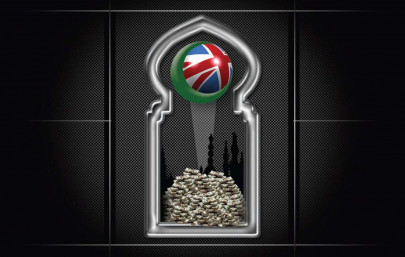
<p>A workforce of 85,000 was employed to produce 60 million balls per year worth $210 million. In Fifa World Cup years the demand for stitched balls rises by 70 per cent. Consecutive governments however, ignored this industry and failed to plan ahead to tackle the growing competition from China, India and Japan.</p>
<p>For a long time this vital industry also faced criticism from European countries and especially from United States with allegations of using child labour. The Sialkot Chamber of Commerce and Industry took prompt measures to curb child labour from the soccer ball industry in accordance with the Atlanta Agreement signed with the International Labour Organisation (ILO) and Unicef in February 1997.</p>
<p>It is estimated that some 93 per cent of child labour was progressively eradicated from this vital industry and necessary steps were taken to provide social protection to children and their families. The children who were associated with this industry were provided with good schooling. The vital steps taken by the soccer manufacturers and exporter were highly praised by the then United States President Bill Clinton in the address at the ILO convention at Geneva in June 1999.</p>
<p>The Sialkot football industry has been contributing millions of export dollars to the national kitty but in the year 2006 the industry’s share in the international market took a significant hit with the entry of new players in the market, notably China and India. Manufacturers from these countries were able to supply balls at a much cheaper rate.</p>
<p>According to industry sources, local soccer ball manufacturers have been able to grab around 30 to 40 per cent of the total orders floated globally for the upcoming Fifa World Cup. This is a sharp decline from the 70-80 per cent bagged during the 1998 and 2002 World tournaments. The local football industry earned $164 million in export earnings in the financial year 09, as against an average of $221 million per annum earned during financial years 2005-08. Power and gas shortage are not making it any easier for the industry, and sources say that a number of business have failed to meet deadlines which has dented their reputation.</p>
<p>Technology was also a major factor in tilting the balance against the local industry. The penetration of machine-made balls hit the Sialkot hand made stitched soccer industry.</p>
<p>And in the present scenario of fast growing globalisation hand-stitched balls will not be able to compete with machine-made footballs. It is important that the local industry moves forward and embraces new technology to meet the needs of the international market.</p>
<p>Industry sources also say that China has received large export orders of footballs from a number of countries ahead of the June 2010 Football World Cup. Pakistan Sports Goods Manufacturers and Exporters Association is rightly concerned over this state of affairs.</p>
<p>According to Arif Mehmood Sheikh, a former chairman (PSGMEA) the shift of a large number of orders to China should serve as an “eye opener” for every one. He said that the factors behind the diversion of export orders to China was a combination of rising cost of production and inability to meet deadlines, which in turn were caused by rising POL prices and unreliable power supply. This has made it difficult for Sialkot exporters to compete with manufacturers in China, India, Nepal and Thailand.</p>
<p>With the government looking for new avenues to bridge the fiscal deficit and the trade deficit, it is very important that measures be taken to build upon the advantages that Pakistan holds in the global market, and not allow others to encroach upon them. The Sialkot exporters have urged the government to come up with some sort of trade related package to stop the diversion of football export orders through the Trade Development Authority, likewise enforcing suitable measures to encourage the export of hand stitched fooballs.</p>
<p>Outdated manufacturing techniques still in use by the local industry is a major hurdle in enhancing exports. This industry for its survival is in dire need of advanced technology and early provisioning of skilled labour. The Sialkot manufacturers and exporters have realised that in the event of a change in the global trend from hand stitched balls to mechanically stitched balls they will also need to make the shift.</p>
<p>In order to cope with the menace of machine made balls, the Small and Medium Enterprise Development Authority has at put in place the final steps for the establishing of the Sports Industries Development Centre. It is expected that this project worth Rs435 million will enable the Sialkot sports manufacturing industry to adopt modern technology, without which there is no going forward.</p>
<p><em>Published in the Express Tribune, May 31st, 2010.</em></p>
</p>
			<br clear="all"/>
		]]>
		</description>

		<media:content width="424" height="228"
							isDefault="true" medium="image" url="http://i1.tribune.com.pk/wp-content/uploads/2010/05/85-448x241.jpg">
			<media:title>85</media:title>
			<media:description>Inception of modern technology demanded by manufacturers.</media:description>
			<media:thumbnail url="http://i1.tribune.com.pk/wp-content/uploads/2010/05/85-80x45.jpg" width="160" height="120" />
      </media:content>

		<wfw:commentRss></wfw:commentRss>
		<slash:comments>4</slash:comments>
	</item>
	
</channel>
</rss>
<!-- Cached page generated by Express Cache on 2012-05-25 00:26:44
     Time taken: 0.07s
-->