<?xml version="1.0" encoding="UTF-8"?>
<rss version="2.0"
	xmlns:content="http://purl.org/rss/1.0/modules/content/"
	xmlns:wfw="http://wellformedweb.org/CommentAPI/"
	xmlns:dc="http://purl.org/dc/elements/1.1/"
	xmlns:atom="http://www.w3.org/2005/Atom"
	xmlns:sy="http://purl.org/rss/1.0/modules/syndication/"
	xmlns:slash="http://purl.org/rss/1.0/modules/slash/"
	xmlns:media="http://search.yahoo.com/mrss/"
	>

<channel>
	<title>The Express Tribune &#187; Shahzad Jillani</title>
	<atom:link href="http://tribune.com.pk/author/565/shahzad-jillani/feed/" rel="self" type="application/rss+xml" />
	<link>http://tribune.com.pk</link>
	<description>Latest Breaking Pakistan News, Business, Life, Style, Cricket, Videos, Comments</description>
	<lastBuildDate>Thu, 23 May 2013 23:38:34 +0000</lastBuildDate>
	<language></language>
	<sy:updatePeriod>hourly</sy:updatePeriod>
	<sy:updateFrequency>1</sy:updateFrequency>
	<generator>http://wordpress.org/?v=3.5.1</generator>

		<item>
		<title>KWSB, CBC join hands to solve water problems</title>
		<link>http://tribune.com.pk/story/53039/kwsb-cbc-join-hands-to-solve-water-problems/</link>
		<pubDate>Wed, 22 Sep 2010 04:57:37 +0000</pubDate>

		<guid isPermaLink="false">http://tribune.com.pk/?p=53039</guid>

		<description>
		<![CDATA[
			<a href="http://tribune.com.pk/story/53039/kwsb-cbc-join-hands-to-solve-water-problems/">
				<img src="http://i1.tribune.com.pk/wp-content/uploads/2010/09/karachi421314112111321111131422311111111213131113211214141714411511415-160x120.jpg" width="160" height="120" alt="" />
			</a>
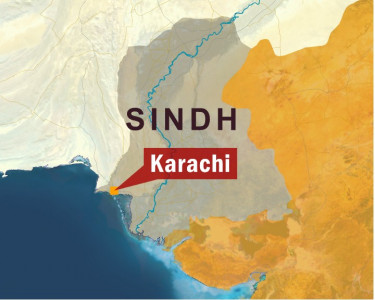
			<p><p><strong><strong class='location'>KARACHI:&nbsp;</strong>The Karachi Water and Sewerage Board (KWSB) has agreed to give nine million gallons of water per day (MGD) to the Clifton Cantonment Board (CBC) after the chairman KWSB met the station commander to sort out their water dispute on Saturday.</strong></p>
<p>According to CBC officials, Water Board Chairman Sajjad Hussain Abbasi met Brigadier Anees, the new president of CBC, so that the prevalent water shortage in the area could be dealt with.</p>
<p>“The KWSB has assured a supply of 9MGD water to the CBC areas but this has yet to happen,” said Chief Operating Officer CBC Mohammed Hayat Mahr, adding that he hoped the matter would be resolved soon. “The CBC president was assured that the water will be supplied in time,” he said.</p>
<p>According to CBC Vice President Aziz Suharwardy, there were illegal hydrants in Chakra Goth.</p>
<p>These hydrants stole water from the main supply and thereby caused a decrease in the water pressure.</p>
<p>“Around three illegal hydrants built in an area of 500 yards were the main reasons for low supply of water to the CBC areas,” Suharwardy claimed.</p>
<p>“The CBC president has also asked relevant authorities to speed up the process of arresting those criminals who are behind water theft,” he said.</p>
<p>Areas that are most affected by the scarcity of water include Delhi Colony, Punjab Colony, Chandio village, Jamhoria Colony, Hazara Colony, Madinabad, Khaliq Zaman Colony, Lower Gizri, Bukshan village and Lower Staff Naval Colony.</p>
<p><strong>Reverse osmosis plants</strong></p>
<p>To completely overcome water shortage, the CBC has also planned to establish reverse osmosis (RO) plants. Suharwardy said that various sites have been identified for RO plants  in Korangi but they have not been finalised yet.</p>
<p><strong>Illegal hydrants disconnected</strong></p>
<p>KWSB took action against illegal hydrants and cut more than 40 connections in Landhi, Bin Qasim, Zaman Town, Ibrahim Hyderi and Chakra Goth.</p>
<p>The KWSB also demolished pumping stations supplying water to the hydrants. However, no arrests were made during the operation.</p>
<p><em>Published in The Express Tribune, September 22<sup>nd</sup>, 2010.</em></p>
</p>
			<br clear="all"/>
		]]>
		</description>

		<media:content width="424" height="318"
							isDefault="true" medium="image" url="http://i1.tribune.com.pk/wp-content/uploads/2010/09/karachi421314112111321111131422311111111213131113211214141714411511415-640x480.jpg">
			<media:title>karachi</media:title>
			<media:description>Water board pledges 9MGD of water 
to CBC
</media:description>
			<media:thumbnail url="http://i1.tribune.com.pk/wp-content/uploads/2010/09/karachi421314112111321111131422311111111213131113211214141714411511415-160x120.jpg" width="160" height="120" />
      </media:content>

		<wfw:commentRss></wfw:commentRss>
		<slash:comments>0</slash:comments>
	</item>
		<item>
		<title>Watan Cards launched to compensate flood survivors</title>
		<link>http://tribune.com.pk/story/50486/watan-cards-launched-to-compensate-flood-survivors/</link>
		<pubDate>Thu, 16 Sep 2010 04:14:48 +0000</pubDate>

		<guid isPermaLink="false">http://tribune.com.pk/?p=50486</guid>

		<description>
		<![CDATA[
			<a href="http://tribune.com.pk/story/50486/watan-cards-launched-to-compensate-flood-survivors/">
				<img src="http://i1.tribune.com.pk/wp-content/uploads/2010/09/210091504546-photo-app-160x120.jpg" width="160" height="120" alt="" />
			</a>
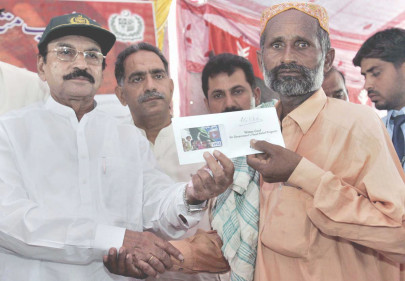
			<p><p><strong><strong class='location'>KARACHI:&nbsp;</strong>Sindh Chief Minister Qaim Ali Shah has launched Watan Cards, a scheme for the rehabilitation of flood survivors, and distributed Rs20,000 each among families affected by the floods.</strong></p>
<p>The National Database and Registration Authority (NADRA) will issue Watan Cards to survivors, who will be able to receive Rs20,000 from special NADRA counters using the cards.</p>
<p>“The government is fulfilling its promise by giving this initial assistance,” said Shah, at the distribution ceremony in Public School Sukkur on Wednesday. In the next phase, the affected families will receive an additional Rs100,000 for the reconstruction of their houses, he added.</p>
<p>Shah said that the distribution is being carried out through cards issued by NADRA to ensure transparency. Moreover, the process is also being monitored by the Asian Development Bank and World Bank.</p>
<p>Despite the caution, it is expected that some families will end up receiving Rs40,000, twice the assigned amount, because of doubling in the registration carried out by NADRA, <em>The Express Tribune</em> has learnt.</p>
<p>Several people are registered in more than one relief camp and can, therefore, claim compensation twice. “My brother has registered himself in Thehri relief camp in Khairpur, while I am registered at a relief camp in Sukkur,” said Reham Ali Bijarani, who hails from Karampur in Kandhkot district. Both brothers lived in the same house before the floods came.</p>
<p>The DCO Sukkur was not available to comment on the registration procedures in Sukkur.</p>
<p>However, NADRA spokesperson Naveed Baig, said that the authority planned the procedure for transparent registration of the internally displaced persons with the government.</p>
<p>“Rs11.72 million have already been distributed among survivors in Karachi, Thatta and Badin,” he said.</p>
<p>At the Razzaqabad camp, around 1,512 families have been registered, while 2,100 families have been registered in other areas of Karachi. Registration of families for Watan Cards has started at the Gulshan-e-Maymer camp and around 1,150 families have been registered by now, said Baig.</p>
<p>In Badin, around 165 families were registered by Tuesday and an addition 150 families were on Wednesday. NADRA has so far issued around 45,000 cards to flood survivors in relief camps across Karachi and Thatta.</p>
<p>According to the spokesperson, the procedure is such that the survivors will go to the information counter, located at the designated Verification and Card Issuance site. Here they will get their computerised national identity card (CNIC) validated from the beneficiary list. Once the cards are proven to be valid, a registration form will be issued to the survivor and their CNIC number will be entered on the form.</p>
<p>The operator will also add a reference ID on the form after taking fingerprints and a photo at the Biometric Counter while all requisite details will be entered on the form at the form filling counters.</p>
<p>At the counter, the bank will issue the applicant’s Watan Card, which will be operational after a verification of credentials from the NADRA database. Baig added that the World Bank and UNHCR are working with NADRA in this venture.</p>
<p>CM Sindh visits Bhuttos’ shrine</p>
<p>Shah also paid a visit to the graves of the Bhutto family in Garhi Khuda Baksh on Wednesday. He was accompanied by MPA Ghulam Mujadid Isran, Pakistan Peoples Party (PPP) Larkana District Vice President Khair Muhammad Shaikh, PPP District General Secretary Abdul Fateh Bhutto, Muhammad Amin Mengal, Naseebaan Channa, Ghulam Asghar Shaikh, DIG Police Din Muhammad Balouch, DPO Irfan Balouch, DCO Abdul Aleem Lashari and other officials.</p>
<p>Addition input from APP</p>
<p><em>Published in The Express Tribune, September 16<sup>th</sup>, 2010.</em></p>
</p>
			<br clear="all"/>
		]]>
		</description>

		<media:content width="424" height="318"
							isDefault="true" medium="image" url="http://i1.tribune.com.pk/wp-content/uploads/2010/09/210091504546-photo-app-640x480.jpg">
			<media:title>210091504546 photo app</media:title>
			<media:description>Many survivors likely to get twice the amount due to doubling in their registration.</media:description>
			<media:thumbnail url="http://i1.tribune.com.pk/wp-content/uploads/2010/09/210091504546-photo-app-160x120.jpg" width="160" height="120" />
      </media:content>

		<wfw:commentRss></wfw:commentRss>
		<slash:comments>61</slash:comments>
	</item>
		<item>
		<title>Is white the new black?</title>
		<link>http://tribune.com.pk/story/49053/is-white-the-new-black/</link>
		<pubDate>Sat, 11 Sep 2010 09:04:51 +0000</pubDate>

		<guid isPermaLink="false">http://tribune.com.pk/?p=49053</guid>

		<description>
		<![CDATA[
			<a href="http://tribune.com.pk/story/49053/is-white-the-new-black/">
				<img src="http://i1.tribune.com.pk/wp-content/uploads/2010/09/pak-flag-melt-160x120.jpg" width="160" height="120" alt="" />
			</a>
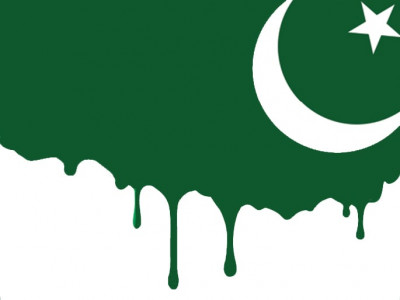
			<p><p><strong><strong class='location'>KARACHI:&nbsp;</strong>It was not many years ago when an Indian minority sought independence. A line was drawn, dividing the Muslims from an over-powering majority in India, and Pakistan was born. While that line remains invisible for the most part today, there is another one that hardly goes unnoticed. It is the white stripe in our flag that represents the non-Muslims of Pakistan.</strong></p>
<p>“We have had no problem as minorities are a very important part of the agenda,” comes the ringing endorsement from Nanak Ram Chhbira at the Swami Narayan temple in Karachi. “We are 99 per cent satisfied with the government.”</p>
<p>Provincial legislator Priten Sehwani feels that minorities are much safer in Sindh, as compared to the Punjab. There are around four million registered Hindus in Pakistan, out of which 70 per cent live in Tharparkar. The legislator maintains that only small disputes between landowners and their field workers, who are usually Hindus, have been reported. “We are sons of the soil and such incidents will never change that,” he hastens to add. Thus develops the argument that not all violence should be cast in the prism of faith. Sometimes it’s just people fighting.</p>
<p>Indeed, the worst violence seems to be reported not from Sindh but from the Punjab. In June 2009, 110 Christian families fled their homes in Kasur over blasphemy accusations. In July, 40 Christian homes near Gojra were burned after accusations of the desecrated the Quran. A few days later, seven Christians, including two children, were burned alive in Gojra.</p>
<p>Such isolated but prominent incidents make it difficult to argue that the violence is not linked to faith.  The problem is that the people who use this reasoning do a double-take when they also use the argument that violence against minorities exists across the globe and by extension is “just a fact of life”. For instance, in India the Shiv Sena targets Muslims, in Sri Lanka, Tamils are in conflict with Buddhists and the Chinese had a bone to pick with the Dalai Lama. Could it be that sometimes members of a minority do not want to acknowledge violence for what it is worth because of fear of repercussions or because of the internalisation of the brutality? Take the reaction of the general secretary of the Swami Narayan temple, Amar Lal Wadhwani, when he is given a kidnapping example.</p>
<p>The Human Rights Commission of Pakistan (HRCP) reported that in October 2009, Gomti, a 15-year-old Hindu girl, was abducted but police and officials refused to act. When she was found, she was married and had converted to Islam, but her parents were not allowed to speak to her alone and since then she has disappeared. Wadhwani insists that kidnappings are prevalent in every society and are not motivated by religion. “If four of our people disappear it is a very big issue,” he says. “But if 10 Muslims disappear, no one asks.”</p>
<p>To buttress his argument, Sehwani shares a case. Two years ago, Jagdesh Kumar was killed by co-workers over blasphemy charges, but his family was compensated Rs0.7 million. Sehwani adds that some kidnapped girls have been returned home after the government took action.</p>
<p>Some legislators and civil society activists have fought for an end to Pakistan’s blasphemy laws, which have affected nearly all minorities. Data from the National Commission for Justice and Peace (NCJP) reveals that from 1986 until August 2009, a total of 964 people had been charged under blasphemy statutes. These comprised 479 Muslims, 340 Ahmadis, 119 Christians, 14 Hindus and 10 others. Thirty-two people charged with blasphemy have been extra-judicially killed. So far, even though numerous individuals have received death sentences for blasphemy, no one has been hanged. Higher court appeals judges generally throw out cases where this sentence has been imposed by lower courts.</p>
<p>Some people argue that minorities should not be set aside by their <a href="http://tribune.com.pk/story/47277/relief-from-belief/">religion</a>, caste or colour and should rather be seen as individual beings. The white stripe and the green background should merge. HRCP member Asad Iqbal Butt is a proponent of this view. He argues that the root cause of discrimination is the lines which have highlighted religious differences.</p>
<p>Vincent Rodrigues, a Catholic, believes that there is no danger to Christians. He attempts to sum it up: “I am not a minority, I am a Pakistani.”</p>
<p><em>Published in The Express Tribune, September 11<sup>th</sup>, 2010.</em></p>
</p>
			<br clear="all"/>
		]]>
		</description>

		<media:content width="424" height="318"
							isDefault="true" medium="image" url="http://i1.tribune.com.pk/wp-content/uploads/2010/09/pak-flag-melt-640x480.jpg">
			<media:title>pak flag melt</media:title>
			<media:description>With increasing incidents allegedly motivated by religion – most notably the deadly attack on the Ahmadiyya place of worship – is it justifiable to consider minorities of Pakistan threatened</media:description>
			<media:thumbnail url="http://i1.tribune.com.pk/wp-content/uploads/2010/09/pak-flag-melt-160x120.jpg" width="160" height="120" />
      </media:content>

		<wfw:commentRss></wfw:commentRss>
		<slash:comments>7</slash:comments>
	</item>
		<item>
		<title>Health workers play the blame game</title>
		<link>http://tribune.com.pk/story/45850/health-workers-play-the-blame-game/</link>
		<pubDate>Fri, 03 Sep 2010 04:59:35 +0000</pubDate>

		<guid isPermaLink="false">http://tribune.com.pk/?p=45850</guid>

		<description>
		<![CDATA[
			<a href="http://tribune.com.pk/story/45850/health-workers-play-the-blame-game/">
				<img src="http://i1.tribune.com.pk/wp-content/uploads/2010/09/karachi421314112111321111131-160x120.jpg" width="160" height="120" alt="" />
			</a>
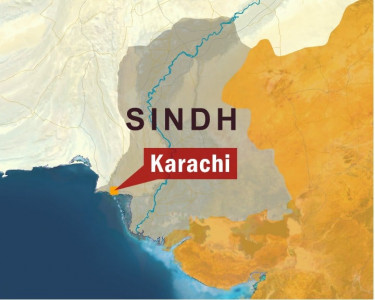
			<p><p><strong><strong class='location'>KARACHI:&nbsp;</strong>Health is a grave concern for thousands of IDPs who are living in relief camps as local health departments are unable to provide treatment. It was estimated that more than 500 children are suffering from skin diseases while over 1,000 children were diagnosed with diarrhoea and dysentery at camps. A large number of pregnant women also faced difficulties at the time of delivery due to nutrition deficiencies.</strong></p>
<p>In their meetings with health officials, camp managers were told that the government had made “all arrangements” for IDPs. Managers, however, begged to differ.</p>
<p>“We have requested the EDO health to provide us with medicines and insect repellents, but to no avail,” said Mushtaq Sheikh, a social worker and tent village manager in Thehri.</p>
<p>The health department has failed to provide treatment to the IDPs and relies upon NGOs for back-up, people at relief camps revealed.</p>
<p>Despite its capacity to cater to 500 patents on a daily basis, the Civil Hospital Khairpur (CHK) has been receiving around 1,500 patients a day. Many of the IDPs are being treated in the hospital’s corridors as beds are difficult to find.</p>
<p>CHK civil surgeon Dr Aijaz said, however, that it would not be wrong on the hospital’s part to seek help from NGOs or philanthropists as it is severely handicapped in handling the large number of patients it is now receiving.</p>
<p>“We have a specified budget and facilities at this hospital. We are unable to deal with this catastrophe,” he added.</p>
<p>Among the organisations that are helping the health department are the Pakistan Primary Health Initiative (PPHI), National Family Planning Program, Red Crescent Society, International Rescue Committee and the Gambat Medcial Institute while a team of doctors from Turkey have also contributed to the department.</p>
<p>“We step in at the point when the health department fails to address the people’s needs,” said PPHI district incharge Mushtaq Sodhro, who was on the belief that the NGOs were doing most of the work while the health department was taking all the credit.</p>
<p>However, officials from the health department said that this was an exaggeration.</p>
<p>“We are providing medicines to the IDPs and are also collecting data. NGO and philanthropists are not faced with the kind of challenges we face. They have helped us but the bulk of the work is carried out by us,” said the health deaprtment’s Dr Agha Sami.</p>
<p>A clerk working at the health department claimed, however, that the health department was not as short on medical supplies as it claims to be. It has received so much in terms of procurement and equipment that it can cater to 50,000 IDPs in a month, he said, adding that, “We usually maintain a policy that we have run out of stock but the fact is that we have enough material, medicines and facilities. Moreover, IDPs who approach our local leadership also get special benefits.”</p>
<p>However, the health department maintained that it was struggling to make ends meet.</p>
<p>It was revealed that the Lady Willington Hospital’s health administration was unable to arrange for blood in several deliveries. Four women lost their lives at the time of delivery because on an unavailability of blood, doctors complained.</p>
<p>“We have requested hospitals, blood banks and laboratories to supply us with blood, but we did not get any response,” claimed EDO revenue Umer Farooq Bullo. He said that it was the role of the civil society to come forward and help the government, which was already under “a lot of pressure”.</p>
<p><em>Published in The Express Tribune, September 3<sup>rd</sup>, 2010.</em></p>
</p>
			<br clear="all"/>
		]]>
		</description>

		<media:content width="424" height="318"
							isDefault="true" medium="image" url="http://i1.tribune.com.pk/wp-content/uploads/2010/09/karachi421314112111321111131-640x480.jpg">
			<media:title>karachi</media:title>
			<media:description>NGOs say the health dept is taking undue credit, the latter claims it is doing most of the work
</media:description>
			<media:thumbnail url="http://i1.tribune.com.pk/wp-content/uploads/2010/09/karachi421314112111321111131-160x120.jpg" width="160" height="120" />
      </media:content>

		<wfw:commentRss></wfw:commentRss>
		<slash:comments>0</slash:comments>
	</item>
		<item>
		<title>IDPs in SITE complain about relief services</title>
		<link>http://tribune.com.pk/story/45460/idps-in-site-complain-about-relief-services/</link>
		<pubDate>Thu, 02 Sep 2010 06:40:14 +0000</pubDate>

		<guid isPermaLink="false">http://tribune.com.pk/?p=45460</guid>

		<description>
		<![CDATA[
			<a href="http://tribune.com.pk/story/45460/idps-in-site-complain-about-relief-services/">
				<img src="http://i1.tribune.com.pk/wp-content/uploads/2010/09/IDPs-160x120.jpg" width="160" height="120" alt="" />
			</a>
			<p><p><strong><strong class='location'>KARACHI:&nbsp;</strong>Internally displaced persons (IDPS) staying at a government college in the SITE area have complained about the supply of unhygienic food, which is causing health problems for flood survivors. A relief camp providing food, shelter and medical care to about 3,700 IDPs was established at the college two weeks ago.</strong></p>
<p>“We were being provided good quality food until Saturday, but for the past few days our food has been watery and foul-smelling,” said Laloo Sheikh from Garhi Khairo in Jacobabad district. The camp is being supervised by the management of the Karachi Chamber of Commerce, which provides two meals a day to the survivors. The DDO Revenue of Orangi town Rafaqat Ali, who said that the food provider was changed four days ago, claims not to have heard any complaints about its quality.</p>
<p>While the DDO was speaking to <em>The Express Tribune</em>, a group of IDPs shouted slogans against the authorities running the camp. When questioned about this, the DDO said that food provision was the responsibility of the chamber of commerce. He also blamed government officials and a lack of discipline among the IDPs for creating circumstances in which it was difficult to provide relief in a just manner. The DDO believed that visits from high-profile ministers disrupt the daily operations of the camp, as these officials tend to hand out food without an efficient system for doing so.</p>
<p>Several IDPs complained that the distribution of food items was inequitable and based on personal favours. They also said that they were still waiting for essentials such as milk, tea and cash that had been promised to them but never distributed. Meanwhile, concerned parents complained that their children were only provided food late in the evening when the adults were offered a meal to open their fast.</p>
<p>DDO Revenue Zulfikar Abbassi, who is in charge of monitoring the morning shift at the camp, said that IDPs had unlimited demands and their accusations were baseless. “We give them everything  and still they cry for more,” he remarked.</p>
<p>The camp was clean and appeared to provide basic facilities to survivors. <em>The Express Tribune</em> contacted the president of the Karachi Chamber of Commerce and Industry, Majeed Haji Muhammed, for further details about where the food served at the camp comes from. President KCCI said that Banoria restaurant had a contract with the organisation for food provision, and he was glad to be informed about complaints regarding its quality so that the issue can be corrected.</p>
<p><em>Published in The Express Tribune, September 2<sup>nd</sup>, 2010.</em></p>
</p>
			<br clear="all"/>
		]]>
		</description>

		<media:content width="424" height="318"
							isDefault="true" medium="image" url="http://i1.tribune.com.pk/wp-content/uploads/2010/09/IDPs-640x480.jpg">
			<media:title>IDPs</media:title>
			<media:description>Flood survivors say that their food is unhygienic and 
relief goods are 
distributed unfairly
</media:description>
			<media:thumbnail url="http://i1.tribune.com.pk/wp-content/uploads/2010/09/IDPs-160x120.jpg" width="160" height="120" />
      </media:content>

		<wfw:commentRss></wfw:commentRss>
		<slash:comments>1</slash:comments>
	</item>
		<item>
		<title>Flood survivors display interfaith harmony</title>
		<link>http://tribune.com.pk/story/41869/flood-survivors-display-interfaith-harmony/</link>
		<pubDate>Mon, 23 Aug 2010 09:48:30 +0000</pubDate>

		<guid isPermaLink="false">http://tribune.com.pk/?p=41869</guid>

		<description>
		<![CDATA[
			<a href="http://tribune.com.pk/story/41869/flood-survivors-display-interfaith-harmony/">
				<img src="http://i1.tribune.com.pk/wp-content/uploads/2010/08/Massive-Floods-AFP11-160x120.jpg" width="160" height="120" alt="" />
			</a>
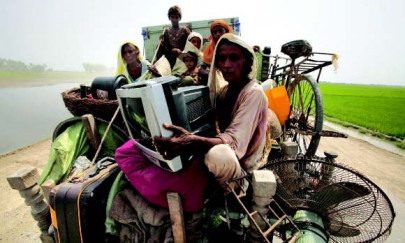
			<p><p><strong>As floods rage through Sindh, many Hindus, Muslims and Sikhs have taken shelter at temples and gurdwaras in calamity-hit areas. In this time of need, everyone is being welcomed and is looked after.</strong></p>
<p>In Kandhkot’s Karampur tehsil, Muslims were provided shelter by the Hindus and Sikhs. “Around 50 people took refuge in the gurdwara after the Tori Bund breach destroyed the entire village,” says Ramchand, the manager of a rice mill in Karampur.</p>
<p>Karampur has a large Hindu population while a small number of Sikh families also live on the outskirts of the area.</p>
<p>While a big chunk of Kandhkot’s population had evacuated their villages, some did not want to leave and hoped that things would get better in a few days.</p>
<p>Its famous temples are now being used as relief camps. “Our community has also been affected and all our businesses have suffered great losses. But despite that we have not forgotten our people and are helping out in relief activities,” says Tara Chand, a local landlord.</p>
<p>According to Chand, shelter and food is being provided without any discrimination. “Local villagers do not differentiate between the communities. They often come and eat with us and we do the same,” Chand says.</p>
<p>Dayam Khan, who has taken shelter in Shiv Shankar temple, seconds the claim. “I have been staying in the mandir for the last eight days. The caretaker of the temple, Narayan Das, moved us here. We are being looked after well and given food.”</p>
<p>Other temples that are being used as the relief camps are Guru Arjan Dev and Sain Juriya Ram.</p>
<p>In district Kahirpur, ten relief camps have been adopted by Hindu traders. “We earn here and have been living here for generations. We want to spend here too for our people who are facing the worst time of their lives,” says Banamal, a local trader.</p>
<p>In Sukkur and Khairpur, Hindu businessmen are contributing towards flood relief activities while in some areas the food arrangements are also being looked after by members of the Hindu community.</p>
<p>In Shikarpur district, several temples in remote areas were also affected by the floods. In Sultan Kot tehsil, a Kali Mata temple was completely inundated. The local administration has tried to drain the water. “We evacuated our houses immediately after flood water started entering our village. Later we were told that the temple where we worship is under water. We told the local administration and also tried to save the mandir but it was difficult to do so,” says Jai Parkash, a resident of the area.</p>
<p>Parkash added that the Hindu Panchyat officials have asked the community to assess their losses so they can be compensated later.</p>
<p><em>Published in The Express Tribune, August 23<sup>rd</sup>, 2010.</em></p>
</p>
			<br clear="all"/>
		]]>
		</description>

		<media:content width="424" height="318"
							isDefault="true" medium="image" url="http://i1.tribune.com.pk/wp-content/uploads/2010/08/Massive-Floods-AFP11-640x480.jpg">
			<media:title>Massive Floods AFP</media:title>
			<media:description>People of all faiths are seeking shelter in temples and gurdwaras. PHOTO: AFP</media:description>
			<media:thumbnail url="http://i1.tribune.com.pk/wp-content/uploads/2010/08/Massive-Floods-AFP11-160x120.jpg" width="160" height="120" />
      </media:content>

		<wfw:commentRss></wfw:commentRss>
		<slash:comments>0</slash:comments>
	</item>
		<item>
		<title>At the mercy of God and ‘Mir sahib’</title>
		<link>http://tribune.com.pk/story/41346/at-the-mercy-of-god-and-mir-sahib/</link>
		<pubDate>Sat, 21 Aug 2010 07:35:07 +0000</pubDate>

		<guid isPermaLink="false">http://tribune.com.pk/?p=41346</guid>

		<description>
		<![CDATA[
			<a href="http://tribune.com.pk/story/41346/at-the-mercy-of-god-and-mir-sahib/">
				<img src="http://i1.tribune.com.pk/wp-content/uploads/2010/08/floods-sindh-AFP21-160x120.jpg" width="160" height="120" alt="" />
			</a>
			<p><p><strong><strong class='location'>KARAMPUR:&nbsp;</strong>More than a week has passed since the savage torrents ravaged Kashmore-Kandhkot, the first district in Sindh to face the wrath of the floods, but its residents are still waiting for a helping hand from the government or donors.</strong></p>
<p>One of its towns, Karampur and the villages in its outskirts, were completely inundated and with no help arriving, its starving people headed towards the residence of Mir Hazar Khan Bijarani, the federal minister for production.</p>
<p>Now most of the people there are seen gathered outside Bijarani House, waiting to receive food. “We have food stocks for another three days provided to us by Mir sahib (Bijarani). What will happen when we run out of that? There has been no assistance by the government or anyone else,” said Sahib Khan Chachar of Karampur.</p>
<p>“I am waiting for my turn to get a pack of food at Bijarani House,” said Qasim Dahlani from a neighbouring village while standing in a queue. “But now we are told that after a few days, the food distribution will stop as Mir sahib cannot cater to the requirements of thousands of villagers much longer,” he said.</p>
<p>Bijarani is helping the villagers, who also happen to be his vote bank, through the stocks of utility stores, which fall under his ministry. But the essential commodities supplied from utility stores will not last longer than another four days.</p>
<p>“We are trying our best using the available resources, but donors need to step in as well,” said Mansoor Ali Bijarani, the minister’s son, who is running relief activities in the area.</p>
<p><strong>Bad state</strong></p>
<p>“We have snakes in the area, but no anti-venom vaccines are available here. There are no relief camps and people want to return to their areas, which is impossible as there is no shelter,” said an elderly Bhagyo.</p>
<p>The district coordination officer was not available to comment about relief efforts and conditions at camps. The villagers of Karampur were provided relief goods in air drops by three helicopters once, but they never returned after that.</p>
<p>Many have also moved to relief camps in others districts. The main bypass road from Shikarpur to Karampur was submerged and the only means of transportation left was a tractor connected with trawlers.</p>
<p>Many people of the area complain that the entire focus was on Sukkur and other districts, while the more devastated Karampur and Ghouspur were neglected.</p>
<p><strong>No show by UN agencies</strong></p>
<p>The Bijaranis also contacted the UN donor agencies, but no relief has been provided despite several promises. “I informed the UN agencies about the situation here and they assured me that they would help, but more than a week has passed and there has been no response by them yet,” Mansoor Bijarani claimed.</p>
<p>The United Nations Office for the Coordination of Humanitarian Affairs’ Fawad Hussain told <em>The Express Tribune</em> that it is difficult to carry out relief activities in Karampur because of the law and order situation prevailing in the area.</p>
<p><em>Published in The Express Tribune, August 21<sup>st</sup>, 2010.</em></p>
</p>
			<br clear="all"/>
		]]>
		</description>

		<media:content width="424" height="318"
							isDefault="true" medium="image" url="http://i1.tribune.com.pk/wp-content/uploads/2010/08/floods-sindh-AFP21-640x480.jpg">
			<media:title>floods-sindh-AFP</media:title>
			<media:description>Residents of Karampur running out of food supplies, need govt and donor help. PHOTO: AFP</media:description>
			<media:thumbnail url="http://i1.tribune.com.pk/wp-content/uploads/2010/08/floods-sindh-AFP21-160x120.jpg" width="160" height="120" />
      </media:content>

		<wfw:commentRss></wfw:commentRss>
		<slash:comments>1</slash:comments>
	</item>
		<item>
		<title>Mixed forecast gives hope, raises fears</title>
		<link>http://tribune.com.pk/story/40658/mixed-forecast-gives-hope-raises-fears/</link>
		<pubDate>Thu, 19 Aug 2010 05:13:35 +0000</pubDate>

		<guid isPermaLink="false">http://tribune.com.pk/?p=40658</guid>

		<description>
		<![CDATA[
			<a href="http://tribune.com.pk/story/40658/mixed-forecast-gives-hope-raises-fears/">
				<img src="http://i1.tribune.com.pk/wp-content/uploads/2010/08/flood-AFP3-160x120.jpg" width="160" height="120" alt="" />
			</a>
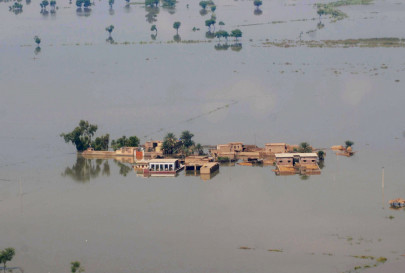
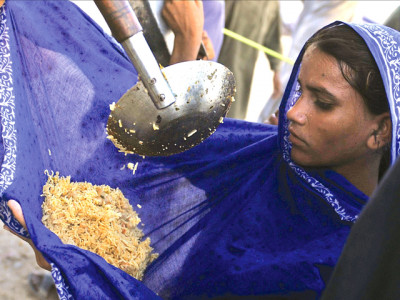
			<p><p><strong>Prospects of some easing in the floods were raised on Wednesday as the meteorological department said that there will not be any significant rains in the coming four to five days.</strong></p>
<p>However, a peak flood is expected to persist between Guddu and Kotri over the next two to three days, the department’s director-general Qamaruz- Zaman warned at a news conference.</p>
<p>At the same time, he said there will be a normal flow of rivers upstream in Sukkur. From downstream Kotri, the floods will continue to be exceptionally high for at least seven more days, he added.</p>
<p>In recordings taken late on Wednesday night, the flow at Guddu decreased and the upstream flow was recorded 1,001,764 cusecs while the downstream flow was 1,001,226 cusecs. This has reduced pressure at Sukkur which had an upstream flow of 1,007,644 cusecs and downstream of 974,489 cusecs. The decrease in water levels at the Sukkur Barrage has relieved both villagers and officials.</p>
<p>“The decision to breach Ali Wahan is withdrawn. There is no need to breach the canal as the situation is settling down,” said chief engineer Sukkur. He said that the government had permitted them to make the cuts but it was preferred that the irrigation department should wait until the situation gets critical.</p>
<p>“I think the media created an unnecessary hype about the situation which was not that bad. The irrigation department has worked day and night to make sure that Ali Wahan bund does not need to be cut,” said District Coordination Officer (DCO) Sukkur Jam Inaullah Dharejo, who is also the brother of the irrigation minister.</p>
<p>While talking to local journalists, he said it was due to the efforts of the irrigation department that a dangerous situation had been averted.</p>
<p>However, locals feel other powers saved them. Sufi saints have fought for us, said a resident. “Baba’s special prayers have worked and it is the mystic miracles of Saeen Sadruddin Shah Badshah that the water did not exceed its level,” he added.</p>
<p>Meanwhile, the road at Jacobabad bypass was cut to save the city and thus the water after inundating Usta Mohammad town started heading towards Garhi Khairo. In a bid to save the town, army personnel along with local villagers worked to change the direction of the waters. In district Shikarpur, Sultankot town is completely under water and all residents have moved to safe places.</p>
<p>Furthermore, the 20 feet wide breach, which had occurred in the river Indus embankment near the Dadu-Moro Bridge on Monday has widened to 75 feet.</p>
<p><strong>Balochistan </strong></p>
<p>Flash floods entered into the downstream of Usta Mohammad and Ghandaka, destroying 1,000 mud houses and rendering thousands of people homeless. However, Usta Mohammad city remained safe because of a protection dyke.</p>
<p>It is learnt that floods further destroyed life and property of people in low-lying areas of Usta Mohammad and Ghandaka where road link and communication system have been severely disrupted. Kot Magsi and Bari Jah area of Jhal Magsi were also affected in recent floods.</p>
<p>Meanwhile, Kirthar Canal breached from six places and Saifullah Magsi Canal breached from five places causing flash floods downstream. Fresh breaches were reported in Begari Canal aggravating the flood situation in Ghari Khairo and surrounding areas.</p>
<p>Thousands of people of Ghandaka took shelter in the open from Ghari Khairo to Saifullah Magsi Canal. Due to the high floodwaters, they were unable to move out of the area and get relief. “Thousands of people are living in the open without any food and shelter from the government,” a Ghandaka-based journalist said, adding that people are still stranded in some places.</p>
<p>In a visit to the flood-affected areas, MNA Marvi Memon said that dead carcasses of animals pose a serious threat of outbreak of epidemics. Addressing a news conference at Quetta Press Club, she said she will demand a judicial inquiry about the diverting the flood water from Sindh to Balochistan. “The relief goods are being distributed on a political basis and victims are not satisfied with the rescue and relief operations,” she said.</p>
<p><em>Published in The Express Tribune, August 19<sup>th</sup>, 2010.</em></p>
</p>
			<br clear="all"/>
		]]>
		</description>

		<media:content width="424" height="318"
							isDefault="true" medium="image" url="http://i1.tribune.com.pk/wp-content/uploads/2010/08/flood-AFP3-640x480.jpg">
			<media:title>flood-AFP</media:title>
			<media:description>A woman receives food in her dupatta at a distribution point at an air force relief camp in Sukkur. PHOTO: AFP</media:description>
			<media:thumbnail url="http://i1.tribune.com.pk/wp-content/uploads/2010/08/flood-AFP3-160x120.jpg" width="160" height="120" />
      </media:content>

		<wfw:commentRss></wfw:commentRss>
		<slash:comments>1</slash:comments>
	</item>
		<item>
		<title>Campers willing to starve if rice is all they get</title>
		<link>http://tribune.com.pk/story/38832/campers-willing-to-starve-if-rice-is-all-they-get/</link>
		<pubDate>Fri, 13 Aug 2010 04:49:56 +0000</pubDate>

		<guid isPermaLink="false">http://tribune.com.pk/?p=38832</guid>

		<description>
		<![CDATA[
			<a href="http://tribune.com.pk/story/38832/campers-willing-to-starve-if-rice-is-all-they-get/">
				<img src="http://i1.tribune.com.pk/wp-content/uploads/2010/08/flood-sindh-AFP-160x120.jpg" width="160" height="120" alt="" />
			</a>
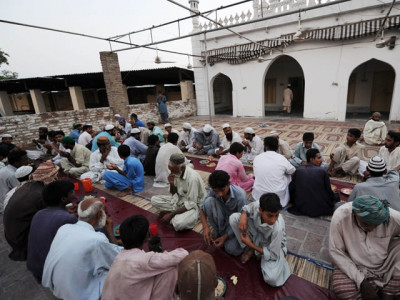
			<p><p><strong><strong class='location'>KOT PUL:&nbsp;</strong>While the first day of Ramazan was an uncomplicated trial &#8211; with clear skies and gentle breeze &#8211; for the people who were fasting in Karachi, it tested the </strong><strong>endurance of relief workers and flood survivors across the province on a grander scale.</strong></p>
<p>A meeting was held at the district management cell under Nafisa Shah, who sat down with the EDOs, NGOs as well as the UN delegations to devise a strategy to help the flood survivors. It was decided that a 24- to 48-hour exercise will be carried out to survey the areas and gather data regarding what needs to be done, after which each NGO will pick a camp and run it with the support of the UN as well as the government. The meeting decided that the NGOs will be responsible or the food, as well as the health and hygiene efforts at their camps.</p>
<p>Meanwhile, villagers at a relief camp, set up near the Ramazan Brohi belt that lies around one-and-a-half kilometres away from the river embankment, complained of diarrhoea and other food-related diseases, adding that though they had been rescued, their lives were not much better.</p>
<p>The camp, housing around 5,500 people, doesn’t have any kind of shelter against the elements and people are forced to sleep under the skies.</p>
<p>These camps are unmonitored and the food for the survivors comes from a contract-based supplier, hired by the district government which is responsible for the distribution of food.</p>
<p>Despite having been rescued by the navy officials two days ago, Do Sali and his family said that they had yet to be provided with proper shelter and that the rice they were given twice a day &#8211; dubbed as “meals” &#8211; smelt bad.</p>
<p>“We will starve, but we will not eat this rice,” said villagers who insisted that the crop had gone bad, something officials and volunteers around the camp confirmed.</p>
<p>“We tried to eat it but it truly smells bad. I wouldn’t touch it,” said a volunteer.</p>
<p>However, officials at the Mahesar school, which is currently acting as another relief camp in the area, said that the problem did not lie with the rice. Instead, the villagers are hoping to get their diet changed by complaining because they are sick of eating the same thing every day, they added.</p>
<p>Meanwhile, there appears to be a Good Samaritan in the area who has heard the pleas of the villagers and is trying to ensure that they are provided with food. Abdul Hameer Narejo, a local from the area, which belongs to the Pagara tribe, said that the chief of the community had asked his tribesmen to distribute food in the area no matter what the government is doing about the situation.</p>
<p>It appears that the government as well as the NGOs are playing a game with the flood survivors, according to sources, who claimed that officials from these NGOs could only be seen during visits by ministers and other VIPs.</p>
<p>“They look busy when the chief of naval staff or the ministers come, but disappear when the official visits are over,” they added.</p>
<p>Mohammad Ramazan, a resident of the Mor Ghabar Shaikh village, who arrived at the camp with eight others from his village, said that many people have been forced to initiate evacuation by themselves as the navy had refused to transport them to the embankments with their belongings.</p>
<p>“No one was giving us boats to move with our things. Officials from the navy said that they will take us across, but not with our things, so we had no choice but to help ourselves,” said Ramazan, who swam to the camp with some villagers who wanted to take their belongings with them.</p>
<p>However, in the middle of all these problems, a woman, identified as Fatima Abro from the Soomar Mala village, gave birth to baby girl with the help of a midwife at the camp. Both mother and daughter are believed to be in a stable condition.</p>
<p><em>Published in The Express Tribune, August 13<sup>th</sup>, 2010.</em></p>
</p>
			<br clear="all"/>
		]]>
		</description>

		<media:content width="424" height="318"
							isDefault="true" medium="image" url="http://i1.tribune.com.pk/wp-content/uploads/2010/08/flood-sindh-AFP-640x480.jpg">
			<media:title>flood sindh-AFP</media:title>
			<media:description>Flood affectees and local residents break their fast on the first day of Ramazan. PHOTO: AFP</media:description>
			<media:thumbnail url="http://i1.tribune.com.pk/wp-content/uploads/2010/08/flood-sindh-AFP-160x120.jpg" width="160" height="120" />
      </media:content>

		<wfw:commentRss></wfw:commentRss>
		<slash:comments>0</slash:comments>
	</item>
		<item>
		<title>NGOs feel ‘faith deficit’ with UN agencies</title>
		<link>http://tribune.com.pk/story/38112/ngos-feel-faith-deficit-with-un-agencies/</link>
		<pubDate>Tue, 10 Aug 2010 20:45:41 +0000</pubDate>

		<guid isPermaLink="false">http://tribune.com.pk/?p=38112</guid>

		<description>
		<![CDATA[
			<a href="http://tribune.com.pk/story/38112/ngos-feel-faith-deficit-with-un-agencies/">
				<img src="http://i1.tribune.com.pk/wp-content/uploads/2010/08/NGO-160x120.jpg" width="160" height="120" alt="" />
			</a>
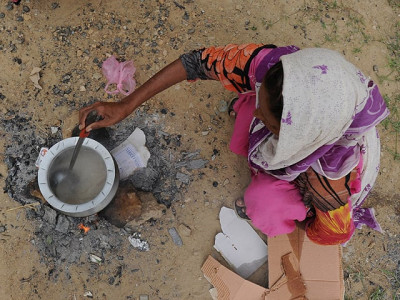
			<p><p><strong><strong class='location'>SUKKUR:&nbsp;</strong>Local non-governmental organisations (NGOs) appeared less than happy at the end of the meeting with the United Nations (UN) agencies on Tuesday.</strong></p>
<p>Organisations including the United Nations Office for the Coordination of Humanitarian Affairs (UNOCHA), Unicef, World Food Programme, UNAIDs and government representatives from the national disaster management authority (NDMA) met with NGOs and members of civil society in Sukkur’s Institute of Business Administration to discuss relief efforts for flood victims in the region.</p>
<p>Representatives of the agencies told participants that they were not willing to rely on the data already collected by the local administration and other organisations. They wished to start the process of getting information on the flood-affected areas and displaced people anew and hoped that the local NGOs would help them out in this effort.</p>
<p>Fawad Hussain of the UNOCHA said, “We want to make sure that the aid provided by the UN agencies goes out to those who really need it.” He said that they will form committees to oversee relief camps and rehabilitation activities. “We want to identify cases of mishandling and ensure that everyone, especially women and children are provided for.”</p>
<p><strong>Not everyone in the audience was satisfied with the plan.</strong></p>
<p>“We have been here for seven days or more,” said a disgruntled volunteer, “These people just came today and have started giving orders.”</p>
<p>Many were unhappy with what they termed ‘dictation’ by the UN agencies.</p>
<p>The NGOs were told to fill out the forms, which asked details of where the participants were from, their area of expertise and name of organisation, ‘there and then’. Submissions tomorrow would not be accepted, they were told.</p>
<p>Through these forms, the agencies would select the NGOs they want to work with, while the organisations found to be lacking in credibility would be removed from their list. Akram Sheikh from Indus Resource Centre expressed his dissent at the direction of the meeting. The agencies say that they are here to help but they don’t want to make use of what we have already done, he argued, adding that it was a hassle to go through the entire process of data collection all over again. He emphasised that relief efforts should be “based on trust” between the UN agencies and the NGOs.</p>
<p>Meanwhile, the Sindh scouts withdrew their offer to work with the UN after the meeting. Representatives said that they did not agree with the attitude shown and would only help if it was required, and asked for it, later.</p>
<p>The spokesman for another local NGO echoed similar feelings and said this kind of attitude is not acceptable to the NGOs that have been working day and night for the flood-affected people.</p>
<p><strong>Plans discussed, fears expressed</strong></p>
<p>The UN agencies plan to set up tents village across the province. They will pay special attention to bathroom facilities and hygiene since the families displaced by the flood are already exposed to various diseases.</p>
<p>Each family will be provided a small toilet and proper water supply will be ensured, said Hussain.</p>
<p>Other officials at the meeting included Andrew J from Unicef, Daurde Jessen from World Food Programme, Dr Safdar Salman from UNAIDS, the chief relief commissioner for Sindh Ghulam Ali Pasha, NDMA director general Saleh Farooqui and Special Secretary Health Captain Dr Abdul Majid.</p>
<p>More families in the province will be forced to leave their homes and the affected people in Sindh will double, said Pasha.</p>
<p>He stressed the importance of collecting information on how many people in a family were being moved, where these families were coming from and so forth so that once the flood recedes, these people can be taken back to where they belong.</p>
<p>An implicit fear behind a lack of such information is that too many people will settle in one district, putting a strain on that area’s resources.</p>
<p>Farooqui said that the government had its own mechanism of data collection and loss assessment. UN agencies will be given the data collected by the government so that they can identify which areas were most affected and what are the needs of these people.</p>
<p><em>Published in The Express Tribune, August 11<sup>th</sup>, 2010.</em></p>
</p>
			<br clear="all"/>
		]]>
		</description>

		<media:content width="424" height="318"
							isDefault="true" medium="image" url="http://i1.tribune.com.pk/wp-content/uploads/2010/08/NGO-640x480.jpg">
			<media:title>NGO</media:title>
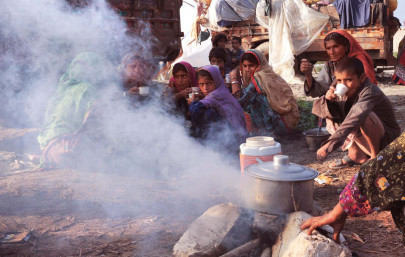
			<media:description>Flood survivors prepare breakfast at a roadside in the outskirts of Sukkur. UN agencies held a meeting with local NGOs in Sukkur to discuss relief efforts. PHOTO: AFP</media:description>
			<media:thumbnail url="http://i1.tribune.com.pk/wp-content/uploads/2010/08/NGO-160x120.jpg" width="160" height="120" />
      </media:content>

		<wfw:commentRss></wfw:commentRss>
		<slash:comments>6</slash:comments>
	</item>
	
</channel>
</rss>
<!-- Performance optimized by W3 Total Cache. Learn more: http://www.w3-edge.com/wordpress-plugins/

Page Caching using apc
Database Caching 15/44 queries in 1.551 seconds using memcached
Object Caching 1427/1587 objects using apc

 Served from: tribune.com.pk @ 2013-05-24 08:01:41 by W3 Total Cache -->