<?xml version="1.0" encoding="UTF-8"?>
<rss version="2.0"
	xmlns:content="http://purl.org/rss/1.0/modules/content/"
	xmlns:wfw="http://wellformedweb.org/CommentAPI/"
	xmlns:dc="http://purl.org/dc/elements/1.1/"
	xmlns:atom="http://www.w3.org/2005/Atom"
	xmlns:sy="http://purl.org/rss/1.0/modules/syndication/"
	xmlns:slash="http://purl.org/rss/1.0/modules/slash/"
	xmlns:media="http://search.yahoo.com/mrss/"
	>

<channel>
	<title>The Express Tribune &#187; Aisha Iqbal</title>
	<atom:link href="http://tribune.com.pk/author/39/aisha-iqbal/feed/" rel="self" type="application/rss+xml" />
	<link>http://tribune.com.pk</link>
	<description>Latest Breaking Pakistan News, Business, Life, Style, Cricket, Videos, Comments</description>
	<lastBuildDate>Thu, 24 May 2012 18:42:42 +0000</lastBuildDate>
	<language>en</language>
	<sy:updatePeriod>hourly</sy:updatePeriod>
	<sy:updateFrequency>1</sy:updateFrequency>
	<generator>http://wordpress.org/?v=3.2.1</generator>

		<item>
		<title>Crumbling heritage: The Talpur tombs hold quiet histories long forgotten</title>
		<link>http://tribune.com.pk/story/150911/crumbling-heritage-the-talpur-tombs-hold-quiet-histories-long-forgotten/</link>
		<pubDate>Sun, 17 Apr 2011 04:45:43 +0000</pubDate>

		<guid isPermaLink="false">http://tribune.com.pk/?p=150911</guid>

		<description>
		<![CDATA[
			<a href="http://tribune.com.pk/story/150911/crumbling-heritage-the-talpur-tombs-hold-quiet-histories-long-forgotten/">
				<img src="http://i1.tribune.com.pk/wp-content/uploads/2011/04/Talpur01-PHOTOS-INP-160x120.jpg" width="160" height="120" alt="" />
			</a>
			<p><div><strong class='location'>KARACHI:&nbsp;</strong>
<p><strong>The final resting place of rulers is usually associated with large, green spaces but the Talpurs of Hyderabad are buried in tombs surrounded by a bustling, encroaching neighbourhood.</strong></p>
</div>
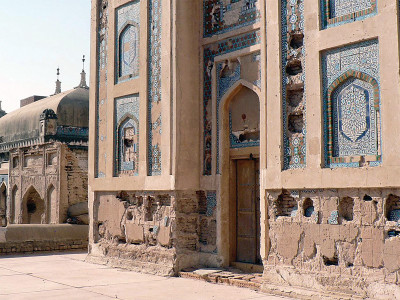
<p>Several crumbling crypts stand together in Hirabad while another tomb stands alone in the Journalists Colony near the Hyderabad Central Jail. All of them are in utter disrepair &#8211; nobody knows much about them and nobody really cares.</p>
<p>“In Hyderabad, we call them ‘meeron key qubbay’ and that’s about all anyone knows of them,” says Sindh historian Mubarak Ali.</p>
<p>He says the custom is to build tombs in wide, open spaces and usually within a luscious green garden.</p>
<p>But in the case of these tombs, there were no parks and grass around.</p>
<p>As time went on, the heirs of the Talpur Mirs sold off the land around the tombs, till finally, today, the last resting places of Sindh’s rulers are surrounded on all sides by narrow, busy lanes, choked with houses and structures.</p>
<p>Ali is not impressed by the architectural beauty of these tombs, “there’s no style” he comments. However, they are part of our history and need to be preserved.</p>
<p>The archaeology department either knows nothing about them or just isn’t interested, he says. “If you go inside the tombs you’ll see how dirty they are.”</p>
<p>People in Hyderabad are accustomed to the clay-coloured domed structures but hardly anyone visits.</p>
<p>As for the famous Talpur Mirs, they still live in Hyderabad and are rumoured to own manuscripts and precious antiquities but they don’t like to share or show it to anyone, says the historian.</p>
<p><strong>Sassui Palijo deflects</strong></p>
<p>Culture minister Sassui Palijo defended the provincial government and says that most of the archaeological sites in Sindh are under the federal government. However, the department was handed over to Sindh on March 30, as part of devolution (handing over responsibility to provinces). It takes a while to make right what’s been wrong for the past 63 years, Palijo explains.</p>
<p>She assures that she is “very interested personally in the history of Talpurs” and has already formed a committee of five to 10 people to make a list of important heritage sites in the province. “The provincial government has signed a memorandum with Unesco and it will help us preserve our heritage,” she promises.</p>
<p><strong>History of the Talpurs</strong></p>
<p>Shaikh Khurshid Hasan writes that the Talpurs and the Kalhorahs were the two dynasties that ruled over Sindh before the British arrived. Mir Fateh ‘Ali Khan, the Talpur chief, defeated the last Kalhorah ruler and established his government in 1784.</p>
<p>He divided Sindh into three regions, Hyderabad, Khairpur and Mirpur Khas, which were each ruled by a separate branch of the family.</p>
<p>Hyderabad was ruled by Mir Fateh ‘Ali Khan along with his other brothers, Mir Ghulam ‘Ali Khan, Mir Karam ‘Ali and Mir Murad ‘Ali Khan. They became the ‘Chaar Yaar’ (four friends or companions) and the government was called as Chauyari.</p>
<p>According to talpur.org, Karam ‘Ali Khan died in 1828 and was buried in a domed mausoleum, which was constructed around 1812.</p>
<p>Several other family members, including their wives and children, are buried in tombs nearby. “The marble graves have the actual royal turbans of these rulers placed upon a projection at one end,” says the website.</p>
<p><em> </em></p>
<p><em>Published in The Express Tribune, April 17<sup>th</sup>, 2011.</em></p>
</p>
			<br clear="all"/>
		]]>
		</description>

		<media:content width="424" height="318"
							isDefault="true" medium="image" url="http://i1.tribune.com.pk/wp-content/uploads/2011/04/Talpur01-PHOTOS-INP-640x480.jpg">
			<media:title>Talpur01-PHOTOS-INP</media:title>
			<media:description>The tombs of the Talpur Mirs in Hirabad are more than 200 years old. Several of the Talpur chiefs, their wives and children are buried here. PHOTOS: INP</media:description>
			<media:thumbnail url="http://i1.tribune.com.pk/wp-content/uploads/2011/04/Talpur01-PHOTOS-INP-160x120.jpg" width="160" height="120" />
      </media:content>

		<wfw:commentRss></wfw:commentRss>
		<slash:comments>0</slash:comments>
	</item>
		<item>
		<title>Contractor blasting through Tharparkar temple in search of granite  </title>
		<link>http://tribune.com.pk/story/130210/contractor-blasting-through-tharparkar-temple-in-search-of-granite/</link>
		<pubDate>Wed, 09 Mar 2011 20:01:43 +0000</pubDate>

		<guid isPermaLink="false">http://tribune.com.pk/?p=130210</guid>

		<description>
		<![CDATA[
			<a href="http://tribune.com.pk/story/130210/contractor-blasting-through-tharparkar-temple-in-search-of-granite/">
				<img src="http://i1.tribune.com.pk/wp-content/uploads/2011/03/Durga-PHOTOS-COURTESY-SAJID-BAJEER-160x120.jpg" width="160" height="120" alt="" />
			</a>
			<p><div><strong class='location'>KARACHI/MITHI:&nbsp;</strong>
<p><strong>This February, when the pilgrims came to celebrate the annual Sardaro mela at their beautiful temple on a hill in Tharparkar, they found that the path leading up to the mandir was destroyed.</strong></p>
</div>
<p>Pieces of rock were scattered all around and heavy machinery loomed ominously and silently nearby.</p>
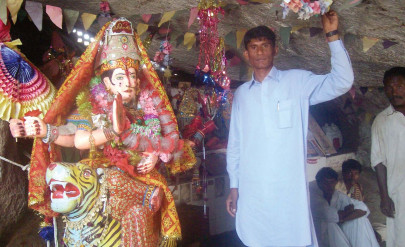
<p>The ancient temple of Durga Mata rests on top of a hill in Choryo village, Nagarparkar in Tharparkar district. Unfortunately, for the yatrees who come from Nepal, India and other countries to celebrate their festivals every year, this hill is rich in granite.</p>
<p>Around a month ago, a private company’s diggers arrived with huge machines and dynamite. Residents say the contractor, Abdullah Qureshi, was given control of the hill on lease by the Sindh government. The contractor is busy blasting through huge chunks of the hill at the bottom of the temple to extract granite while the pilgrims watch on in horror.</p>
<p>The three-day Shivratri mela started this year on February 2, except this time the festival was not just about pooja but about protest. “We found that the way leading up to the temple is also destroyed. The hill is being sawed into from all sides, we’re afraid our temple will be damaged,” said Veerjhi Kohli, who lives in Choryo.</p>
<p>Veerjhi explained they cremate their dead and then save the ashes till Shivratri &#8211; a sacred day that comes once every year. On this day they scatter the ashes into holy water. While Pakistan’s richer Hindus go to India and release their loved one’s remains into the Ganges, those who cannot afford the trip go to Nagarparkar.</p>
<p>Durga Mata temple is one of the two temples where the Hindus always go and pay their respects on this day, making it a significant part of their religion. According to him, around 200,000 pilgrims flock to the temple for the festival. Although the digging stopped while the mela continued, the pilgrims were dismayed at the project. They organised a protest but “in a place as remote as this, no media came, there was no notice”, said a disappointed Veerjhi. “Only one newspaper picked it up as a small story.”</p>
<p>The residents have had little success so far. The contractors say they have a lease. The mukhtiarkar and DCO say they have no authority. However, an MPA has promised his support. “He said the digging will be stopped,” Veerjhi told The Express Tribune.</p>
<p>Officials have been quick to deny, shift the blame or simply stay quiet. Culture minister Sassui Palijo was in Islamabad so she could not be contacted. However, her department director, Muhammad Ali Manjhi, said they would “never dig around a heritage site”. When pestered about whether such digging was going on, he relented “it is possible” before quickly adding that his department had nothing to do with it. They would only dig and excavate for archaeology purposes.</p>
<p>Tharparkar DCO Shakeel Zaman remained tight-lipped over the issue, refusing to say anything more than “I have asked for a report from the revenue department. I will share details once the report is given.” When will the report come? “I’ve asked them to give it in as soon as possible.”</p>
<p>While officials move the responsibility around, Veerjhi puts it succinctly: “Of all the hills, why this one?”</p>
<p><em>Published in The Express Tribune, March 10<sup>th</sup>, 2011.</em></p>
</p>
			<br clear="all"/>
		]]>
		</description>

		<media:content width="423" height="318"
							isDefault="true" medium="image" url="http://i1.tribune.com.pk/wp-content/uploads/2011/03/Durga-PHOTOS-COURTESY-SAJID-BAJEER-640x480.jpg">
			<media:title>Durga-PHOTOS COURTESY SAJID BAJEER</media:title>
			<media:description>Residents say Karachi company was given lease by Sindh government   
</media:description>
			<media:thumbnail url="http://i1.tribune.com.pk/wp-content/uploads/2011/03/Durga-PHOTOS-COURTESY-SAJID-BAJEER-160x120.jpg" width="160" height="120" />
      </media:content>

		<wfw:commentRss></wfw:commentRss>
		<slash:comments>3</slash:comments>
	</item>
		<item>
		<title>Of great minds and ‘little Taj Mahals of egos’</title>
		<link>http://tribune.com.pk/story/115118/of-great-minds-and-little-taj-mahals-of-egos/</link>
		<pubDate>Mon, 07 Feb 2011 05:27:36 +0000</pubDate>

		<guid isPermaLink="false">http://tribune.com.pk/?p=115118</guid>

		<description>
		<![CDATA[
			<a href="http://tribune.com.pk/story/115118/of-great-minds-and-little-taj-mahals-of-egos/">
				<img src="http://i1.tribune.com.pk/wp-content/uploads/2011/02/Riakshah5-160x120.jpg" width="160" height="120" alt="" />
			</a>
			<p><p><strong><strong class='location'>KARACHI:&nbsp;</strong>“I’m never afraid to make a fool of myself&#8230;before the camera starts rolling,” said the thin, wiry Sunil Sethi. Seated between a shiny-pated HM Naqvi and a twinkly-eyed <a href="http://tribune.com.pk/story/115113/daniyal-mueenudin-the-new-yorker-in-karachi-shocks-with-desi-punjabi-twang/">Daniyal Mueenuddin</a>, Sethi was comfortable, witty, articulate. Not a surprise since he has been running his own TV show, Just Books, in which he has been interviewing writers and “great minds” for over six years.</strong></p>
<p>The brightly lit, uncomfortably cold Maharani was filled, mostly with aunties in crisp clothes and even crisper accents. Before the event, the launch of “The Big Bookshelf: Suni Sethi in Conversation with 30 Famous Writers”, kicked off, Sethi and Mueenuddin were handed Espresso coffee, which Sethi then proceeded to share with Naqvi, pouring it into the large champagne glass on the table.</p>
<p>Moderator Ameena Saiyid was sweet but not terribly deft. Sethi’s book has been all sold out, she told the audience, but you can still find Naqvi and Mueenuddin’s books at the stalls outside! As she read out Sethi’s impressive biographic details in loud monotones, Mueenuddin daydreamed with his chin in his palm and Naqvi almost fell off his chair, a cute, squirrel-like grin appearing on his face.</p>
<p>“What’s wonderful about the <a href="http://tribune.com.pk/story/112208/2nd-karachi-literature-festival-all-star-cast-to-descend-on-karachi-this-weekend/">Karachi Literature Festival</a> is that it has warmth, an intimacy,” Sethi said, adding, “I hope it retains that.”</p>
<p>He talked of his book, what the digital age has done to media and literature. He said he barely gets home from work and the internet is exploding with his show and Twitter alerts from the authors he’s barely finished interviewing. “How can they be concentrating on the interview and be tweeting at the same time!”</p>
<p>The purpose behind his book was to contrast and write not just about “how writers write, the process, their inspirations but how the writers and the writers’ world has changed”.</p>
<p>Sethi then asked the writers on his sides to interview him.</p>
<p>“Which books inspired you?” asked Mueenuddin. “I live in a house actually constructed of books,” Sethi replied, explaining how he gets around 25 books a week to review or to put on his show. He has books all over the house and he donates them to charities, schools and boutiques for “decoration”. The latest consignment is going to be sent to a jail in Delhi.</p>
<p>“Are you so good that you can get the writers to bare their souls to you?” asked Naqvi, a question he rephrased continuously in a bid to get Sethi to reveal his “secrets and tricks”. But Sethi battled them off like an expert. “I’m not good at all. It’s the writers who are so good to share.” Sethi said initially he had given his show “six weeks” with the expectation that he’d be then “rapidly unemployed”.</p>
<p>Naqvi confessed that he was very uncomfortable “interfacing with his audience”. He finds being interviewed unsettling. “I’m curious,” he tried again, “are their any tricks that you use to get through to writers, who are sequestered in their minds and rooms for eight hours a day?”</p>
<p>It is a two-way process, Sethi replied, drawing a parallel between writers and journalists. Just like you employ journalistic techniques to research and find out about your topics and subjects, so do I, he told Naqvi.</p>
<p>Of course not all writers like to be interviewed, he added to which Naqvi quickly interposed: Who has refused to come on Sethi’s show to be interviewed? Jhumpa Lahiri was one, a point seized, pounced on and shredded in mock anger by Mueenuddin: “You know, I just don’t get these writers!” he said. “It’s so silly.” For him, writing was like any other business, say like producing Coca Cola. If the soft drink makers weren’t allowed to “have a temperament”, why should writers? You’ve made a product, you should be able to talk about it if someone asks you. Writers write to entertain and books as products are “perhaps a little more sophisticated than TV”.</p>
<p>“You have to be charming. The key is to listen, to pay attention,” continued Sethi on how to get writers to talk about their work. He always chats to the person he’s interviewing before the show starts and tries to make them comfortable. He recalled the show with Nobel laureate Amartya Sen, which had had him “perspiring”.</p>
<p>“You’ve talked of the greater minds you’ve interviewed, what about some of the lesser minds,” asked the cheeky Naqvi, looking down at a piece of paper, “I see your list has Jeffery Archer in there&#8230;”</p>
<p>The question-and-answer session was brief. Mueenuddin told a tall, loud questioner who asked him if he treats his art as a commodity that there are two sides to writing. “You write what is beautiful and true but once the beautiful and true is out, you want it to sell.”</p>
<p>“I hate it when writers try and make their role into one of high priests!” he said.</p>
<p><em>Published in The Express Tribune, February 7<sup>th</sup>, 2011.</em></p>
</p>
			<br clear="all"/>
		]]>
		</description>

		<media:content width="424" height="318"
							isDefault="true" medium="image" url="http://i1.tribune.com.pk/wp-content/uploads/2011/02/Riakshah5-640x480.jpg">
			<media:title>Riakshah</media:title>
			<media:description>Sunil Sethi, Daniyal Mueenuddin and HM Naqvi have the crowd in sporadic fits of laughter while discussing writers and their quirks.
</media:description>
			<media:thumbnail url="http://i1.tribune.com.pk/wp-content/uploads/2011/02/Riakshah5-160x120.jpg" width="160" height="120" />
      </media:content>

		<wfw:commentRss></wfw:commentRss>
		<slash:comments>0</slash:comments>
	</item>
		<item>
		<title>What’s black and white and cute all over?</title>
		<link>http://tribune.com.pk/story/66788/whats-black-and-white-and-cute-all-over/</link>
		<pubDate>Sun, 24 Oct 2010 07:02:10 +0000</pubDate>

		<guid isPermaLink="false">http://tribune.com.pk/?p=66788</guid>

		<description>
		<![CDATA[
			<a href="http://tribune.com.pk/story/66788/whats-black-and-white-and-cute-all-over/">
				<img src="http://i1.tribune.com.pk/wp-content/uploads/2010/10/What-160x120.jpg" width="160" height="120" alt="" />
			</a>
			<p><p><strong><strong class='location'>KARACHI:&nbsp;</strong>A baby zebra was born in all its black and white glory on Saturday. The newcomer has delighted not just the management of the Safari Park but animal lovers across the world.</strong></p>
<p>DO Safari Park Syed Raza Abbas Rizvi claimed proudly that zebras never gave birth in artificial environments such as zoos and safari parks. “Zebras are only born in their natural habitat. This is the first time that a baby zebra has been born in a park!” he exclaimed.</p>
<p>According to Rizvi, the park has received congratulatory phone calls from the Czech Republic, Tanzania, South Africa and the US on their new addition.</p>
<p>At 15 kilogrammes, the baby zebra was described  as ‘super fit’ by the DO. Moreover, the little animal, barely knee-high, was able to stand up on his shaky legs just 20 minutes after being born. A sure sign that he was healthy, said Rizvi happily.</p>
<p>However, the first 48 hours are crucial and the baby is going to be watched carefully by the park vet, Dr Kazim.</p>
<p>Dr Kazim reported for duty at 3 am and finally, around 8:30 am, the baby was born. Zebra births are tricky because they are shy animals and so doctors have to strike a balance between giving the animals their space but still being within distance of knowing when to intervene and help.</p>
<p>There are around seven to eight people, including a doctor, zookeeper and feeder, near the animals at the time of birth. “It is tough with animals because they can’t talk so you just have to watch them very carefully and observe their behaviour and sounds,” said Rizvi.</p>
<p>He said the baby will be given his vaccinations after two days. While the park administration did not allow the public to go near the zebra enclosure on Saturday, they plan to let visitors go from today (Sunday).</p>
<p>The mother and father zebras were among the four gifted to the Safari Park by a multinational company five years ago. The mother is said to be healthy and strong, as any visitor could tell by watching the animals gallop around their large enclosure.</p>
<p>When it was found that one of the two female zebras was pregnant, all hands were called on deck. The mother’s diet was given special attention. “Food supplements are given so that the mother stays healthy and gives birth to a healthy child,” explained Rizvi.</p>
<p><strong>Park’s past, present and future</strong></p>
<p>Established in 1970, the Karachi Safari Park started off at 350 acres of land. Several years down the road, encroachers have taken up more than half of the land. “At present the park is spread across 173 acres,” Rizvi said. There are two squatter settlements that have taken up the land that originally belonged to the park, which is run by the city district government. Both squatter settlements have now been regularised.</p>
<p>Rizvi claimed that the Karachi Safari Park is the biggest in Asia. They have 16 species including several kinds of deer, such as the red deer, hog deer, spotted deer, Eland and chinkaras, white camels, horses, two elephants and llamas.</p>
<p>While the park does not have the cat family, Rizvi said “giraffes and hippopotamus are in the pipeline”.</p>
<p>The process of getting an animal for the park is long and complicated. First they have to write the Sindh wildlife department and then the federal department. After which they get in touch with a government who can provide them the animal. The city government provides the funds for the costly procedure, which requires a contractor who can check the health of the animal in question and after keeping it in quarantine for a while, the animal is finally imported and brought to the park.</p>
<p>Private cars are not allowed in the park. The entry fee is Rs10 and an additional Rs20 buys a ride in the park’s coach, which goes through the park and gives people an opportunity to spy on the animals in their ‘natural’ habitat.</p>
<p>According to Rizvi, they get around 4,000 visitors everyday while on the weekends, the park can get as many as 10,000 visitors. There are also chairlifts, which give a bird’s eye view of the large enclosure.</p>
<p><em>Published in The Express Tribune, October 24<sup>th</sup>, 2010.</em></p>
</p>
			<br clear="all"/>
		]]>
		</description>

		<media:content width="424" height="318"
							isDefault="true" medium="image" url="http://i1.tribune.com.pk/wp-content/uploads/2010/10/What-640x480.jpg">
			<media:title>What</media:title>
			<media:description>The baby zebra weighed 15 kgs at birth and is reported to be in good health. PHOTO: EXPRESS</media:description>
			<media:thumbnail url="http://i1.tribune.com.pk/wp-content/uploads/2010/10/What-160x120.jpg" width="160" height="120" />
      </media:content>

		<wfw:commentRss></wfw:commentRss>
		<slash:comments>0</slash:comments>
	</item>
		<item>
		<title>Baby comes to town</title>
		<link>http://tribune.com.pk/story/40924/baby-comes-to-town/</link>
		<pubDate>Fri, 20 Aug 2010 04:24:36 +0000</pubDate>

		<guid isPermaLink="false">http://tribune.com.pk/?p=40924</guid>

		<description>
		<![CDATA[
			<a href="http://tribune.com.pk/story/40924/baby-comes-to-town/">
				<img src="http://i1.tribune.com.pk/wp-content/uploads/2010/08/Baby-160x120.jpg" width="160" height="120" alt="" />
			</a>
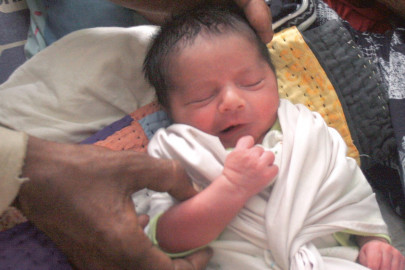
			<p><p><strong><strong class='location'>KARACHI:&nbsp;</strong>Hidayat made it to Karachi just in time to deliver her third baby. The family arrived at the relief camp in Sachal Goth on Wednesday night. Early Thursday morning, Hidayat’s labour pains began.</strong></p>
<p>A doctor from a nearby private hospital came in around 10 am and recommended taking the young mother to the hospital, but she and her husband chose to stay put.</p>
<p>“We’re happy where we are, we have everything we need at the moment,” the proud father, Yar Muhammad, explained later.</p>
<p>The baby, named Allah Dino, was born at the camp and handed to his parents. “We are so happy,” Muhammad exclaimed, dismissing any worries or fears of how this young child will be brought up.</p>
<p>Allah Dino has two older brothers, five-year-old Khuda Bukhsh and Amir Bukhsh, “whose baby teeth are just coming out”, the father explained when asked his age.</p>
<p>Several political parties’ representatives met the family and proferred them with gifts and congratulations.</p>
<p>The family comes from village Jaffrabad in Jacobabad district. Most of the residents had not evacuated because all fears of the flood had been refuted by their landlords. “They kept saying we’re safe and then when it was too late and the water was already flooding our village they said ‘bhaago’!” Muhammad said. According to him, around 500 homes in his village were destroyed in the flood.</p>
<p>Like hundreds of others, Muhammad’s family had no time to gather any belongings. They were lucky enough to get a ride to Karachi. One of the villagers, Rafiq, arranged for a truck that brought them here.</p>
<p>“They didn’t demand fares from us because we had no money,” Muhammad said.</p>
<p>The flood survivors are now living in the New Grammar Boys Secondary School in Sachal Goth. There are around 15 classrooms in the government school, each crammed with at least 20 people.</p>
<p>While the internally displaced persons (IDPs) spend their days beneath the trees in the school grounds, wiling away time, at night they go up to the roof and sleep beneath the open sky.</p>
<p>The happiest of the lot seem to be the young children, who are making full use of the school’s grounds by chasing one another and playing.</p>
<p>“We don’t want to go back,” says Muhammad. “Just give us a makan here and we’ll be happy. There is nothing for us back home.”</p>
<p><em>Published in The Express Tribune, August 20<sup>th</sup>, 2010.</em></p>
</p>
			<br clear="all"/>
		]]>
		</description>

		<media:content width="424" height="318"
							isDefault="true" medium="image" url="http://i1.tribune.com.pk/wp-content/uploads/2010/08/Baby-640x480.jpg">
			<media:title>Baby</media:title>
			<media:description> Baby Allah Dino was born to Hidayat and Yar Mohammad from Jacobabad at a Sachal Goth camp. PHOTO: ATHAR KHAN/EXPRESS</media:description>
			<media:thumbnail url="http://i1.tribune.com.pk/wp-content/uploads/2010/08/Baby-160x120.jpg" width="160" height="120" />
      </media:content>

		<wfw:commentRss></wfw:commentRss>
		<slash:comments>1</slash:comments>
	</item>
		<item>
		<title>A reason to hope</title>
		<link>http://tribune.com.pk/story/39353/a-reason-to-hope/</link>
		<pubDate>Sun, 15 Aug 2010 08:04:57 +0000</pubDate>

		<guid isPermaLink="false">http://tribune.com.pk/?p=39353</guid>

		<description>
		<![CDATA[
			<a href="http://tribune.com.pk/story/39353/a-reason-to-hope/">
				<img src="http://i1.tribune.com.pk/wp-content/uploads/2010/08/Aisha-Iqbal-New-160x120.jpg" width="160" height="120" alt="" />
			</a>
			<p><p>I was stuck. I had managed to come within two feet of the huts I had been aiming for but now I was on a grassy edge of the mountain with four large goats and the huts were on a level above with no way to get there.</p>
<p>Then the lady appeared. Like an angel with wrinkled skin and orange hair, she was startled to see me with my army green shoulder bag and sneakers, a dupatta perched on my head. “Where’d you drop from?” she asked in surprise and then called over her family. It took two women and four arms to haul me up from the goats to the makeshift shelters where a few families were staying.</p>
<p>The year was 2008 and I was part of a team trying to assess rehabilitation work since the 2005 earthquake in Balakot. This was one of the many mountainous villages that had been razed and clusters of people were living in temporary shelters for almost three years now.</p>
<p>Men, women and babies with grey eyes huddled around me. The old woman petted my head when I told her why I was there.</p>
<p>“Many of you have come here,” one of the younger men remarked, leaning on the pole. “Nothing changes afterwards.”</p>
<p>I tell him I can promise nothing either but I would still want them to answer a few questions…</p>
<p>They do, the hard ones about how many family members they lost, the personal ones about income and assets, and while I have nothing to give them, those people give me the thing that helps me survive.</p>
<p>They give me cake, they give me water. Like the villagers in Sindh and Punjab that I have visited, these people were poor, many of them with no steady source of income. But even if it is just kalay channay that they have, they spread them out on a charpoy to share.</p>
<p>And while they have complaints, they’re not bitter. They joke about ‘city people’ and they tell me it’s great that I had come to see them.</p>
<p>And whenever the news around me gets me down, I think of these people and I feel that if there is any hope, it is in the resilient people across the country, with big hearts and unshakable faith.</p>
<p><em>Published in The Express Tribune, August 15<sup>th</sup>, 2010.</em></p>
</p>
			<br clear="all"/>
		]]>
		</description>

		<media:content width="424" height="318"
							isDefault="true" medium="image" url="http://i1.tribune.com.pk/wp-content/uploads/2010/08/Aisha-Iqbal-New-640x480.jpg">
			<media:title>Aisha Iqbal New</media:title>
			<media:description></media:description>
			<media:thumbnail url="http://i1.tribune.com.pk/wp-content/uploads/2010/08/Aisha-Iqbal-New-160x120.jpg" width="160" height="120" />
      </media:content>

		<wfw:commentRss></wfw:commentRss>
		<slash:comments>0</slash:comments>
	</item>
		<item>
		<title>Hope floats as Karachi’s young blood dips in to help  </title>
		<link>http://tribune.com.pk/story/37061/hope-floats-as-karachis-young-blood-dips-in-to-help/</link>
		<pubDate>Sun, 08 Aug 2010 06:25:48 +0000</pubDate>

		<guid isPermaLink="false">http://tribune.com.pk/?p=37061</guid>

		<description>
		<![CDATA[
			<a href="http://tribune.com.pk/story/37061/hope-floats-as-karachis-young-blood-dips-in-to-help/">
				<img src="http://i1.tribune.com.pk/wp-content/uploads/2010/08/Hope-160x120.jpg" width="160" height="120" alt="" />
			</a>
			<p><p><strong><strong class='location'>KARACHI:&nbsp;</strong>Two law students from Manchester decided to do something different when they came back home this summer.</strong></p>
<p>Twenty-five-year old Mohammad Jibran Nasir and his friend Amar Abbasi felt that while the floods were wreaking havoc across the country, there did not seem to be an obvious channel to help those affected by the disaster.</p>
<p>“When the earthquake came everybody had a channel, they all knew they could go the PAF base and donate there,” said Jibran. “But this time around there did not seem to be anything out there.”</p>
<p>Since the two young men felt that their efforts were the first step to reach the flood-affected families in Khyber-Pakthunkhwa and other areas, they decided ‘Pehla Qaddam’ would be an apt name.</p>
<p>Despite the target killings, riots and storms, the group managed to raise around Rs250,000 in five days. “We set a target of Rs100,000 in seven days but Mash’Allah we managed to make so much in just five days!” said the optimistic Jibran.</p>
<p>On the first day of work, MPA Raza Haider was killed and they collected a mere Rs1,700 much to their chagrin. However, conditions in the city did not stop the two co-founders of Pehla Qadam from taking their little organisation forward. They got in touch with volunteers through friends, siblings and of course, Facebook. Volunteers surfaced and participation was confirmed over the phone.</p>
<p>“We told the volunteers to just collect donations in their neighbourhoods,” Jibran told <em>The Express Tribune</em>, adding that the group was stressing on monetary donations.</p>
<p>“If somebody has contacts or is a factory owner, it makes sense for them to buy the goods,” he said. “But we don’t want people to go to Agha’s and buy flour because we know we can get it cheaper from elsewhere.”</p>
<p>In fact, Pehla Qadam has struck a good deal with the Imtiaz Supermarket chain, which has promised to sell the items on the group’s list (adapted from the National Disaster Management Authority’s list) at a subsidised rate.</p>
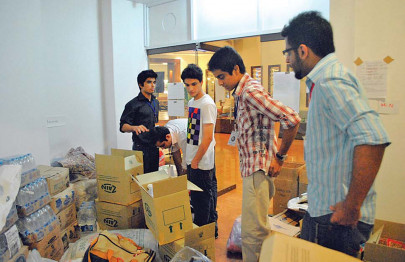
<p>Moreover, the Royal Rodale has donated a room, which is serving as the main collection point for the group.</p>
<p>Initially the plan was to collect supplies for a week and then send them off since both Jibran and Amar have to head back to Manchester. “But our friends were so eager that we have decided to leave things to them and keep the process going for another week.”</p>
<p>The hotel too has agreed to let them keep the room for another seven days.</p>
<p>Collection carries on from 12 pm to 12 am and is manned by 15- to 25-year-olds who spend their hours waiting and packing donated goods.</p>
<p>“Most of our donations come from student pocket money and what they can get from their parents.” They have not yet received any corporate donations but three companies have pledged goods.</p>
<p>“Believe me, we got a lot of stuff,” said 18-year-old Hamza, a volunteer with Pehla Qadam.</p>
<p>At the end of every day, the collection box is opened and the money is counted in front of all volunteers.</p>
<p>“We then send out a message through Facebook telling them the day’s earnings,” explained Jibran, adding that they plan to scan and upload all receipts of items bought, to maintain perfect transparency.</p>
<p>They plan to use up all the monetary donations and buy goods rather than send the cash because, “there is always a credibility issue”.</p>
<p>Since Pehla Qadam is not a registered entity, the group decided to affiliate itself with the Rotaract Club. The same organisation will help the group transport the goods to the affected areas.</p>
<p><strong>Gullak</strong></p>
<p>Twenty-seven-year old Ammara Gul Agha’s efforts to help the flood victims are definitely unique.</p>
<p>Using her t-shirt company, Gullak, the young graphics designer decided to ask people to donate shirts. “Not everyone can afford to donate money, so I thought why not change something that is available into something functional,” she said.</p>
<p>The idea is to collect old clothes, mostly t-shirts, and at the same time, get together a team of designers and textile students. When the group has enough raw material, it will sit down and stitch the cloth into things that the flood victims might need, such as hammocks, sleeping bags and blankets.</p>
<p>So far, the group has the Indus Valley School of Arts and Architecture on board, where a teacher, Ghazala Pirzada, is taking donations. Ammara plans to get in touch with all art institutions in the city, including the Karachi School of Arts and the Karachi University’s relevant departments.</p>
<p>One of the group’s collection points is Cafe Headlion in Clifton and another is at the School of Leadership.</p>
<p><strong>Text messages</strong></p>
<p>Most people feel that mass text messaging is a nuisance but this time around, it is playing an important part in relief work for the people of Balochistan and Sindh.“I messaged about 200 people about my relief camp and ask them to spread the word,” says Morial Shah, a college student who is collecting goods. “People gathered within hours to help.”</p>
<p>Texting worked miracles for Aayla Magsi as well. “Mobile texts and Facebook were the key flows of information,” she says. Whether it was cash, water or dry food, everything was encouraged. “We have collected Rs70,000 so far.”</p>
<p>Along with cash, she has collected flour, rice, lentils, dry milk and medical supplies including oral-rehydration salts (ORS) and bandages. Meanwhile, Morial is concentrating on packaged foods &#8211; milk, water, biscuits and chips.</p>
<p>“There are three buses that will reach Kambar-Shahdadkot (which is on the border of Sindh and Balochistan). After collecting more items from there, they will be sent off to Sibi and Jhal Magsi districts,” she describes.</p>
<p>People from the districts contacted Aayla’s father, who is in the government, for help as those areas are inundated. So it is more of a family effort. The goods are being received at home.</p>
<p>Morial’s effort is also a family collaboration; her aunt is the chairperson of the National Commission for Human Development (NCHD). On a day’s notice, she, along with a tiny NCHD staff, set up a relief camp outside Agha’s &#8211; which was a roaring success.</p>
<p>They managed to collect Rs60,000 in cash, 23 large and two small cartons of bottled water and a couple of cheques with substantial amounts of money.</p>
<p>The second camp at the Forum Mall was unfortunately swept away by the rain. But that did not stop Morial. She picked up the donation box and stood at the mall’s gate. “After the security guard was assured that I was taking the relief goods myself, even he donated Rs10,” she says.</p>
<p>They will continue fundraising until Thursday and then will send trucks to Khairpur, Shikarpur and its surrounding areas. Morial and the NCHD team are even trying to set up a mobile van outside the DHA Sunday Bazaar for more donations.</p>
<p><em>Published in The Express Tribune, August 8<sup>th</sup>, 2010.</em></p>
</p>
			<br clear="all"/>
		]]>
		</description>

		<media:content width="424" height="318"
							isDefault="true" medium="image" url="http://i1.tribune.com.pk/wp-content/uploads/2010/08/Hope-640x480.jpg">
			<media:title>Hope</media:title>
			<media:description> Members of Pehla Qadam collecting relief goods at the Royal Rodale. PHOTO: PEHLA QADAM</media:description>
			<media:thumbnail url="http://i1.tribune.com.pk/wp-content/uploads/2010/08/Hope-160x120.jpg" width="160" height="120" />
      </media:content>

		<wfw:commentRss></wfw:commentRss>
		<slash:comments>33</slash:comments>
	</item>
		<item>
		<title>‘Instrument Landing Systems are safer’</title>
		<link>http://tribune.com.pk/story/32210/instrument-landing-systems-are-safer/</link>
		<pubDate>Thu, 29 Jul 2010 04:55:44 +0000</pubDate>

		<guid isPermaLink="false">http://tribune.com.pk/?p=32210</guid>

		<description>
		<![CDATA[
			<a href="http://tribune.com.pk/story/32210/instrument-landing-systems-are-safer/">
				<img src="http://i1.tribune.com.pk/wp-content/uploads/2010/07/crash1-Reuters-160x120.jpg" width="160" height="120" alt="" />
			</a>
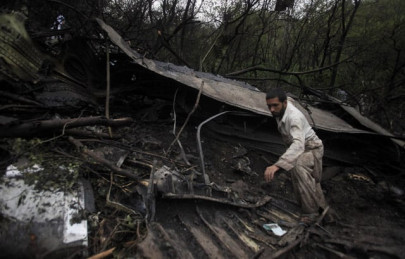
			<p><p><strong><strong class='location'>KARACHI:&nbsp;</strong>A Karachi-based pilot with 33 years of experience feels that one of the factors behind the crash could be the shortage of Instrument Landing Systems (ILS).</strong></p>
<p>“A runway has two ends and you can either land on it from the east or the west, depending on the direction of the wind,” he explained, adding that the wind should preferably be on the front side of the plane.  An ILS is a device that helps a pilot land. “It makes it much easier, and safer, for the pilot to land,” he said.</p>
<p>According to him, in Pakistan airports have the ILS installed on just one end of the runway. “This means that if a pilot is landing from the other end, it won’t get the aid of the ILS.”</p>
<p>In the case of Airblue’s Airbus A321, the pilot was trying to land from the end of the runway which did not have the ILS.</p>
<p>“In Peshawar they don’t even have an ILS because they say the terrain doesn’t require one,” the pilot commented, adding that he could not fathom why the airport authorities simply did not ensure that the instrument was installed on both ends of the runways. “It is a matter of flight safety.”</p>
<p>Islamabad does have tricky terrain but as the pilot put it, “there are degrees of difficulty. Compared to Skardu, landing in Islamabad is not difficult but compared to Lahore where there are no mountains, it is hard.”</p>
<p>He feels that a number of issues together, including bad weather, were behind the plane crash.</p>
<p>He admitted that nothing could be said for certain yet and it would probably take a very long time to figure out what happened.</p>
<p>However, the plane crash is an incident that should be used to highlight the lack of the ILS in the country’s airports.</p>
<p>The Instrument Landing System adds glide-slope, or elevation information. Commonly called the ILS, it is, in every sense, a precision approach system and with the most sophisticated equipment it can guide you right down to the runway-zero Decision-Height and zero visibility (Flight Simulator Navigation website).</p>
<p>Usually aircraft land on auto-pilot mode but weather conditions could force the pilot to apply manual methods for landing, a senior PIA captain told <em>The Express Tribune</em>. At the Benazir Bhutto Shaheed International Airport, if an aircraft, while taxiing for takeoff, does not receive clearance from the control tower then the aircraft approaching to land is asked CAA was contacted about the Airblue flight, they said it had obtained clearance.</p>
<p>According to aviation law, each airline has to get a weather report an hour before it takes off. “The flight pilot is given an Actual Weather Report (AWR), including the visibility [description],” said a senior cockpit crewmember. For instance, at the time of departure, the visibility report is given to the pilot and is an average of 800 metres. “If the visibility is less than 800 meters, the flight is delayed,” said an official.(with additional reporting by shahzad jillani)</p>
<p><em>Published in The Express Tribune, July 29<sup>th</sup>, 2010.</em></p>
</p>
			<br clear="all"/>
		]]>
		</description>

		<media:content width="424" height="318"
							isDefault="true" medium="image" url="http://i1.tribune.com.pk/wp-content/uploads/2010/07/crash1-Reuters-640x480.jpg">
			<media:title>crash1- Reuters</media:title>
			<media:description>A rescue worker searches the wreckage of an Airblue passenger plane. PHOTO: REUTERS</media:description>
			<media:thumbnail url="http://i1.tribune.com.pk/wp-content/uploads/2010/07/crash1-Reuters-160x120.jpg" width="160" height="120" />
      </media:content>

		<wfw:commentRss></wfw:commentRss>
		<slash:comments>3</slash:comments>
	</item>
		<item>
		<title>Sadly, this whale had a  fishermen of a time</title>
		<link>http://tribune.com.pk/story/25924/sadly-this-whale-had-a-fishermen-of-a-time/</link>
		<pubDate>Mon, 05 Jul 2010 19:57:00 +0000</pubDate>

		<guid isPermaLink="false">http://tribune.com.pk/?p=25924</guid>

		<description>
		<![CDATA[
			<a href="http://tribune.com.pk/story/25924/sadly-this-whale-had-a-fishermen-of-a-time/">
				<img src="http://i1.tribune.com.pk/wp-content/uploads/2010/07/Fisah-80x45.jpg" width="160" height="120" alt="" />
			</a>
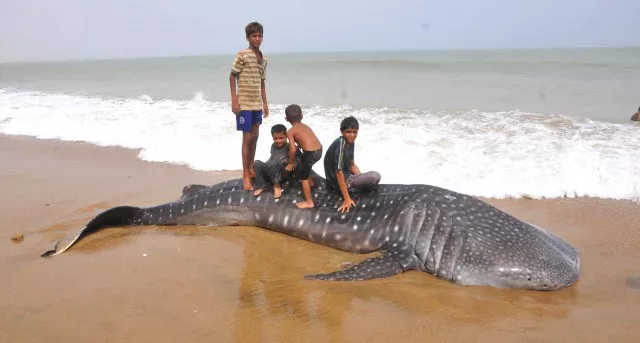
			<p><p><strong>The sea was wild, the sky still dark and the fishermen on their small boat were too scared to free the 16-feet-long whale shark caught in their nets 15 kilometres from the shore.</strong></p>
<p>We were afraid our launch would have overturned and we would have drowned, they said. By the time they did manage to wrest it out of the net it was already too late. But the fishermen tied a rope around it and slowly dragged it to the shore at Abdur Rehman Goth, Hawks Bay.</p>
<p>“Another boat joined us and helped tug it back,” Imam Bakhsh, one of the fishermen on the boat, said. “It was a very slow journey because our boats are small with weak engines.”</p>
<p>Even though the fishermen went through the trouble of bringing the shark back, they do not think the whale shark is important in terms of profit.</p>
<p>“The only use of the fish is its liver,” Nazar, another fishermen, told Express News. “So we took out its liver and will use its oil to rub on our boats.”</p>
<p>The shark is around 16-feet long and weighs about one and a half to two tons.</p>
<p>“It is unfortunate [how the shark died],” said Dr Ghulam Akbar of the World Wildlife Fund, Pakistan.</p>
<p>According to Akbar, the fishermen use ‘sua nets’, which are made of a silky material and are quite strong. The fish is called ‘Behran’ in Balochi and ‘Andhi Magar’ in Sindhi. Its meat is not used and the only thing sold is its liver oil, he added.</p>
<p>The law dictates that while fishermen are not allowed to hunt down these fish, if they are killed accidentally then the men can use it as they see fit.</p>
<p>Every once in a while a dead whale washes up on the shore. Usually they are killed when they get caught in the nets of deep-sea trawlers. Since these species of fish have limited market value, the fishermen just let them return to the sea. The waves, meanwhile, often bring the dead sharks to shore.</p>
<p>While the Sindh wildlife conservator, Hussain Bux Bhagat, said that the department had sent its team to the site, where they were looking after the situation, earlier in the day the dead fish served as a makeshift surfboard for excited children. Balancing on the slippery fish, the children shrieked with delight as waves swept them off while crowds of people thronged the beach to watch the spectacle.</p>
<p>“We will try our best to bring the shark back to our laboratory tonight,” Bhagat told <em>The Express Tribune</em>. “Our team has been sent to look after the shark and if not tonight we will definitely have it with us by Tuesday morning.”</p>
<p>The Sindh wildlife department plans to carry out a post-mortem of the shark with the help of Karachi zoo’s equipment. They also hope to preserve the whale, or at least its skeleton, at their laboratory.</p>
<p>The last time Bhagat remembers such an event occurring was around five years ago when a 50-foot whale washed up on the beach. The skeleton of that whale is still preserved at the department.</p>
<p>Eventually they hope to showcase both skeletons either at their laboratory or the museum, which will be set up at their main office in Saddar.</p>
<p>“The Sindh government has given us all the funds, we hope to renovate our office, set up the museum and expand our laboratory very soon,” he said.</p>
<p>Dr Akbar expressed his hopes while talking to <em>The Express Tribune</em>, of acquiring custody of the whale shark’s skeleton. “We can exhibit it at our wetland centre on Sandspit and use it for educational purposes,” he said. “We will request the Sindh wildlife department.”</p>
<p>Meanwhile, Bhagat maintained that the department would want to keep the shark but the main purpose is to use it for education and research.</p>
<p>“If the WWF requests us and we think they have better facilities then we will consider handing over the shark to them,” he said reluctantly.</p>
<p><em>Published in The Express Tribune, July 6<sup>th</sup>, 2010.</em><em></em></p>
</p>
			<br clear="all"/>
		]]>
		</description>

		<media:content width="424" height="227"
							isDefault="true" medium="image" url="http://i1.tribune.com.pk/wp-content/uploads/2010/07/Fisah-448x240.jpg">
			<media:title>Fisah</media:title>
			<media:description>The Sindh wildlife department plans to preserve the whale shark in their laboratory. PHOTO: ATHAR KHAN/EXPRESS</media:description>
			<media:thumbnail url="http://i1.tribune.com.pk/wp-content/uploads/2010/07/Fisah-80x45.jpg" width="160" height="120" />
      </media:content>

		<wfw:commentRss></wfw:commentRss>
		<slash:comments>10</slash:comments>
	</item>
		<item>
		<title>Crash in to me</title>
		<link>http://tribune.com.pk/story/25688/crash-in-to-me/</link>
		<pubDate>Sun, 04 Jul 2010 20:31:42 +0000</pubDate>

		<guid isPermaLink="false">http://tribune.com.pk/?p=25688</guid>

		<description>
		<![CDATA[
			<a href="http://tribune.com.pk/story/25688/crash-in-to-me/">
				<img src="http://i1.tribune.com.pk/wp-content/uploads/2010/07/Paradise-80x45.jpg" width="160" height="120" alt="" />
			</a>
			<p><p><strong>It seems as if the fiercer the waves get the more people are attracted to them, with fatal consequences. Despite the June and July ban on swimming, four people joined the list of victims on Sunday at Sandspit.</strong></p>
<p>Come weekend, heat-striken Karachi residents flock to the sandy beaches and prance about in the wild waters of the Arabian Sea.</p>
<p>Seven young people out for picnics on Sunday were swept away by the sea, four of them were rescued safely. Meanwhile, the search continues for the other boys.</p>
<p>The distraught mother of one of the boys who drowned at sea had no words: “Who can we ask for help, nobody can help us, my son is gone,” she sobbed.</p>
<p>Police have attempted to stop people from going in but their half-hearted orders fall on deaf ears. Rescue efforts are frail with hardly any lifeguards appointed by the provincial government to man the beaches.</p>
<p>What’s worse is that the 40 or so lifeguards who were working under a welfare organisation, Pakistan Aquatic Life Saving (PALS), have packed up and left. Their tall, rickety benches, huts and offices stand empty in the season that they are needed the most. “There are too many people coming out here,” complained Nasir, a lifeguard. “If we go out to save somebody, another will be drowning somewhere else.”</p>
<p>Twenty-four-year-old Hisham Ali (not his real name), however, was one of the luckier ones. He went to Sandspit on Saturday morning with a group of friends, oblivious to the ban and just waiting to run into the cold water as soon as he saw it.</p>
<p>He does not really remember how it happened, he was just “swimming in the water with friends” and he closed his eyes to just flow with the waves. The next moment he opens his eyes to rushing water all around him. “I couldn’t touch the ground anymore and I was some 30 to 40 feet away from the shore,” reacalls the six-feet-tall man. “I did not panic at first, I told myself whatever, I’ll just swim.”</p>
<p>But swimming against the strong currents is scarcely an easy, or even possible, feat and when Hisham realised he was not moving any closer to the shore or his frantic friends, panic descended on him. “I’m a pretty good swimmer, I can swim five laps nonstop in a pool but the current was really strong,” he told<em> The Express Tribune</em>. “I thought I was a goner.”</p>
<p>However, Hisham was brave enough not to let the panic overcome his senses and when he realised the swimming was not working, he decided to catch a wave and hope for the best. The wave managed to pick Hisham up and bring him closer to where two of his friends were waist-deep in rocky waters, holding out their arms to grab on to him.</p>
<p>Did you see your life flash before your eyes, Hisham was asked, to which he jokingly replied, “No, the only thing that flashed before my eyes were the two guys jumping in front of me!”</p>
<p>However, the young man has learnt his lesson well. He definitely will not be wading too deep in the water, and especially not with his eyes closed. “I’m going to keep my feet glued to the ground,” he promised.</p>
<p><strong>The elusive life guards</strong></p>
<p>According to PALS, the stretch of public beaches in Karachi is over 35 kilometres. Most of the coast is largely unsupervised and every year, more than 250 people drown in Karachi’s salty waters.</p>
<p>But the organisation that boasted being the ‘first professional lifeguard service’ of Pakistan had a very short life span. It started in 2004 when Surf Life Saving New Zealand’s Northern Region (SLSNR) decided to help set it up. SLSNR helped train PALS’ lifeguards and also donated them essential equipment. The SLSNR team were given 175 life guards for training, which included some Pakistan Navy Divers, City Government Divers in addition to the PALS life guards. At the end of the two weeks of training, 64 life guards were issued SLSNR Awards and 41 were issued certificates, according to the PALS website.</p>
<p>PALS’ lofty blue visions to expand its service to the rest of the country vanished along with its meagre hold in Karachi around a year ago, said Abdul Latif, a lifeguard employed by the city government. Latif has been in the diving service since 1988. He was transferred to his job as a lifeguard three years ago. “We were given a week’s training in Manora,” he said, adding that anyone employed by the city government had to undergo training.</p>
<p>According to him, there are more than 50 lifeguards working at the rescue team’s main office in Hawkes Bay. The all-male lifeguard team arrived around 7 am and stays there till a little past 7 pm. On the weekends, the entire team has to report for duty but the rest of the week the lifeguards work in shifts.</p>
<p>“Sometimes we can save them, sometimes we can’t,” said Abdul Latif in a matter-of-fact tone. “If we see somebody far out, no matter how far, we do go after them.” But the lifeguard feels that life and death are scarcely in their hands. “It is all God’s will.”</p>
<p><em>Published in The Express Tribune, July 5<sup>th</sup>, 2010.</em></p>
</p>
			<br clear="all"/>
		]]>
		</description>

		<media:content width="424" height="227"
							isDefault="true" medium="image" url="http://i1.tribune.com.pk/wp-content/uploads/2010/07/Paradise-448x240.jpg">
			<media:title>Paradise</media:title>
			<media:description>Despite section 144 on swimming in the sea, crowds throng the beaches. PHOTO: AFP  </media:description>
			<media:thumbnail url="http://i1.tribune.com.pk/wp-content/uploads/2010/07/Paradise-80x45.jpg" width="160" height="120" />
      </media:content>

		<wfw:commentRss></wfw:commentRss>
		<slash:comments>0</slash:comments>
	</item>
	
</channel>
</rss>
<!-- Cached page generated by Express Cache on 2012-05-24 23:52:34
     Time taken: 0.10s
-->