<?xml version="1.0" encoding="UTF-8"?>
<rss version="2.0"
	xmlns:content="http://purl.org/rss/1.0/modules/content/"
	xmlns:wfw="http://wellformedweb.org/CommentAPI/"
	xmlns:dc="http://purl.org/dc/elements/1.1/"
	xmlns:atom="http://www.w3.org/2005/Atom"
	xmlns:sy="http://purl.org/rss/1.0/modules/syndication/"
	xmlns:slash="http://purl.org/rss/1.0/modules/slash/"
	xmlns:media="http://search.yahoo.com/mrss/"
	>

<channel>
	<title>The Express Tribune &#187; Obaidur Rehman Abbasi</title>
	<atom:link href="http://tribune.com.pk/author/3259/obaidur-rehman-abbasi/feed/" rel="self" type="application/rss+xml" />
	<link>http://tribune.com.pk</link>
	<description>Latest Breaking Pakistan News, Business, Life, Style, Cricket, Videos, Comments</description>
	<lastBuildDate>Tue, 18 Jun 2013 22:14:15 +0000</lastBuildDate>
	<language></language>
	<sy:updatePeriod>hourly</sy:updatePeriod>
	<sy:updateFrequency>1</sy:updateFrequency>
	<generator>http://wordpress.org/?v=3.5.1</generator>

		<item>
		<title>Crushed </title>
		<link>http://tribune.com.pk/story/435439/crushed/</link>
		<pubDate>Sun, 16 Sep 2012 06:46:04 +0000</pubDate>

		<guid isPermaLink="false">http://tribune.com.pk/?p=435439</guid>

		<description>
		<![CDATA[
			<a href="http://tribune.com.pk/story/435439/crushed/">
				<img src="http://i1.tribune.com.pk/wp-content/uploads/2012/09/435439-stone-1347456168-184-160x120.jpg" width="160" height="120" alt="" />
			</a>
			<p><p><strong>When tourists drive over to Abbottabad from Islamabad, they expect lush green forests to welcome them. Now, it’s the echoing sound of machinery from stone-crushing units that dot the area which, at one point, used to be lined with a variety of trees.</strong></p>
<p align="left">I experienced that shock firsthand. On the invitation of some villagers from an affected area, I decided to make the journey and witness the situation for myself. After an hour-and-a-half, I reached Ghora Gali at Rawalpindi-Murree Road and took a left turn to make my way towards Abbottabad. Anticipating scenic forests, I drove three miles further only to see disfigured and defiled hills.</p>
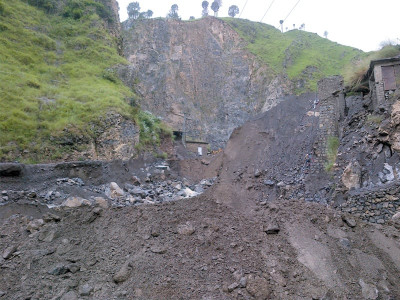
<p align="left">Stone-crushers appeared to occupy these most beautiful valleys, disturbing the landscape’s natural geographical formations and archaeological features. The pristine, clean environment has been replaced by the pungent smell of industry and the noise of motors. Heavy traffic, such as trucks and dumpers, has damaged roads and bridges and noise pollution has made the area, once a getaway from city noise and pressure, almost unliveable. Even spring water, commonly known as ‘aab-i-shifa’, has become polluted because of careless human habitation around the spring’s source.</p>
<p align="left">“The activities have either polluted or completely destroyed our drinking water sources,” complains Masood Khan, a resident. “A good night’s sleep or even an afternoon nap is difficult to come by because of noise from the machinery and constant blasting by workers.”</p>
<p align="left"> “A stone-crushing mafia has been cutting down forests to install more and more crushing units,” says Jawadullah Khan, a social worker. “Diseases have erupted in our lush green valley because two dozen stone-crushing plants have been installed on both sides of the Lora-Abbottabad Road.”</p>
<p align="left">I looked around. Giant tree and earth cutters have been placed and pine trees, among others, are being brutally cut down. Seed-eating birds such as doves, parrots and pigeons, which nested in the region for centuries and used the trees as a source of food, are spotted far and few between while garbage-eating birds like mynas, pied mynas, Indian kites and crows have descended upon the area to feed on the increased filth and waste. Plantation experts add that cutting down a tree basically means damaging the natural cycle in which birds spread seeds through their droppings that lead <em>Shahtoot, Dhraik, Tali, Kiker </em>and <em>Kachnaar</em> to sprout.</p>
<p align="left">Among the bigger stone-crushing units is one that belongs to the National Logistics Cell and is located along the famous Haroo Stream in Maal Moola village (in Khyber-Pakhtunkhwa’s Hazara division). The construction of the unit was aided by the Punjab government, which has awarded a lucrative contract to the NLC for transporting crushed stone and other building material to Murree for a Punjab-sanctioned project.</p>
<p align="left">Abbottabad DCO Imtiaz Hussain categorically denies having issued a No-Objection Certificate for the NLC plant. “Peshawar might have issued them permission but we haven’t been provided any information regarding that either,” he adds.</p>
<p align="left">In fact, he says, the Abbottabad district administration has tried, albeit unsuccessfully, to crack down on the continuous growth in the number of stone-crushing units. “The administration cancelled the lease granted earlier to these stone-crushing units but then the provincial departments of mines and environment issued NOCs in the stone-crushers’ favour,” he says.</p>
<p align="left">Most stone-crushing activity takes place along the fairly busy Ghora Gali-Lora Road, which means that residents often end up stuck in hour-long traffic jams as workers halt traffic to carry out unscheduled blasts. A stone’s throw away is a police checkpoint, but the men manning it appear reluctant to act.</p>
<p align="left">“We have lodged a dozen complaints, but all in vain,” says Arshad Ali, another resident. “Our daily activities are disrupted at times because the stone-crushers start blasting without a previously announced schedule,” he adds.</p>
<p align="left">Although it may appear as if there is no legal regulation of the situation, legal eagles point to the NWFP Mining Concession Rules 2005 which lays down certain conditions before a license can be issued to stone-crushing businesses. But these rules, however, are hardly ever implemented.</p>
<p align="left">“Without a strong system for implementing these rules and regulations, we are inviting everyone to damage the environment for personal interests,” says Kosar Naqvi, an Abbottabad-based journalist. “There are confirmed reports of serious diseases that have erupted in the area due to felling of trees. A resident lodged a complaint with Lora Police Station while another approached the current provincial chief minister but authorities are yet to make a move.”</p>
<p align="left">“On the one hand, the government claims it is boosting environmental protection but on the other, they are permitting such cruel activities openly,” says Yasir Akhtar, a social worker. “They don’t realise that trees are lungs of the earth and very important for restoration of the eco-system.”</p>
<p align="left">To attract attention towards this grave issue, climate change experts have even tried to put a monetary value to losses incurred by ignoring the environment. A five-year-old World Bank report says that Pakistan is losing Rs365 million annually due to environmental degradation. This may be least of the concerns of labourers who work for these stone-crushing units but environment experts in the Khyber-Pakhtunkhwa government must take cognisance that these trees take at least 50 years to grow to a point where they begin providing oxygen to the atmosphere. And by cutting them down without replacing them at a matching rate, they are creating a deficit that is becoming tougher and tougher to plug.</p>
<p><em>Published in The Express Tribune, Sunday Magazine, September 16<sup>th</sup>, 2012.</em></p>
<p>Like Express Tribune Magazine on <a href="https://www.facebook.com/pages/Express-Tribune-Magazine/496571717038735">Facebook</a> and follow at <a href="https://twitter.com/ETribuneMag">@ETribuneMag</a></p>
</p>
			<br clear="all"/>
		]]>
		</description>

		<media:content width="424" height="318"
							isDefault="true" medium="image" url="http://i1.tribune.com.pk/wp-content/uploads/2012/09/435439-stone-1347456168-184-640x480.jpg">
			<media:title>stone 01</media:title>
			<media:description>Looking to create more space to install stone-crushing units, businesses in Khyber-Pakhtunkhwa are carelessly cutting down trees without replacing them, resulting in massive deforestation in the region.</media:description>
			<media:thumbnail url="http://i1.tribune.com.pk/wp-content/uploads/2012/09/435439-stone-1347456168-184-160x120.jpg" width="160" height="120" />
      </media:content>

		<wfw:commentRss></wfw:commentRss>
		<slash:comments>7</slash:comments>
	</item>
		<item>
		<title>Small town, big history </title>
		<link>http://tribune.com.pk/story/399974/small-town-big-history/</link>
		<pubDate>Sun, 01 Jul 2012 06:33:03 +0000</pubDate>

		<guid isPermaLink="false">http://tribune.com.pk/?p=399974</guid>

		<description>
		<![CDATA[
			<a href="http://tribune.com.pk/story/399974/small-town-big-history/">
				<img src="http://i1.tribune.com.pk/wp-content/uploads/2012/06/399974-house-1340805790-773-160x120.jpg" width="160" height="120" alt="" />
			</a>
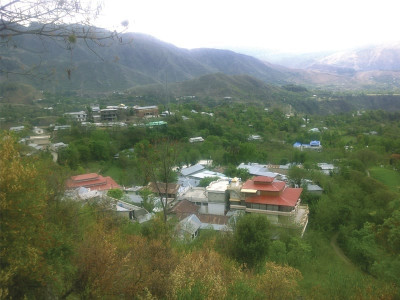
			<p><p><strong>The Haro River that cuts across the village of Nagri Totial is often dotted with frolicking young men in the summers. Small, serene and picturesque, it is ideal for tourists who wish to flee the sweltering summer heat of the plains and arrive in the green belt.</strong></p>
<p>The colourful tin roofs and lofty pine trees that emerge on the horizon as one crosses the river to enter the valley could make it pass off as just another village in the Galiyat. But this quaint village, which lies at an elevation of 4,081 feet, has a unique story to tell. It has seen Hindus and Sikhs co-habit with the Muslims till the partition when they fled in large numbers to India. The remains of the chamber where Hindus used to burn their dead still exist. “We lived together in peace and harmony. But soon after the creation of Pakistan, Hindus and Sikhs left the valley. The villagers provided them a safe escape,” says Mohammad Nasim Qamar, a retired school teacher and a notable of the area.</p>
<p>The British have enjoyed it as a summer retreat during their prime as many prominent officials of the empire visited the village numerous times. It was here that the first Muslim provincial minister of the British Raj Khan Bahadur Abdul Rehman was born, who went on to mobilise the Hazaras to vote in favour of uniting with Pakistan during the NWFP referendum in 1947. He later became a member of the executive council of the Pakistan Muslim League and grew close to Mohammad Ali Jinnah. His was a lineage that produced eminent politicians like Sardar Khan, his younger brother, and Sardar Inayatur Rehman Abbasi, his nephew.</p>
<p>Mostly hailing from the ‘Totialian’ branch of the Dhund Abbassid tribe (named after Toota Khan, an Abbasi chief) in the Hazara division, the villagers of Nagri Totial have settled on a stretch lying south-east of Abbottabad up till Ghora Gali near Murree in the east. Considerable numbers of Qureshis, Awans and Bhattis etc also live here.</p>
<p>One would think that this small town with a big history and breathtaking landscape enjoys privileges of better infrastructure and resources. Regrettably, Nagri Totial has slipped under the radar of the authorities and now suffers from multiple problems.</p>
<p>Lora is the closest town to Nagri Totial, and accessible only by hired jeeps, buses, taxis and personal cars. The nearest police station, the boys’ college, hospital and dozens of union council offices are situated here. The bus station at Lora also services routes to other neighbouring villages. Yet the two roads that connect Nagri Totial with Abbottabad beyond Lora remain unpaved and bumpy. “Millions of rupees have been spent on this project but the road paints a gloomy picture, which says not a single penny was spent and public money was only wasted,” says Kosar Naqvi, a well-known local journalist. Plans envisioned in 1986 to connect these roads to the Grand Trunk Road remain elusive.</p>
<p>Medical facilities in the area are nonexistent. There is only one Basic Health Unit, located some three kilometers away from the valley in the midst of a jungle, and that too is in deplorable condition. There is one high school for boys and one middle school for girls. “Most of the teachers are absent. They are paid for sitting at homes,” says another local journalist Javed Iqbal, adding that their complaints to authorities fall on deaf ears. The primary school that was damaged during the 2005 earthquake still awaits restoration by the dithering contractor, he says. The girls are thus forced to take classes in the boys’ primary school, which already lacks adequate teaching strength.</p>
<p>The rise of powerful commercial interests in the region is playing havoc with nature. Forests in the area are felled recklessly by the influential timber mafia without so much as a hindrance from the Khyber-Pakhtunkwa forestry department. “Two wood-cutting machines have been installed inside the Nagri Totial bazaar where the timber mafia regularly sells timber illegally,” says resident Javed Iqbal Abbasi.</p>
<p>On the other hand, the stone-crushing mafia has arrived and installed their plant at the banks of Haro, polluting the entire valley. “They first spoilt Ghora Gali-Lora Road and now they have reached here to disturb the natural beauty of the area,” complains Sardar Jawadullah Khan, a student of International Islamic University in Islamabad and a social worker.</p>
<p>The picturesque valley of Nagri Totial is in need of rescue. Not only does it need an exhaustive forest management project to sustain the indigenous natural resources, it also needs an efficient social development programme aimed at uplifting the lives of the people. If Nagri Totial keeps falling into disrepair, Pakistan would indeed lose a valuable treasure forever. In the pursuit of material gain, we forget that the cost of neglect and exploitation leads to irreparable damage.</p>
<p><em>Published in The Express Tribune, Sunday Magazine, July 1<sup>st</sup>, 2012.</em></p>
</p>
			<br clear="all"/>
		]]>
		</description>

		<media:content width="424" height="318"
							isDefault="true" medium="image" url="http://i1.tribune.com.pk/wp-content/uploads/2012/06/399974-house-1340805790-773-640x480.jpg">
			<media:title>house</media:title>
			<media:description>The valley of Nagri Totial — home to heritage and breathtaking natural beauty — is falling victim to human neglect and greed but continues to stand as a symbol of a harmonious past.</media:description>
			<media:thumbnail url="http://i1.tribune.com.pk/wp-content/uploads/2012/06/399974-house-1340805790-773-160x120.jpg" width="160" height="120" />
      </media:content>

		<wfw:commentRss></wfw:commentRss>
		<slash:comments>11</slash:comments>
	</item>
	
</channel>
</rss>
<!-- Performance optimized by W3 Total Cache. Learn more: http://www.w3-edge.com/wordpress-plugins/

Page Caching using apc
Database Caching 17/28 queries in 0.023 seconds using memcached
Object Caching 536/594 objects using apc

 Served from: tribune.com.pk @ 2013-06-19 03:17:49 by W3 Total Cache -->